Introduction
In the competitive landscape of the UK grocery market, staying ahead requires more than just
tracking current prices—it demands understanding historical trends and long-term pricing
patterns. Retailers and brands that can analyze how prices have evolved over time gain a
significant edge in planning promotions, forecasting demand, and strategizing product placement.
Extracting historical grocery price data from UK supermarkets allows businesses to examine
seasonal patterns, inflation impacts, and the effectiveness of promotional strategies. By
leveraging this data, companies can make data-driven decisions that optimize pricing, improve
competitiveness, and increase profitability.
The UK grocery sector has seen significant price shifts from 2020 to 2025, with inflation,
supply chain disruptions, and changes in consumer behavior driving fluctuating trends. For
instance, Office for National Statistics data shows that grocery prices rose by 0.4% in June
2025 compared to the previous year, highlighting the need for businesses to track trends
closely. Integrating technologies like a UK Grocery Price Tracking API for historical data
ensures access to reliable datasets, enabling retailers and brands to analyze pricing dynamics
efficiently. This blog explores how businesses can extract historical grocery price data from UK
supermarkets, analyze trends, and gain actionable insights to stay competitive in a
fast-evolving retail environment.
Understanding Long-Term Price Trends in UK Supermarkets
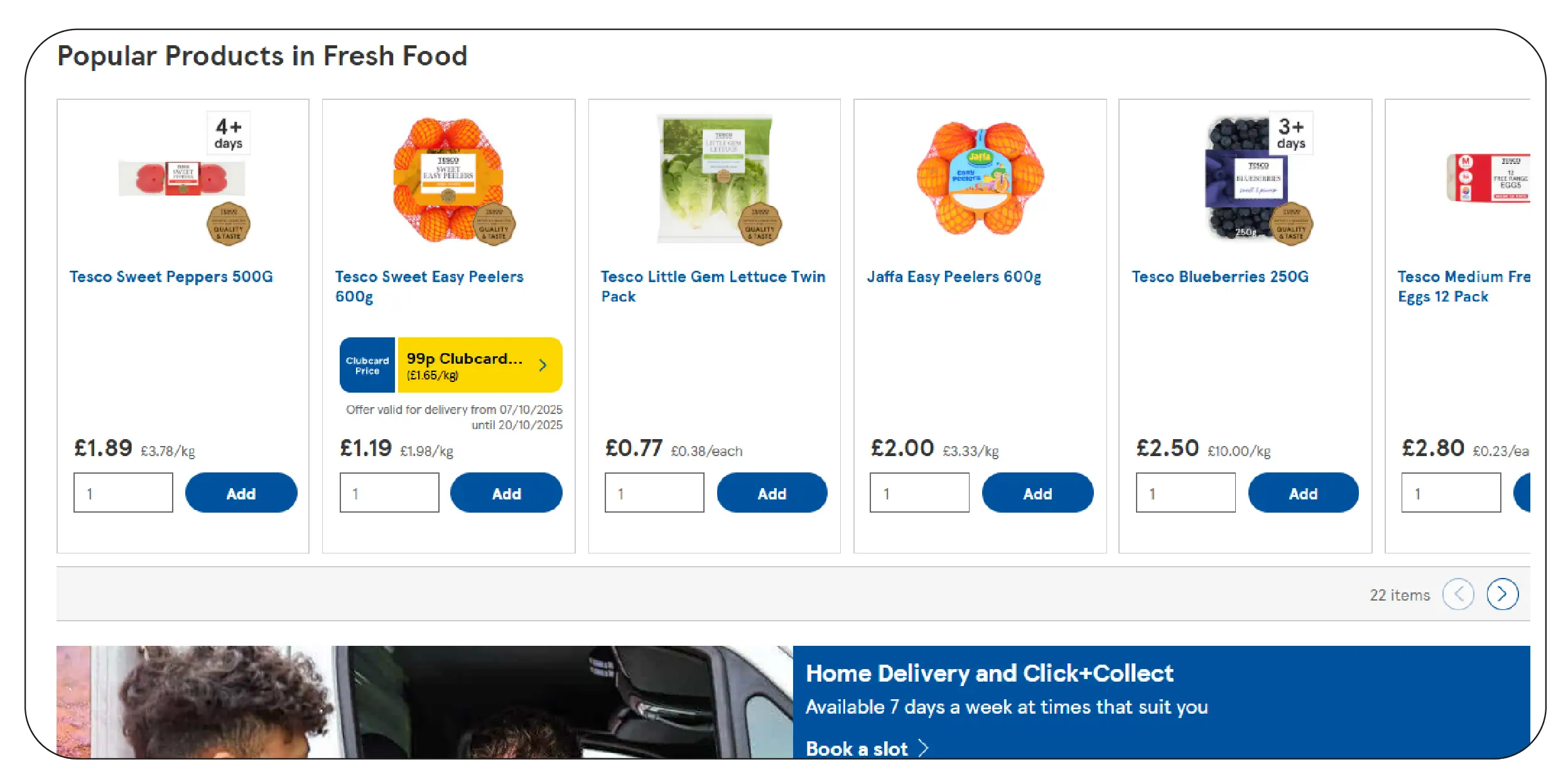
Analyzing long-term price trends is the first step toward effective grocery pricing strategies.
Extract Historical Grocery Price Data from UK supermarkets provides a foundation for identifying
patterns over multiple years, from 2020 to 2025. These patterns include seasonal fluctuations,
price spikes during holidays, and responses to inflation or supply chain changes. For example,
Tesco, Sainsbury’s, and Aldi often adjust their pricing in response to global commodity shifts,
which can be observed when analyzing historical datasets.
Retailers can benefit by integrating Extract Long-Term Price Trends in UK Supermarkets into
their strategy. By comparing monthly prices of staple items like milk, bread, and eggs, brands
can identify recurring increases in certain months, allowing better stock planning and
promotional timing. Historical data also helps assess how competitors’ pricing changes impact
market share. For example, Aldi’s promotion of festive chocolate tubs under £5 in December 2025
led to a measurable increase in store footfall compared to competitors who did not offer similar
discounts. Using the UK Online Grocery Price Comparison Dataset, businesses can benchmark their
pricing against multiple competitors. The dataset allows brands to analyze hundreds of products,
identifying where they are over- or under-priced relative to the market. Historical analysis
informs long-term planning, as retailers can forecast future pricing trends. Data from 2020 to
2025 shows that average supermarket basket prices rose steadily due to inflation and supply
constraints, while categories like fresh produce experienced higher volatility. Understanding
these trends enables companies to set more effective pricing, plan inventory, and optimize
promotions. In summary, leveraging historical grocery price data allows companies to anticipate
market changes, understand seasonal patterns, and benchmark against competitors, providing a
foundation for data-driven strategic decisions.
Utilizing APIs for Efficient Data Extraction

Manually collecting historical pricing data is time-consuming and prone to errors, particularly
when tracking multiple supermarkets across the UK. To address this, businesses increasingly rely
on APIs such as the UK Grocery Price Tracking API for Historical Data. These APIs provide
automated access to structured datasets, covering hundreds of products across multiple retailers
from 2020 to 2025. Automation ensures accuracy, reduces human error, and accelerates data
availability, enabling businesses to make quicker, informed decisions.
APIs allow retailers to Extract Current Supermarket Prices & Discounts UK, providing both
historical and real-time datasets. This dual functionality is critical for brands seeking to
understand past trends while responding to current market dynamics. For example, a supermarket
could monitor competitor price drops on staple items, adjusting their promotions in real-time
while also analyzing historical data to predict future seasonal trends. Additionally, businesses
can Scrape UK Supermarket Stock Price Changes Data to track fluctuations in product availability
and pricing. This ensures that pricing decisions are informed not just by historical trends but
also by current stock conditions. Data collected via APIs can be integrated with advanced
analytics platforms, enabling visualizations of price trajectories, seasonal peaks, and
competitor promotions. The adoption of Web Data Intelligence API further enhances data
extraction by standardizing datasets, cleaning inconsistent entries, and delivering structured
outputs ready for analysis. This is particularly important when comparing data across multiple
supermarkets with varying formats and currencies. For example, a retailer can track pricing of
branded cereals across Tesco, Sainsbury’s, and Asda, observing both historical price trends and
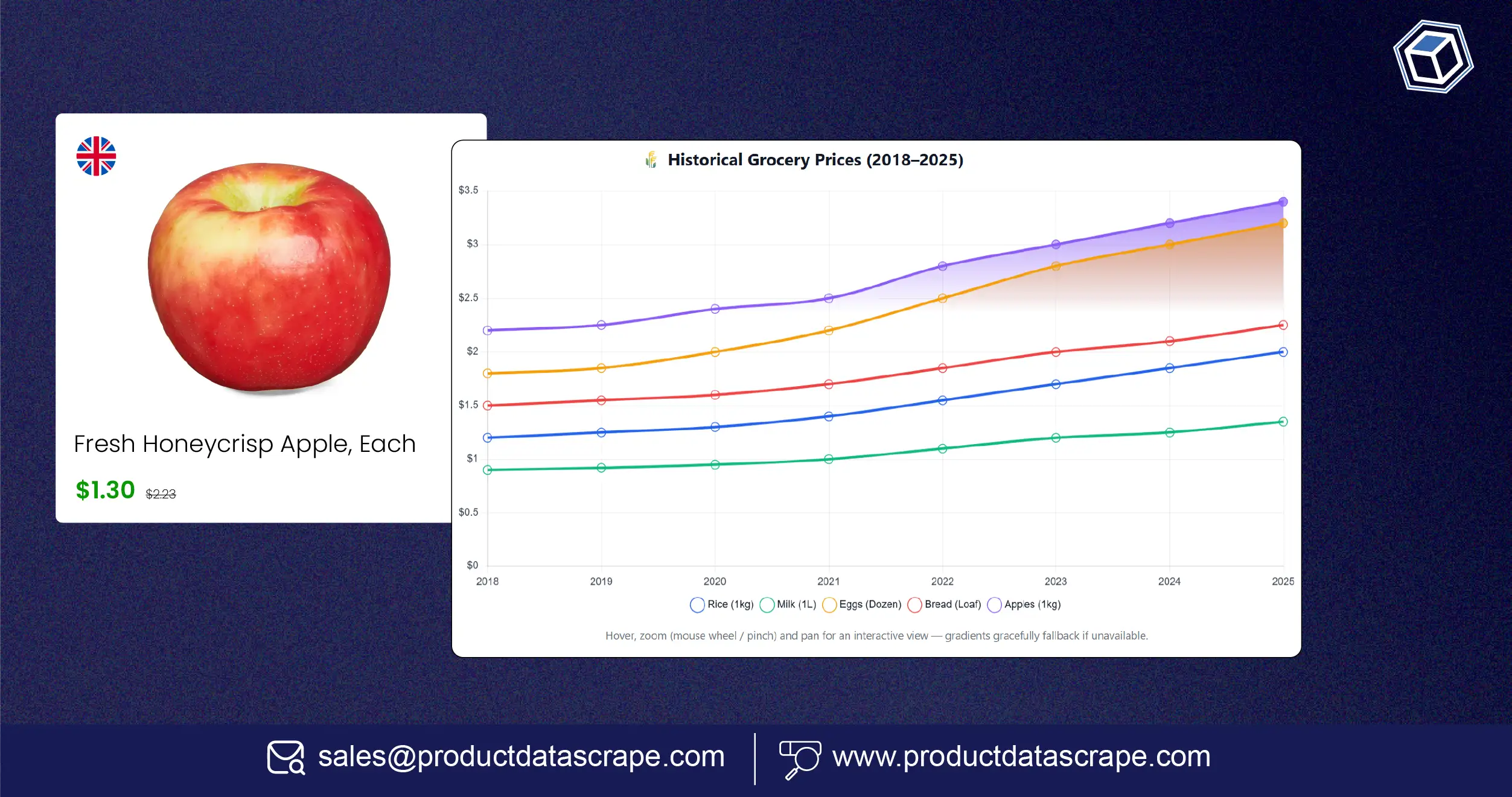
current promotional activity. Using APIs, businesses can also generate tables and charts
comparing price movements over time. Between 2020 and 2025, historical data revealed that
average prices for fresh produce increased by 15%, while canned goods remained largely stable.
These insights help companies optimize pricing strategies, forecast inventory needs, and plan
promotions effectively. By leveraging APIs for data extraction, retailers can access reliable,
comprehensive, and actionable datasets without the delays and errors associated with manual
collection, ensuring they remain competitive in a rapidly evolving market.
Unlock accurate, real-time grocery pricing insights—integrate our APIs
today and start extracting, analyzing, and acting on data instantly.
Contact Us Today!
Comparing Price Changes Across Supermarkets
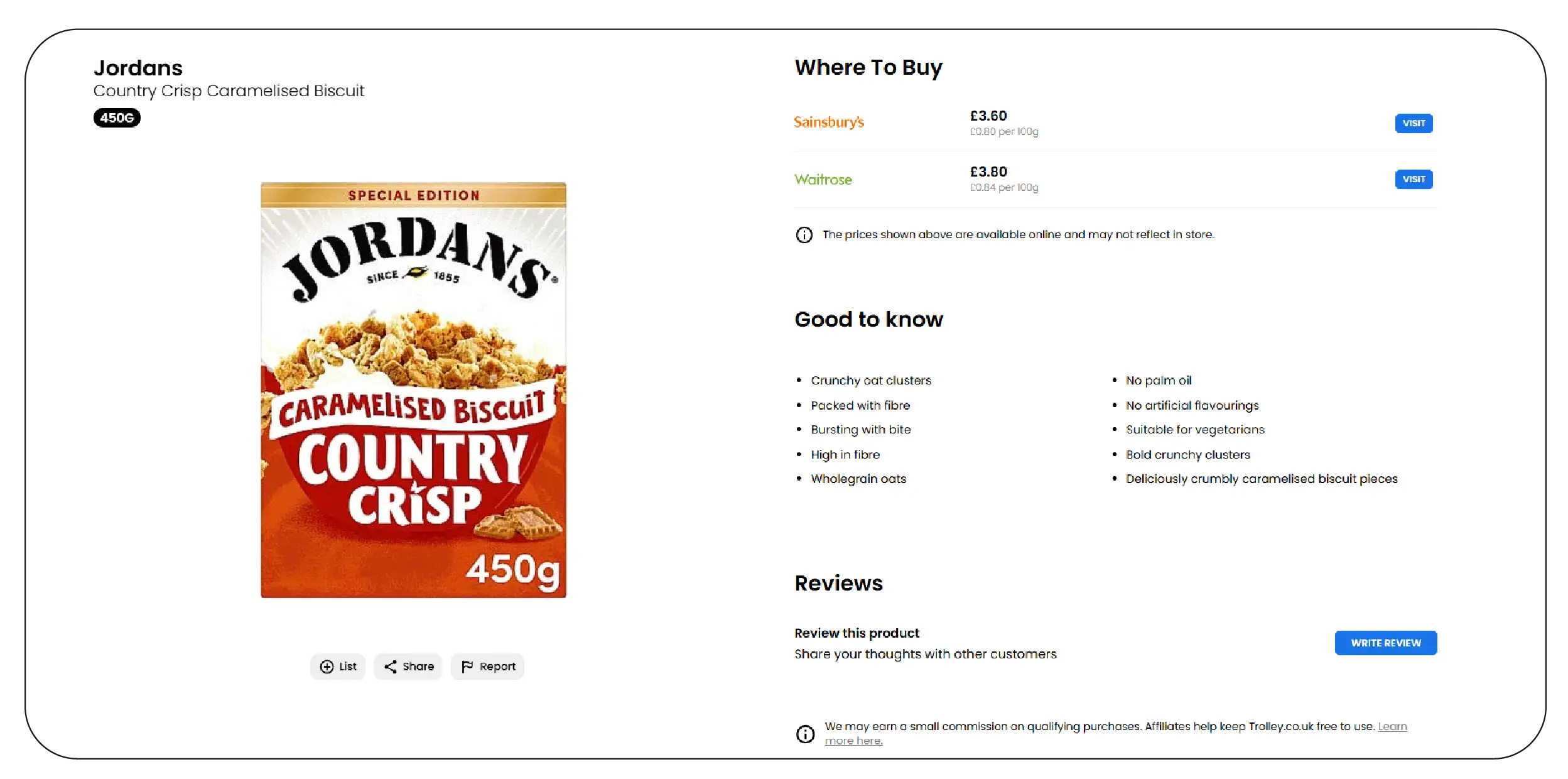
Understanding competitive pricing requires analyzing multiple supermarkets simultaneously. By
leveraging Supermarkets Price Extraction in the UK , businesses can track historical and current
prices across different retail chains, including Tesco, Asda, Sainsbury’s, and Aldi. Extract
Historical Grocery Price Data from UK supermarkets enables detailed comparisons, revealing
pricing patterns, promotional strategies, and market positioning.
Historical data from 2020 to 2025 highlights notable trends. For example, Aldi consistently
maintained lower basket prices compared to Tesco and Sainsbury’s. In September 2025, a basket of
71 commonly purchased items averaged £122.77 at Aldi, slightly lower than Lidl at £123.95. This
comparative insight is critical for brands planning pricing strategies or promotions.
Retailers can also integrate the UK Online Grocery Price Comparison Dataset to benchmark against
competitors. This dataset aggregates prices across multiple categories, enabling businesses to
identify over- or under-priced products. For instance, a bakery brand may find that its packaged
bread is priced 10% higher than the market average, signaling an opportunity for adjustment or
promotional discounting.
In addition to static price comparisons, businesses can track historical promotional trends
using Historical Price Drop & Discount Tracking Data UK. Understanding when and how competitors
applied discounts allows brands to anticipate market behavior and adjust their campaigns
accordingly. Real-time insights combined with historical comparisons enhance decision-making.
Companies can track weekly flyers and evaluate loyalty offers across supermarkets.
By systematically comparing historical and current pricing data across supermarkets, retailers
gain actionable insights into competitor strategies, enabling proactive decisions that drive
market share and profitability.
Analyzing the Impact of Promotions and Discounts
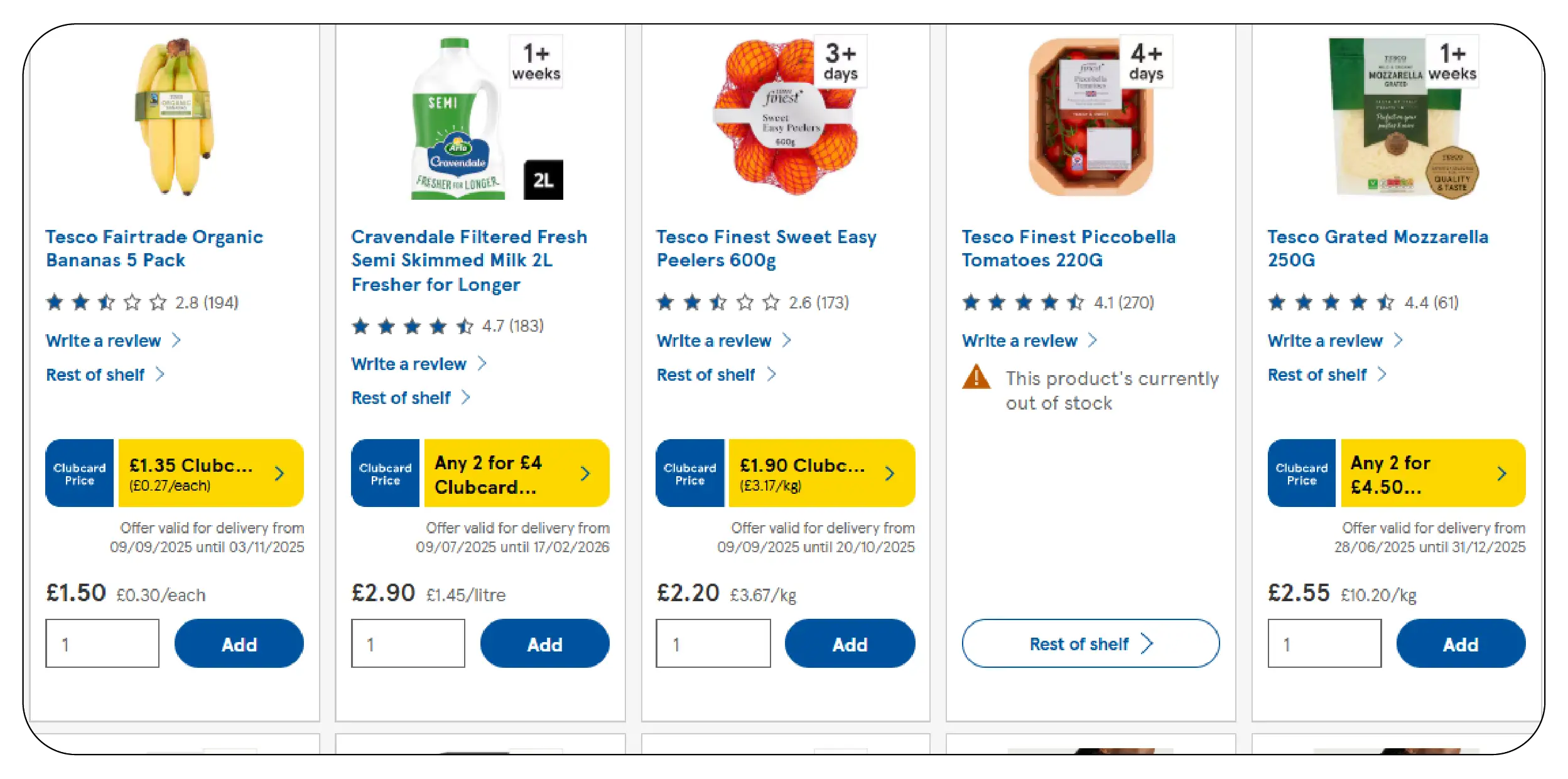
Promotional activities significantly influence pricing and sales performance in the grocery
sector. By leveraging historical data, businesses can analyze how previous promotions affected
consumer behavior and adjust future campaigns accordingly. Using Extract Historical Grocery
Price Data from UK, retailers can track discounts, offers, and seasonal promotions across
multiple supermarkets from 2020 to 2025.
For instance, data reveals that festive promotions in December 2024 and 2025, including
chocolate tubs and holiday treats, boosted sales by 12–15% in Aldi and Tesco stores. Such
insights are critical for planning effective marketing strategies. Scrape Retail Promotions &
Loyalty Offer Data allows businesses to capture information on loyalty card incentives, bundle
offers, and price cuts across stores, providing a holistic view of market activity.
Additionally, using Extract Store-Level Discount & Offer Data enables granular analysis at the
store level. Retailers can identify which locations responded most effectively to promotions,
tailoring campaigns to maximize engagement. Historical datasets also highlight trends in
consumer sensitivity to discounts, helping brands optimize pricing thresholds.
The integration of Web Scraping Grocery & Gourmet Food Data ensures a comprehensive dataset that
includes all product categories. Companies can track long-term trends such as sustained price
reductions on staples or temporary promotional spikes, aligning marketing strategies with
observed patterns. For example, a study of 2020–2025 data showed that price reductions on fresh
produce during summer months consistently increased basket size by 8–10%.
By analyzing historical promotions and discounts, businesses gain actionable insights that
inform future campaigns, optimize revenue, and strengthen competitive positioning.
Forecasting Future Price Trends
Forecasting future prices relies heavily on historical trends. By leveraging Extract Historical
Grocery Price Data from UK, businesses can identify recurring patterns, seasonal fluctuations,
and price volatility to make informed predictions. Between 2020 and 2025, price monitoring
showed that staple goods like milk and bread experienced predictable increases during winter
months, while discretionary items were more sensitive to supply chain disruptions.
Integrating UK Grocery Store APIs allows real-time data input to complement historical datasets.
This combination ensures that forecasts are accurate and reflect current market conditions.
Retailers can simulate pricing scenarios, anticipate consumer behavior, and plan inventory
accordingly.
For example, historical analysis revealed that a 5% average price increase in branded cereals
during Q4 2023 led to a 3% decline in volume sales, while private-label alternatives saw a 7%
increase. These insights enable brands to adjust prices strategically, balancing profitability
with consumer demand. Price Monitoring Services can automate this process, delivering timely
alerts when competitors adjust prices or promotions.
Combining historical data with predictive analytics empowers businesses to forecast price trends
effectively, manage stock levels, and optimize revenue strategies. By understanding market
patterns from 2020–2025, retailers can make proactive decisions that enhance competitiveness and
profitability.
Predict market shifts confidently—leverage our historical and real-time
grocery pricing data to forecast trends and optimize your strategy
today.
Contact Us Today!
Enhancing Competitive Intelligence

Staying ahead in the grocery sector requires robust competitive intelligence. By using Scrape UK
Supermarket Stock Price Changes Data, brands can monitor competitor activity and anticipate
market shifts. Extract Historical Grocery Price Data from UK provides a foundation for
understanding long-term competitor strategies, identifying seasonal promotions, and analyzing
price positioning over time.
For instance, tracking competitor price changes on key categories such as dairy, bakery, and
frozen goods from 2020 to 2025 highlights which retailers successfully used pricing strategies
to capture market share. Integrating UK Online Grocery Price Comparison Dataset and Historical
Price Drop & Discount Tracking Data UK enables retailers to benchmark against competitors and
identify opportunities for differentiation.
Leveraging Grocery Store Dataset ensures that intelligence is comprehensive, covering multiple
stores, product categories, and promotion types. By combining historical and current data
through Web Data Intelligence API , businesses can visualize competitor behavior, optimize their
pricing, and improve promotional effectiveness.
Real-time tracking combined with historical insights allows brands to respond proactively. For
example, a sudden competitor discount can be countered with targeted promotions, ensuring
sustained market share. Competitive intelligence derived from historical and current data
provides actionable insights that drive smarter decisions and enhance profitability in the UK
grocery market.
Why Choose Product Data Scrape?
Product Data Scrape provides comprehensive solutions for extracting, analyzing, and monitoring
grocery pricing data. Our Extract Historical Grocery Price Data from UK services empower
retailers and brands with accurate datasets spanning multiple years, enabling detailed trend
analysis. With our UK Grocery Price Tracking API for Historical Data, businesses can automate
extraction, standardize data, and gain actionable insights without manual effort.
We specialize in integrating historical and real-time data, providing insights on price changes,
promotions, and competitor strategies. Our solutions are compatible with advanced analytics
platforms, facilitating visualizations, predictive analysis, and benchmarking. Retailers can
also leverage our UK Online Grocery Price Comparison Dataset to monitor competitors and optimize
pricing strategies effectively.
By choosing Product Data Scrape, businesses gain a reliable partner for monitoring pricing
trends, predicting market movements, and making informed decisions that drive profitability and
competitive advantage. Our scalable and customizable solutions meet the needs of supermarkets,
brands, and analysts alike, ensuring accurate, timely, and actionable grocery data.
Conclusion
Tracking historical and current grocery pricing data is essential for businesses seeking to
optimize pricing strategies and gain competitive intelligence. By using Extract Historical
Grocery Price Data from UK, retailers can analyze trends from 2020 to 2025, understand seasonal
fluctuations, and forecast future pricing patterns. Integrating tools like the UK Grocery Price
Tracking API for Historical Data and Web Data Intelligence API ensures accurate, automated, and
comprehensive datasets.
Historical price analysis combined with real-time monitoring allows businesses to evaluate
promotions, anticipate competitor actions, and make strategic pricing decisions. By leveraging
Scrape UK Supermarket Stock Price Changes Data, companies can gain actionable insights into
market positioning, pricing trends, and consumer behavior across multiple retailers.
Take control of your grocery pricing strategy today. With Product Data Scrape , you can extract,
analyze, and monitor historical and current supermarket pricing data, turning raw data into
actionable intelligence. Contact us now to harness the power of historical grocery price
insights and stay ahead in the competitive UK grocery market.


 Singapore
 EMAIL
EMAIL
 PHONE
PHONE


.webp)
.webp "thumb")
.webp "thumb")
.webp "thumb")









.webp)