Quick Overview
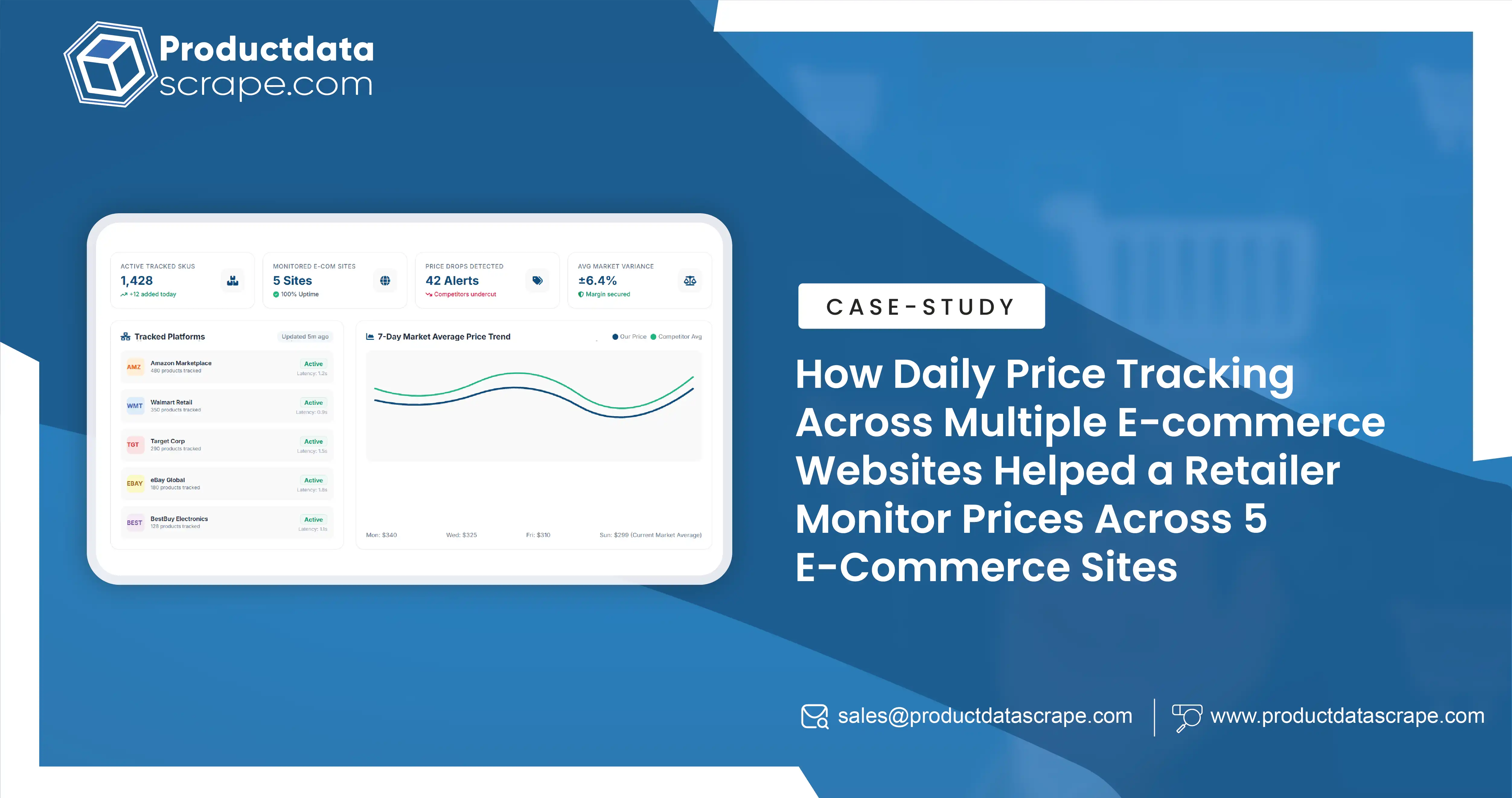
Daily Price Tracking Across Multiple E-commerce Websites enabled a multi-category retail brand to establish a centralized system for monitoring product prices across Amazon, Walmart, eBay, Target, and Best Buy. Product Data Scrape implemented automated data collection covering products from categories such as consumer electronics, fashion, footwear, and home appliances. The engagement focused on improving price visibility, reducing manual monitoring, and creating a consistent dataset for competitive analysis. The solution enabled the retailer to Scrape Daily Price Updates from Online Retailers, delivering structured daily pricing information, standardized product records, and automated comparison workflows. Over the project period, the retailer achieved faster price updates, improved product matching, and stronger monitoring coverage across five major e-commerce marketplaces.
Client Name / Industry: Leading Multi-Category Retail Brand / E-Commerce & Retail
Service / Duration: E-Commerce Product Price Data Collection & Monitoring / 12 Weeks
Key Impact Metrics: 95%+ automated data coverage, 80% reduction in manual price-checking effort, and 90%+ product matching accuracy.
The Client
The client was a growing multi-category retail business operating in a highly competitive e-commerce environment. Its product portfolio included consumer electronics, smartphones, laptops, footwear, fashion accessories, and home appliances from brands such as Apple, Samsung, Nike, Adidas, Sony, and LG. As competition increased, the retailer needed stronger visibility into competitor prices across Amazon, Walmart, eBay, Target, and Best Buy.
The retailer previously depended on spreadsheets, manual website checks, and fragmented internal processes to understand pricing movements. This approach made it difficult to maintain consistent product records and identify price changes quickly. Monitoring hundreds of products across five marketplaces required substantial operational effort, while differences in product titles, SKUs, pack sizes, specifications, and seller information created additional comparison challenges.
The pressure to respond quickly to market changes made transformation essential. A competitor lowering the price of an Apple iPhone, Samsung Galaxy smartphone, Nike shoe, or Sony television could influence the client's pricing decisions within hours.
The project introduced product price tracking across five online retailers through a structured data workflow. A dedicated Price Comparison API for Global eCommerce was also incorporated into the broader architecture to support standardized access to comparison-ready pricing information and future expansion.
Goals & Objectives
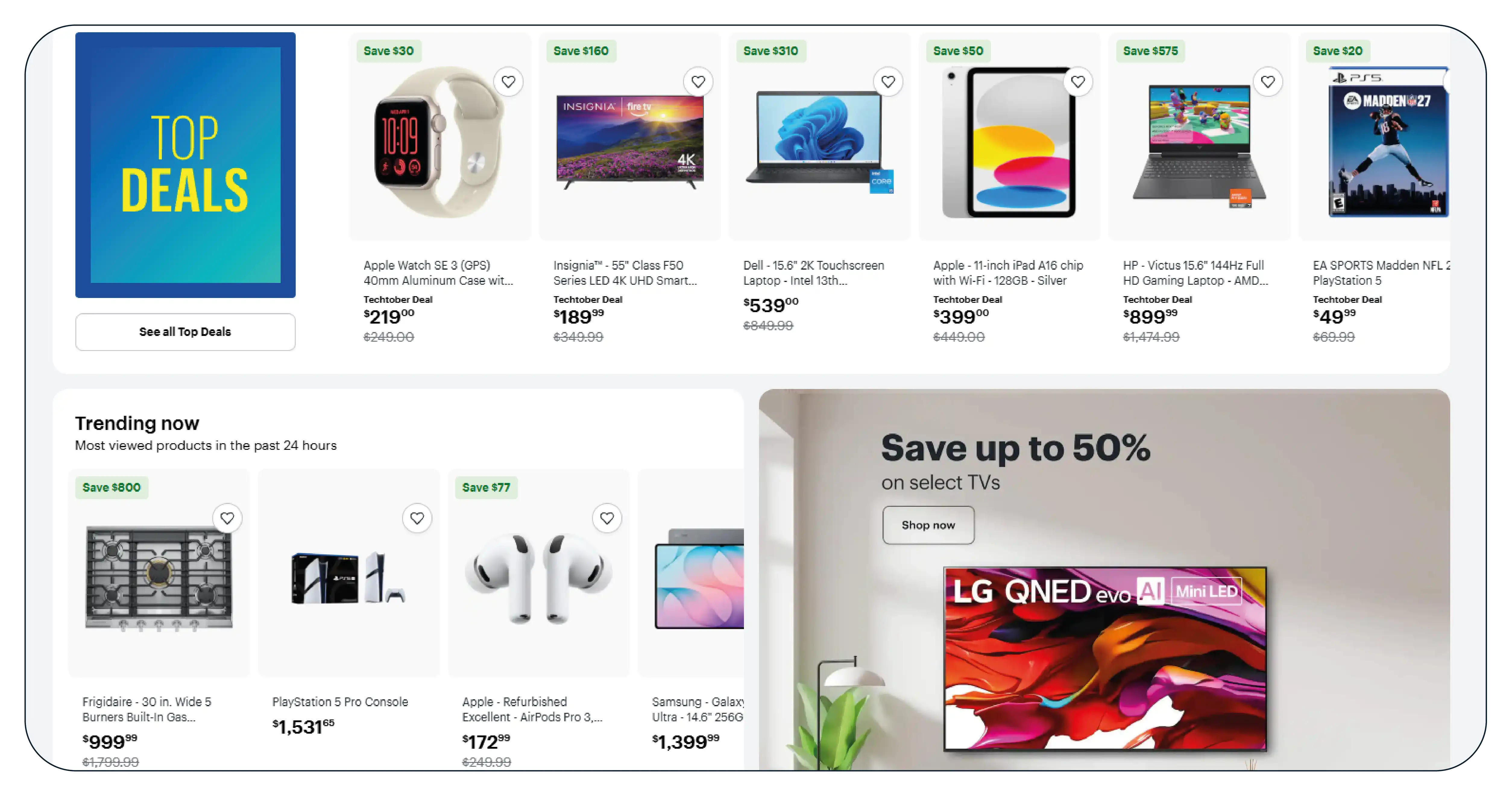
The retailer required a solution that could move beyond periodic manual checks and create a scalable foundation for automated competitive pricing intelligence. The project combined business priorities with technical requirements to establish a reliable daily monitoring process.
Establish scalable pricing monitoring across five major e-commerce websites.
Increase the speed at which competitor price changes could be identified.
Improve price and product matching accuracy across different marketplace formats.
Reduce repetitive manual monitoring and spreadsheet-based workflows.
Support pricing teams with standardized product-level competitive information.
Automate collection of product names, brands, SKUs, prices, discounts, availability, URLs, and seller details.
Develop standardized product matching rules for products such as Apple iPhones, Samsung Galaxy devices, Nike footwear, and Sony TVs.
Integrate automated extraction with structured databases and downstream analytics workflows.
Enable recurring updates for daily price intelligence.
Prepare the dataset for dashboards, alerts, and Daily Product Price Monitoring Across E-Commerce Sites.
Support Real-Time Price Comparison capabilities for selected high-priority products and categories.
95%+ target automated data coverage across monitored product URLs.
90%+ product matching accuracy across comparable marketplace listings.
80% reduction in manual price-monitoring activities.
Daily availability of refreshed pricing records.
95%+ validation success for critical product and price fields.
The Core Challenge
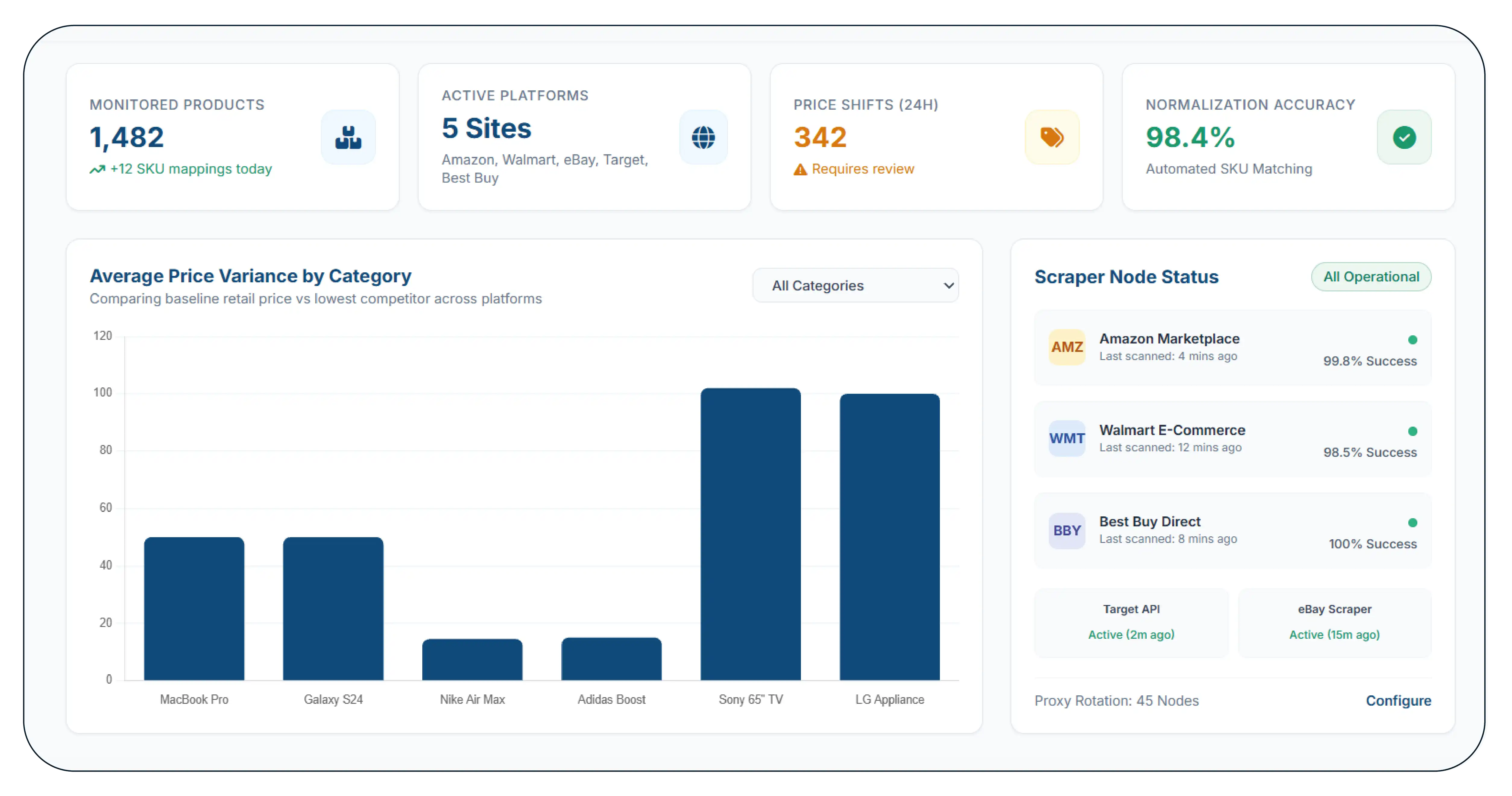
Before the engagement, the retailer's pricing team faced significant operational bottlenecks while monitoring competitors across five e-commerce platforms. Product information was collected manually from different websites, with each marketplace presenting information using its own naming conventions, SKU structures, seller formats, and promotional layouts.
The retailer needed to monitor products such as Apple MacBooks, Samsung Galaxy smartphones, Nike Air Max shoes, Adidas sneakers, Sony televisions, and LG appliances. However, the same product could appear with different titles, descriptions, specifications, seller names, or variations across Amazon, Walmart, eBay, Target, and Best Buy.
This made simple price comparison unreliable. A listing for a 256GB Apple iPhone could be confused with a 128GB variant, while a Samsung Galaxy device might appear under different model descriptions. Promotional prices, coupons, availability indicators, and seller-specific offers also changed frequently.
The existing workflow could not deliver sufficiently fast updates for responsive pricing decisions. Spreadsheet-based consolidation increased the possibility of duplicate records, outdated prices, missing values, and inconsistent product mapping.
The retailer therefore needed a structured approach to Scraping Daily Price Changes data Across E-Commerce Sites with automated validation, product matching, normalization, and recurring collection.
Our Solution
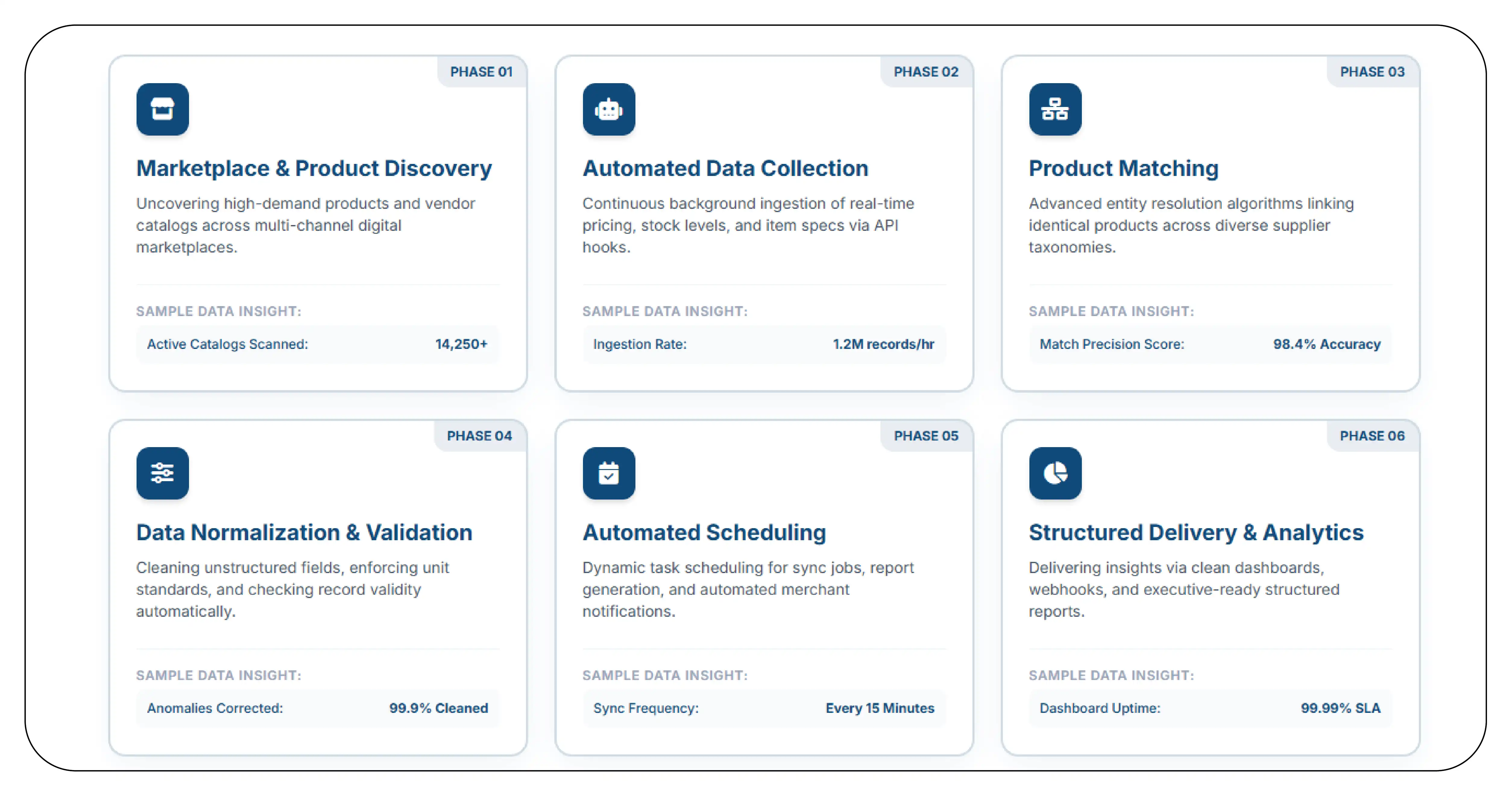
Product Data Scrape designed a phased data collection and monitoring framework that combined automated extraction, product matching, validation, normalization, and scheduled delivery.
Phase 1: Marketplace & Product Discovery
The first phase established the target marketplace and product universe. Amazon, Walmart, eBay, Target, and Best Buy were mapped according to categories, product URLs, brands, SKUs, and priority products. Representative products included Apple iPhone models, Samsung Galaxy smartphones, Sony Bravia televisions, Nike Air Max footwear, Adidas running shoes, and LG home appliances. This created a defined product universe for recurring monitoring.
Phase 2: Automated Data Collection
Automated extraction workflows were configured to capture product names, brands, SKUs, model numbers, prices, original prices, discounts, availability, seller information, product URLs, ratings, and relevant product attributes. The system was designed to handle differences between marketplace page structures while maintaining a consistent output schema.
Phase 3: Product Matching
One of the most important components was catalog matching. Products from different marketplaces were standardized using combinations of brand, model number, SKU, GTIN where available, product attributes, and normalized titles. For example, an Apple iPhone listing from Amazon could be matched with the corresponding Walmart or Best Buy listing despite differences in title formatting. The Extract product catalog matching for price comparison workflow helped establish comparable product records before prices were analyzed.
Phase 4: Data Normalization & Validation
Raw marketplace information was transformed into standardized records. Currency formats, discount fields, product names, availability values, and seller information were normalized. Validation rules flagged missing prices, unusual values, duplicate products, mismatched variants, and incomplete records. This helped prevent inaccurate marketplace comparisons from reaching downstream analytics systems.
Phase 5: Automated Scheduling
Recurring jobs were introduced to collect updated pricing information at defined intervals. Priority products could be monitored more frequently, while broader catalogs followed scheduled daily collection cycles. This created a repeatable foundation for Daily Price Tracking Across Multiple E-commerce Websites, allowing the retailer to move away from manual checks and toward automated competitive monitoring.
Phase 6: Structured Delivery & Analytics
Validated data was delivered in analytics-ready formats for internal reporting and dashboards. Historical records were retained so pricing teams could compare current and previous prices. The resulting dataset could support competitor price benchmarking, discount monitoring, assortment analysis, product availability tracking, and pricing strategy development.
Results & Key Metrics
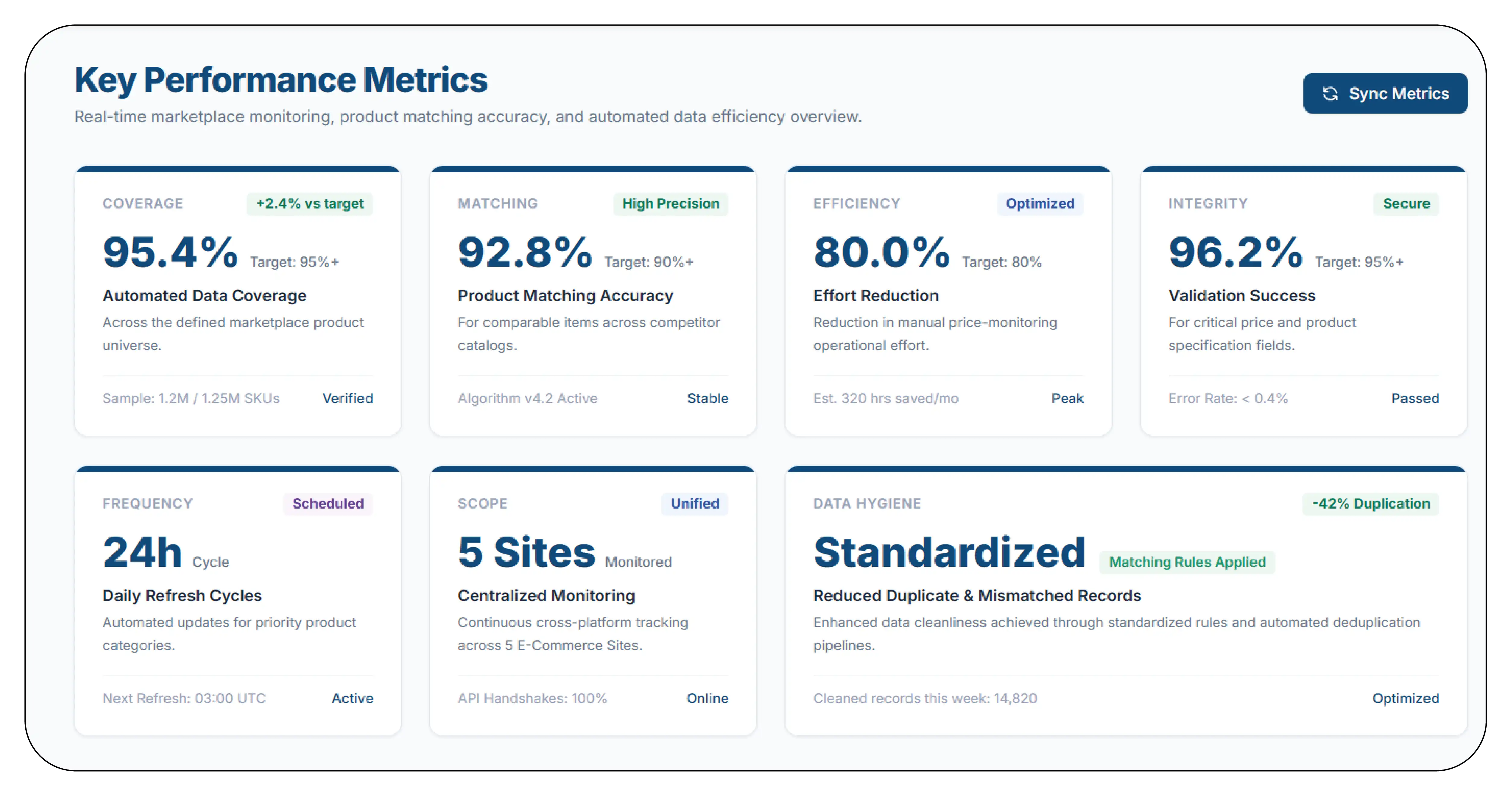
95%+ automated data coverage across the defined marketplace product universe.
90%+ product matching accuracy for comparable products.
80% reduction in manual price-monitoring effort.
95%+ validation success for critical price and product fields.
Daily refresh cycles for priority product categories.
Centralized monitoring across 5 E-Commerce Sites.
Reduced duplicate and mismatched product records through standardized matching rules.
Results Narrative
The implementation gave the retailer a consistent framework for monitoring competitor prices across multiple marketplaces. With structured records available on a recurring basis, pricing teams could identify changes without repeatedly checking individual websites.
The resulting data helped daily price tracking helps compare online retailers by creating standardized product-level records for cross-marketplace analysis. Teams could compare Apple, Samsung, Nike, Adidas, Sony, and LG products using consistent attributes.
The automated workflow also reduced operational dependency on spreadsheets and manual research. Historical price records created additional visibility into discount movements and competitive pricing patterns.
Most importantly, Daily Price Tracking Across Multiple E-commerce Websites became part of an ongoing pricing intelligence process rather than a one-time data collection exercise.
What Made Product Data Scrape Different
Product Data Scrape combined automated collection with catalog intelligence, validation, and recurring monitoring rather than treating price extraction as a simple scraping task.
Its Catalog Enrichment Services helped transform raw marketplace listings into structured product records containing standardized brands, categories, model information, specifications, prices, discounts, availability, and seller attributes.
The workflow also supported intelligent product matching across marketplaces, helping distinguish variants such as different Apple iPhone storage capacities or Samsung Galaxy configurations.
The automation framework enabled recurring collection, validation checks, historical storage, and analytics-ready delivery. Instead of providing isolated price snapshots, the system created a reusable data foundation for competitive intelligence and marketplace monitoring.
The architecture made Daily Price Tracking Across Multiple E-commerce Websites scalable for additional categories, products, marketplaces, and geographic markets as the retailer's requirements expanded.
Client's Testimonial
"Before this project, our pricing team spent considerable time checking marketplace listings and consolidating competitor prices manually. The automated data workflow gave us a much more consistent view of products across Amazon, Walmart, eBay, Target, and Best Buy. We can now identify price movements faster, compare equivalent products more confidently, and provide our pricing team with structured information for decision-making. The ability to maintain historical pricing records has also helped us understand recurring promotional patterns. The solution has given us a stronger data foundation for implementing Dynamic Pricing Strategies for E-commerce and expanding our competitive monitoring program."
— Head of E-Commerce Strategy, Multi-Category Retail Brand
Conclusion
The retailer's transition from manual marketplace checks to automated e-commerce data collection created a scalable foundation for competitive pricing intelligence. By standardizing product records, matching comparable listings, validating price information, and scheduling recurring collection, Product Data Scrape helped improve the speed and consistency of marketplace monitoring.
The solution demonstrates how E-commerce data scraping can support practical business applications beyond basic information collection, including competitor benchmarking, discount monitoring, assortment intelligence, and historical price analysis.
With Daily Price Tracking Across Multiple E-commerce Websites, the retailer established a repeatable framework that can expand to additional marketplaces, categories, brands, and regions while continuing to support faster and more data-driven pricing decisions.
FAQs
1. What does Daily Price Tracking Across Multiple E-commerce Websites involve?
It involves automatically collecting and monitoring product prices from multiple online marketplaces at recurring intervals. Data can include product names, brands, SKUs, prices, discounts, availability, sellers, and URLs.
2. Which e-commerce websites can be monitored?
A monitoring project can cover marketplaces such as Amazon, Walmart, eBay, Target, and Best Buy. The exact websites depend on the client's target market, product categories, and data requirements.
3. Which products can be tracked?
Products can include smartphones such as Apple iPhone and Samsung Galaxy models, laptops such as MacBook and Dell models, footwear from Nike and Adidas, televisions from Sony and LG, and many other categories.
4. How does product matching improve price comparison?
Product matching connects equivalent listings across marketplaces using identifiers such as SKU, model number, brand, GTIN where available, specifications, and normalized product titles. This reduces incorrect comparisons between different product variants.
5. Can the collected data support pricing analytics?
Yes. Structured historical pricing data can support competitor benchmarking, discount analysis, availability monitoring, price-change alerts, and broader competitive intelligence. The dataset can also be integrated into dashboards, databases, or internal analytics systems for ongoing monitoring.


 Singapore
 EMAIL
 PHONE











.webp)