Introduction
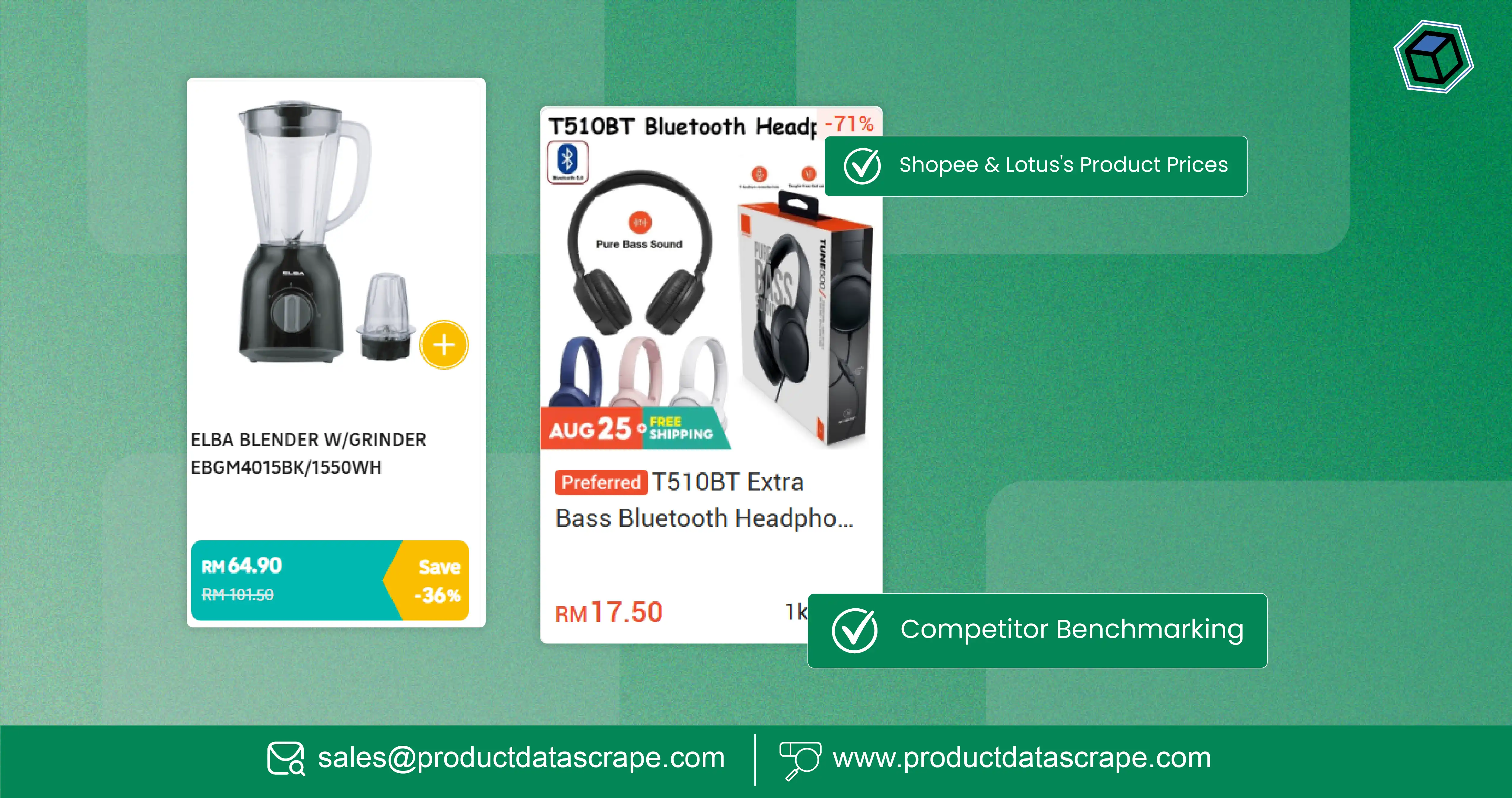
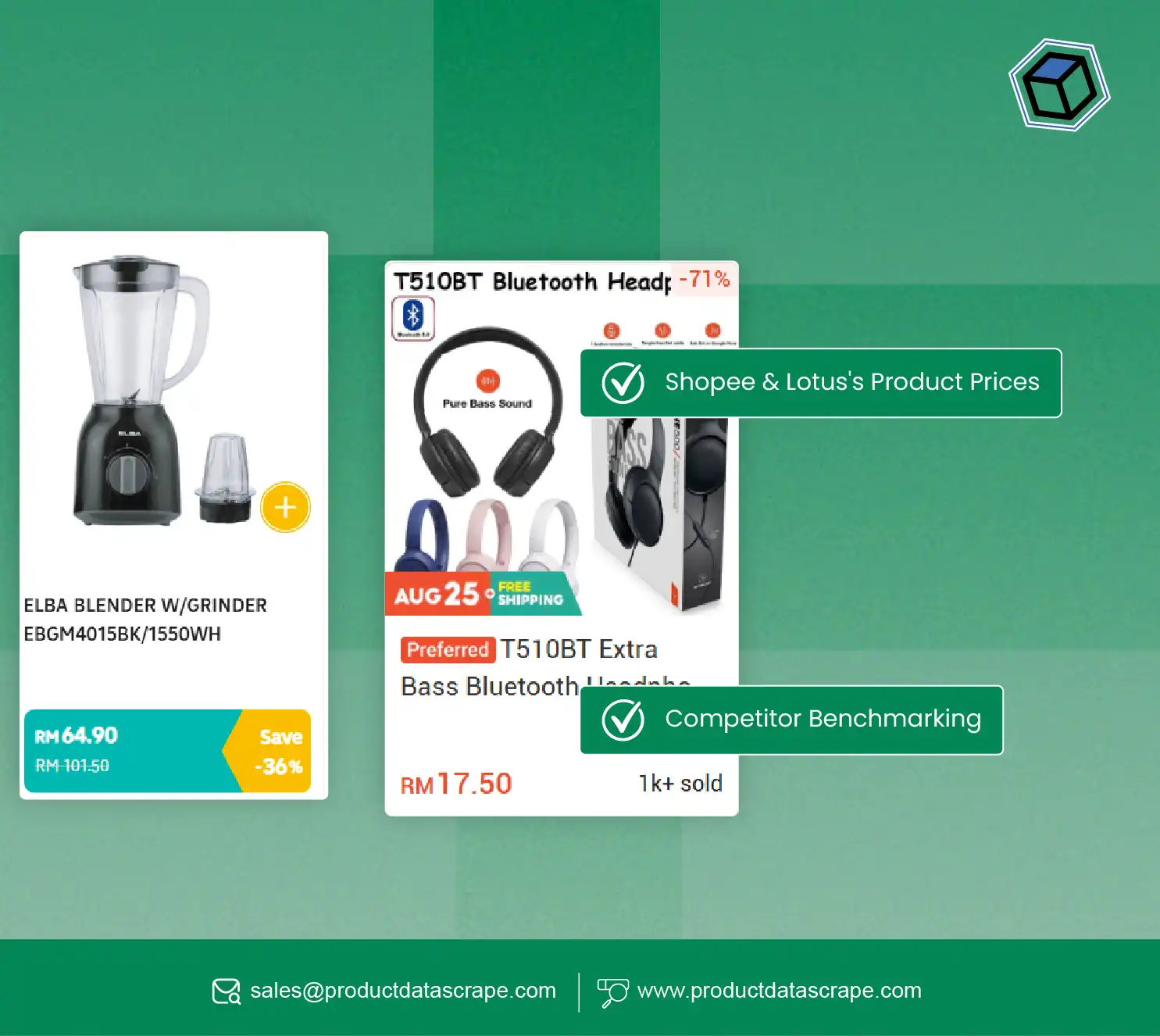
Can businesses improve pricing decisions by monitoring Shopee and Lotus's product data? Yes. Scrape Shopee & Lotus's Product Prices in Malaysia helps retailers, FMCG brands, manufacturers, distributors, and market researchers collect real-time product prices, promotions, stock availability, and assortment data from two of Malaysia's leading retail platforms. Combined with Price monitoring, businesses can optimize pricing strategies, benchmark competitors, respond quickly to market changes, and make data-driven decisions that improve profitability and customer satisfaction.
Industry Insight (2026): Industry analysts estimate that retailers using automated pricing intelligence improve competitive pricing accuracy by over 35% while reducing manual monitoring efforts by nearly 70%.
For eCommerce businesses and retail brands, manually tracking thousands of products across multiple marketplaces is time-consuming and prone to errors. Automated web scraping eliminates these challenges by continuously collecting structured product information, including prices, discounts, inventory status, product descriptions, customer ratings, and promotional campaigns. These insights enable businesses to monitor competitors, forecast demand, optimize inventory, and strengthen pricing strategies across Malaysia's rapidly evolving digital commerce landscape.
How Can Automated Product Collection Improve Market Intelligence?
Retail markets generate enormous amounts of pricing and product information every day. New listings, promotional campaigns, stock updates, and assortment changes occur continuously across online marketplaces. Businesses need automated solutions to monitor these changes efficiently.
Organizations increasingly Scrape Shopee and Lotus's product data automatically to collect structured information on prices, product attributes, stock availability, brands, seller information, customer ratings, and promotional offers. Automated collection eliminates repetitive manual work while providing accurate and continuously updated datasets that support pricing analysis, inventory planning, and competitive benchmarking.
Industry research indicates that businesses using automated product intelligence significantly improve operational efficiency while gaining faster access to market changes.
Key business benefits
- Automated SKU collection
- Product catalog monitoring
- Real-time pricing updates
- Stock availability tracking
- Promotion monitoring
- Brand benchmarking
- Marketplace comparison
- Product attribute collection
- Faster reporting
- Improved decision-making
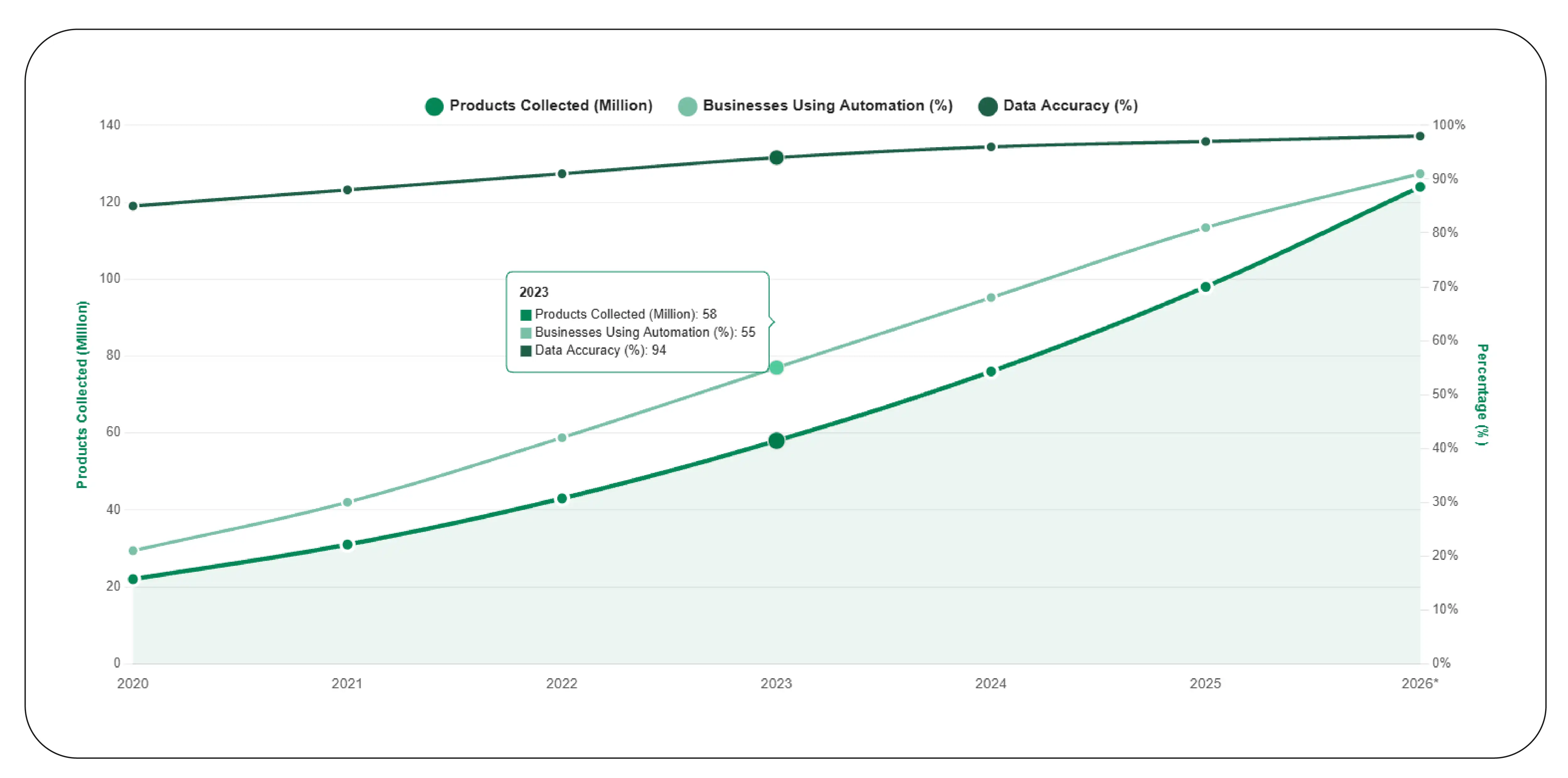
Automated Product Monitoring Trends (2020–2026)
| Year |
Products Collected (Million) |
Businesses Using Automation |
Data Accuracy |
| 2020 |
22 |
21% |
85% |
| 2021 |
31 |
30% |
88% |
| 2022 |
43 |
42% |
91% |
| 2023 |
58 |
55% |
94% |
| 2024 |
76 |
68% |
96% |
| 2025 |
98 |
81% |
97% |
| 2026* |
124 |
91% |
98% |
*Illustrative industry estimates based on Southeast Asian eCommerce analytics and retail automation trends.
Automated product collection also enables category managers to evaluate assortment gaps, pricing teams to react quickly to competitor movements, and executives to access centralized dashboards for strategic planning. Continuous product monitoring transforms marketplace data into actionable intelligence that supports sustainable business growth in increasingly competitive retail environments.
How Can Real-Time Pricing Intelligence Improve Competitive Strategy?
Pricing is one of the most influential factors affecting customer purchasing decisions. Retailers that monitor competitor prices in real time can respond faster to promotions, inventory changes, and shifting consumer demand while protecting margins.
Businesses increasingly monitor Shopee Malaysia product price data to capture continuous pricing updates across multiple product categories. Combined with Competitive pricing data, organizations gain comprehensive visibility into competitor strategies, promotional activities, discount frequency, and price positioning. These insights enable pricing teams to optimize offers, improve profitability, and remain competitive without relying on manual price checks.
Industry studies estimate that retailers using automated pricing intelligence improve promotional effectiveness while reducing pricing response time by more than 60%.
Major advantages
- Real-time competitor monitoring
- Dynamic pricing support
- Promotion tracking
- Historical price analysis
- Margin optimization
- Regional price comparison
- Category benchmarking
- Consumer pricing insights
- Faster business decisions
- Revenue optimization
Retail Pricing Intelligence Growth (2020–2026)
| Year |
Businesses Using Pricing Intelligence |
Price Updates Processed (Million) |
Pricing Efficiency Improvement |
| 2020 |
1,150 |
36 |
18% |
| 2021 |
1,560 |
48 |
26% |
| 2022 |
2,120 |
66 |
39% |
| 2023 |
2,910 |
89 |
53% |
| 2024 |
3,890 |
118 |
66% |
| 2025 |
5,040 |
152 |
79% |
| 2026* |
6,380 |
194 |
89% |
*Illustrative industry estimates based on enterprise adoption of pricing intelligence technologies.
Beyond pricing optimization, continuous pricing intelligence supports procurement planning, marketing strategy, supplier negotiations, and demand forecasting. Retailers can identify pricing opportunities before competitors, manufacturers can evaluate market positioning, and distributors gain deeper visibility into pricing behavior across multiple online channels. As Malaysia's digital retail market continues to expand, real-time pricing intelligence has become an essential capability for organizations seeking stronger competitiveness and sustainable revenue growth.
How Can Supermarket Catalog Intelligence Improve Retail Decisions?
Supermarket catalogs contain valuable information beyond prices. Product descriptions, brands, package sizes, nutritional information, promotional labels, stock availability, and category placement all influence purchasing decisions. Businesses that monitor these details gain deeper insights into consumer demand and competitor strategies.
Organizations increasingly Extract Lotus's supermarket catalog and pricing data to automate the collection of structured product information from one of Malaysia's leading retail chains. This enables retailers, FMCG brands, manufacturers, and market research firms to analyze assortment depth, promotional activity, pricing consistency, and category performance across thousands of SKUs. Automated catalog intelligence reduces manual effort while improving the speed and accuracy of market analysis.
Industry estimates suggest that businesses using automated catalog analytics improve merchandising decisions and reduce product data inconsistencies across digital channels.
Key advantages include
- Product catalog standardization
- SKU-level monitoring
- Category benchmarking
- Promotion analysis
- Brand comparison
- Inventory visibility
- Product attribute collection
- Regional assortment analysis
- Historical catalog tracking
- Faster business reporting
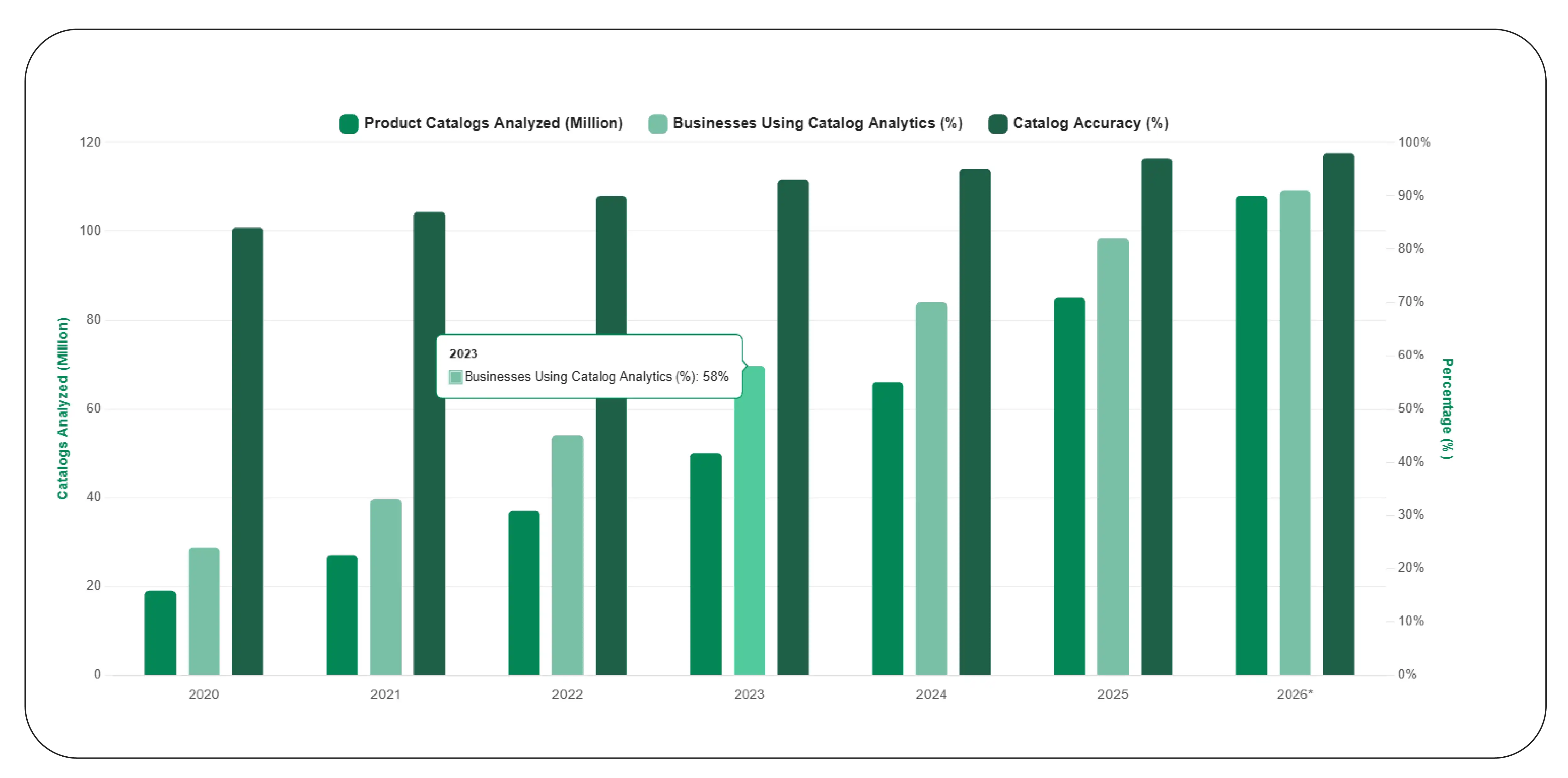
Supermarket Catalog Intelligence Growth (2020–2026)
| Year |
Product Catalogs Analyzed (Million) |
Businesses Using Catalog Analytics |
Catalog Accuracy |
| 2020 |
19 |
24% |
84% |
| 2021 |
27 |
33% |
87% |
| 2022 |
37 |
45% |
90% |
| 2023 |
50 |
58% |
93% |
| 2024 |
66 |
70% |
95% |
| 2025 |
85 |
82% |
97% |
| 2026* |
108 |
91% |
98% |
*Illustrative industry estimates based on retail catalog analytics and eCommerce adoption trends.
Comprehensive catalog intelligence also supports product development, assortment planning, and supplier collaboration. Category managers identify missing products, manufacturers benchmark brand presence, and retailers optimize digital merchandising based on competitor assortment. As supermarket catalogs continue expanding online, automated catalog intelligence provides organizations with a reliable foundation for strategic retail planning.
How Can Assortment Intelligence Strengthen Competitive Positioning?
Modern retailers compete on more than pricing alone. Product assortment, stock availability, category depth, and promotional visibility all influence purchasing decisions. Businesses that monitor these factors continuously can respond more effectively to changing customer demand and competitor activities.
Organizations increasingly rely on Shopee and Lotus's pricing data scraping in Malaysia together with Assortment and availability monitoring to gain a complete view of marketplace performance. Automated systems collect information about available products, out-of-stock items, seasonal assortments, promotional bundles, and inventory changes across multiple categories. This allows retailers and brands to identify assortment gaps, evaluate competitor strategies, and improve product availability.
Industry research indicates that businesses using assortment intelligence improve inventory planning while significantly reducing stock-related losses.
Major business applications
- Assortment comparison
- Stock availability tracking
- Product mix optimization
- Promotion monitoring
- Seasonal demand analysis
- Regional assortment benchmarking
- Inventory planning
- Category expansion analysis
- Supplier performance evaluation
- Executive reporting
Assortment Monitoring Trends (2020–2026)
| Year |
SKUs Monitored (Million) |
Businesses Using Assortment Analytics |
Inventory Planning Improvement |
| 2020 |
28 |
23% |
20% |
| 2021 |
39 |
32% |
29% |
| 2022 |
54 |
44% |
41% |
| 2023 |
73 |
57% |
54% |
| 2024 |
97 |
69% |
67% |
| 2025 |
126 |
82% |
79% |
| 2026* |
159 |
91% |
89% |
*Illustrative industry estimates based on Southeast Asian retail intelligence and digital inventory management trends.
Assortment intelligence also enables businesses to anticipate consumer demand before competitors react. Retailers can optimize shelf space, manufacturers identify underserved product categories, and distributors strengthen supply chain planning using continuously updated marketplace insights. By combining pricing intelligence with assortment monitoring, organizations develop a more complete understanding of competitive performance and build stronger strategies for long-term market growth.
How Can Marketplace Data Improve Business Intelligence?
Retail success depends on timely access to accurate marketplace information. Businesses that continuously monitor product listings, prices, inventory, and promotions can respond quickly to changing market conditions and consumer demand. Manual tracking is no longer practical when thousands of SKUs are updated every day.
Organizations increasingly use Web scraping Shopee and Lotus's product data to automate the collection of structured information from multiple product categories. This includes product names, brands, pricing, discounts, stock availability, seller information, customer ratings, and promotional campaigns. The collected data supports category management, pricing optimization, competitor analysis, demand forecasting, and executive reporting.
Industry analysts estimate that companies implementing automated marketplace intelligence improve operational efficiency while significantly reducing manual data collection costs.
Key business benefits
- Automated product monitoring
- SKU-level intelligence
- Competitor benchmarking
- Historical pricing analysis
- Promotion tracking
- Demand forecasting
- Inventory optimization
- Category performance evaluation
- Executive dashboards
- Faster strategic planning
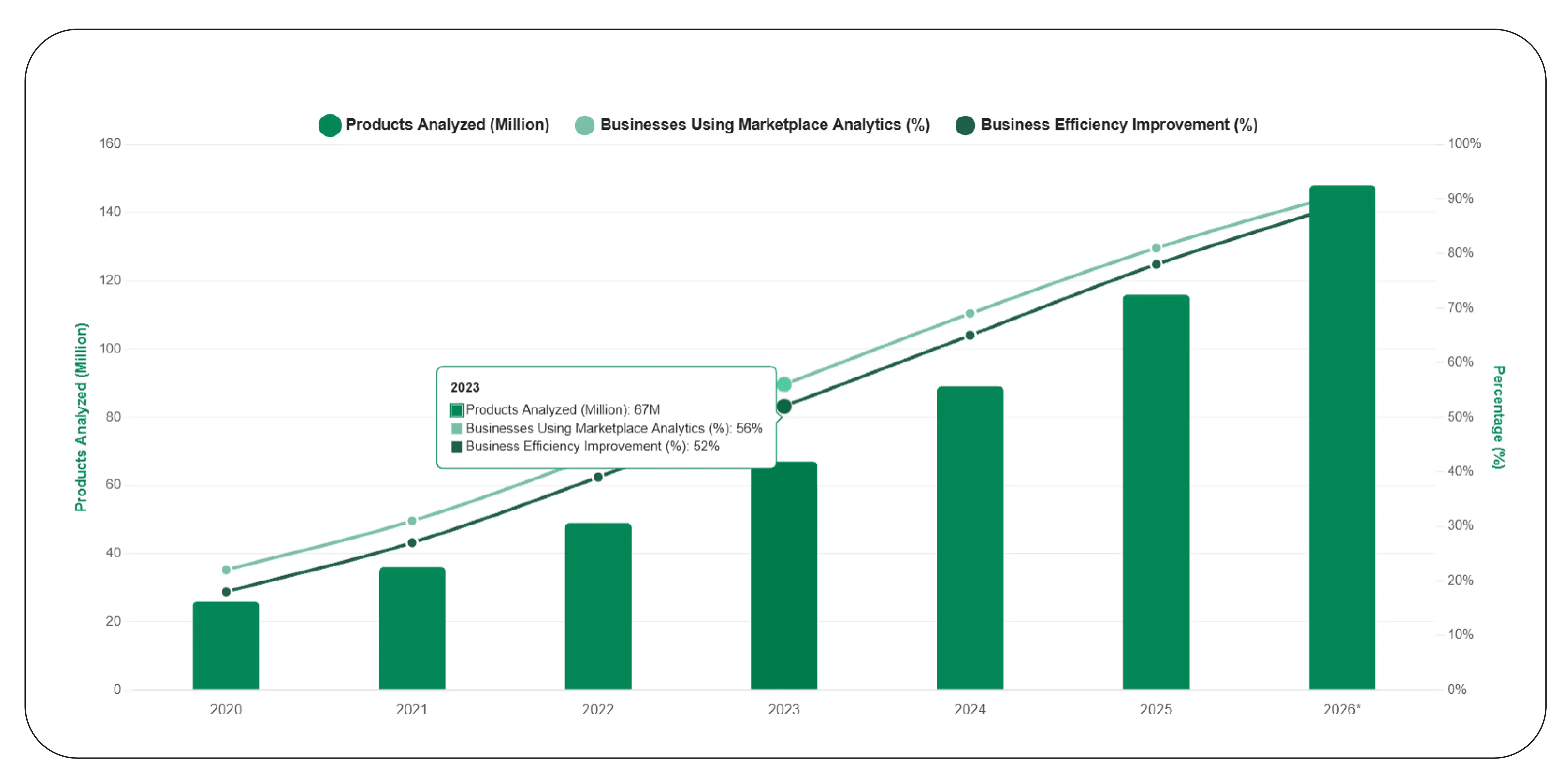
Marketplace Intelligence Growth (2020–2026)
| Year |
Products Analyzed (Million) |
Businesses Using Marketplace Analytics |
Business Efficiency Improvement |
| 2020 |
26 |
22% |
18% |
| 2021 |
36 |
31% |
27% |
| 2022 |
49 |
43% |
39% |
| 2023 |
67 |
56% |
52% |
| 2024 |
89 |
69% |
65% |
| 2025 |
116 |
81% |
78% |
| 2026* |
148 |
91% |
89% |
*Illustrative industry estimates based on retail automation and digital commerce adoption trends.
Marketplace intelligence also strengthens collaboration across pricing, procurement, merchandising, marketing, and executive teams. Every department gains access to consistent and reliable data, enabling organizations to identify growth opportunities, improve pricing strategies, optimize inventory, and make faster business decisions in Malaysia's competitive retail landscape.
How Can Data Insights Support Long-Term Retail Growth?
Retail businesses need more than raw product data. They require actionable insights that explain pricing movements, assortment changes, promotional trends, and marketplace performance. Converting large datasets into business intelligence allows organizations to build proactive strategies rather than reacting to market changes.
Modern analytics platforms deliver Shopee & Lotus's Product Pricing Data Insights together with Marketplace selling intelligence to help businesses understand product performance across multiple categories. These insights support pricing optimization, competitor benchmarking, assortment planning, supplier negotiations, and market expansion strategies. Automated dashboards simplify complex marketplace data into meaningful reports for executives and category managers.
Industry studies indicate that organizations using pricing intelligence platforms improve strategic planning while increasing responsiveness to market changes.
Business applications
- Pricing optimization
- Sales trend analysis
- Category benchmarking
- Marketplace comparison
- Promotion effectiveness evaluation
- Product assortment planning
- Inventory forecasting
- Supplier performance analysis
- Regional demand monitoring
- Executive business reporting
Retail Analytics Adoption (2020–2026)
| Year |
Businesses Using Retail Analytics |
Product Records Processed (Million) |
Decision-Making Efficiency |
| 2020 |
1,320 |
41 |
21% |
| 2021 |
1,790 |
56 |
30% |
| 2022 |
2,430 |
76 |
43% |
| 2023 |
3,290 |
102 |
56% |
| 2024 |
4,360 |
134 |
69% |
| 2025 |
5,650 |
172 |
81% |
| 2026* |
7,090 |
219 |
91% |
*Illustrative industry estimates based on enterprise adoption of retail intelligence technologies.
Businesses that invest in data-driven analytics gain a long-term competitive advantage. They identify opportunities earlier, respond to market shifts faster, improve customer satisfaction, and strengthen profitability through continuous marketplace visibility. As Malaysia's digital commerce ecosystem continues expanding, actionable pricing intelligence will remain essential for sustainable retail growth.
Why Choose Product Data Scrape?
Product Data Scrape provides enterprise-grade retail intelligence solutions that help businesses implement Pricing strategy services through accurate and scalable data extraction. With Scrape Shopee & Lotus's Product Prices in Malaysia, organizations gain real-time access to pricing, inventory, promotions, assortment, and competitor insights. Our customized solutions deliver API-ready datasets, automated monitoring, historical data, and advanced analytics that help retailers, manufacturers, FMCG brands, distributors, and market researchers make faster, data-driven decisions while improving operational efficiency and competitive positioning.
Conclusion
Malaysia's retail market is evolving rapidly, making continuous pricing and marketplace intelligence essential for sustainable growth. Businesses that leverage Shopee Data Scraping Service together with Scrape Shopee & Lotus's Product Prices in Malaysia gain the visibility needed to optimize pricing, monitor competitors, improve inventory planning, and identify emerging market opportunities.
Ready to transform marketplace data into business intelligence? Contact Product Data Scrape today for customized Shopee and Lotus's price monitoring solutions that deliver accurate, scalable, and real-time retail insights to accelerate your business growth.
FAQs
1. Why should businesses monitor Shopee and Lotus's product prices?
Monitoring product prices helps retailers analyze competitors, optimize pricing strategies, track promotions, improve inventory planning, and respond quickly to changing customer demand across Malaysia's digital retail market.
2. What product information can be extracted from these marketplaces?
Businesses can collect product names, prices, discounts, brands, stock availability, ratings, descriptions, package sizes, seller details, promotional offers, and category information for comprehensive market analysis.
3. How often should marketplace data be updated?
For maximum accuracy, businesses should collect data daily or in near real time to monitor pricing changes, inventory updates, promotional campaigns, and new product launches.
4. Can Product Data Scrape provide customized retail datasets?
Yes. Product Data Scrape offers customized web scraping solutions with flexible delivery formats, API integrations, historical datasets, automated updates, and scalable enterprise-grade retail intelligence services.
5. Which industries benefit most from marketplace pricing intelligence?
Retailers, FMCG brands, manufacturers, wholesalers, distributors, market research firms, consulting companies, eCommerce businesses, and pricing analysts benefit from accurate marketplace data for strategic decision-making.


 Singapore
 EMAIL
EMAIL
 PHONE
PHONE


.webp)
.webp "thumb")
.webp "thumb")








.webp)