Quick Overview
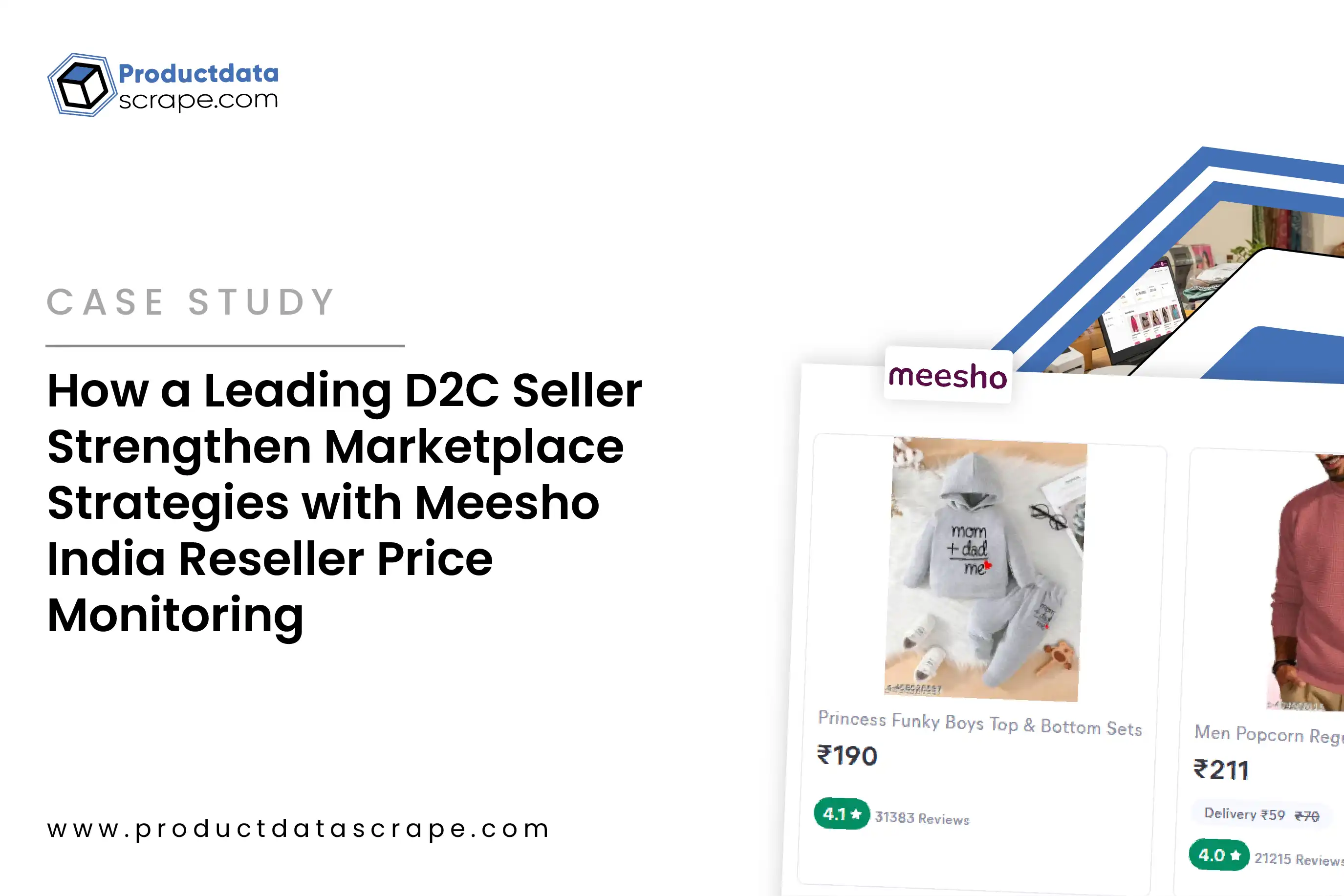
A leading Direct-to-Consumer (D2C) seller wanted better visibility into reseller pricing, competing product listings, and marketplace price variations on Meesho. Meesho India Reseller Price Monitoring was the proposed solution for organizing seller-level pricing information, identifying price differences, and supporting more informed marketplace decisions. Product Data Scrape designed the project around structured listing extraction, product matching, automated monitoring, and centralized reporting. The initiative focused on helping the brand understand reseller activity, strengthen pricing consistency, and improve competitive visibility. The project also established a foundation for scalable D2C brand analytics across marketplace listings.
Client Name / Industry: Confidential leading D2C seller operating in India's e-commerce and consumer-products industry.
Service / Duration: Marketplace reseller price intelligence, product-level listing extraction, seller benchmarking, and automated price monitoring. Project duration: Not disclosed.
Key Impact Metrics: The proposed measurement framework covered three important indicators: reseller listing coverage, product-price matching accuracy, and price-monitoring update frequency. Actual improvement percentages require validation against project records.
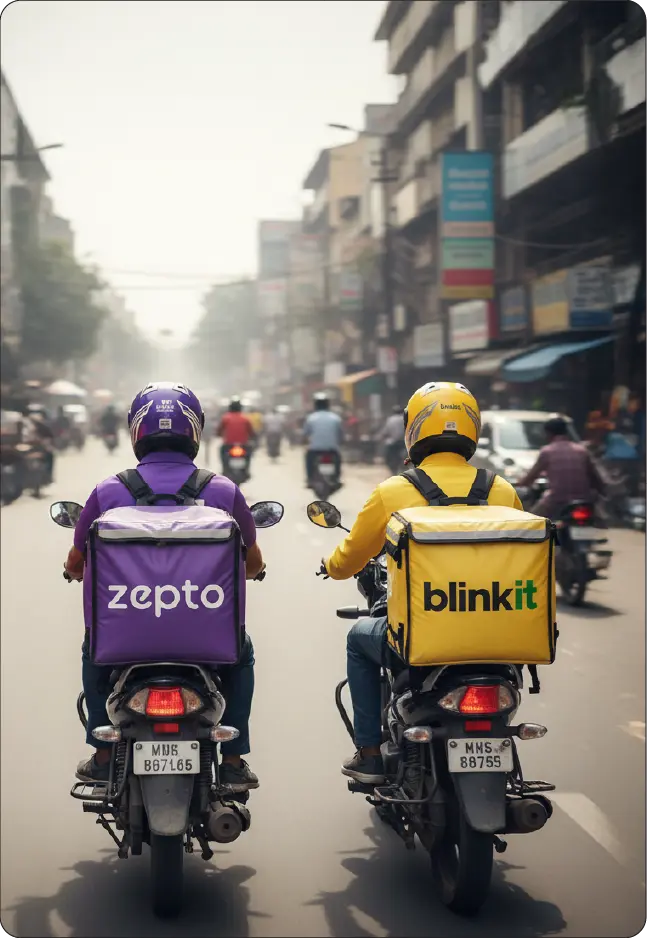
Meta-Backed Meesho Is Beating Amazon, Walmart in Race for Indian Shoppers - WSJ
The Client
India's e-commerce industry has become increasingly competitive as brands expand their digital distribution and consumers gain access to more online shopping options. According to Bain and Flipkart's How India Shops Online 2025 report, India's e-retail market reached approximately $60 billion in gross merchandise value in 2024, with more than 270 million online shoppers. The report also highlighted the growing importance of value-focused commerce and expanding digital participation.
The client was a D2C seller operating in a competitive consumer-products environment. Its marketplace presence required better visibility into how independently operated reseller listings represented its products and pricing.
Before the proposed partnership, the brand faced the challenge of understanding price differences across multiple seller listings. Product variations, inconsistent titles, changing discounts, and seller-level listing differences made manual comparisons difficult to scale.
The brand needed a structured approach to identifying matching products, comparing advertised prices, and tracking changes over time.
Meesho's marketplace ecosystem includes manufacturers, wholesalers, and traders, creating a diverse seller environment. Its official company filing also describes seller acquisition and retention as important to marketplace assortment and competition.
Product Data Scrape proposed D2C Competitor Listing Price Extraction to organize competitor listing information and Meesho seller data scraping to establish a consistent view of reseller activity.
Meesho cracks down on low-quality merchandise, delists 2 lakh products
Meesho Products List | List of Items you can Sell on Meesho
Sell Skin Care Products | How to Sell Skin Care Products Online on Meesho
Goals & Objectives
The project required a practical framework connecting business priorities with technical capabilities. The objective was to improve the brand's understanding of reseller pricing while creating a repeatable data collection process.
Improve pricing visibility: Identify differences between the brand's reference prices and reseller-listed prices.
Strengthen competitiveness: Understand how similar products were positioned across Meesho listings.
Support scalability: Develop a monitoring framework that could accommodate additional products and sellers.
Improve decision-making: Give pricing and marketplace teams organized information for reviewing reseller activity.
Automate the collection of publicly accessible product listing information through authorized methods.
Standardize product titles, SKUs, variants, seller information, and displayed prices.
Match identical or comparable products using product identifiers and attributes.
Integrate structured information into centralized reporting systems.
Support scheduled data refreshes and exception-based monitoring.
Enable historical comparisons to identify changes in advertised prices.
The proposed Meesho Product-Level Reseller Benchmark Scraping framework would help organize comparable product records and seller-level observations.
The project should be evaluated using the following measurable indicators:
Product coverage: Number and percentage of target SKUs successfully monitored.
Matching accuracy: Percentage of correctly matched product listings.
Data completeness: Percentage of records containing required seller and price fields.
Refresh performance: Time taken to complete scheduled monitoring cycles.
Price variance detection: Number of verified reseller price differences identified.
Exception resolution: Time required to investigate missing, mismatched, or inconsistent records.
The central Price monitoring objective was to create reliable, measurable visibility rather than rely on isolated marketplace observations.
The Core Challenge
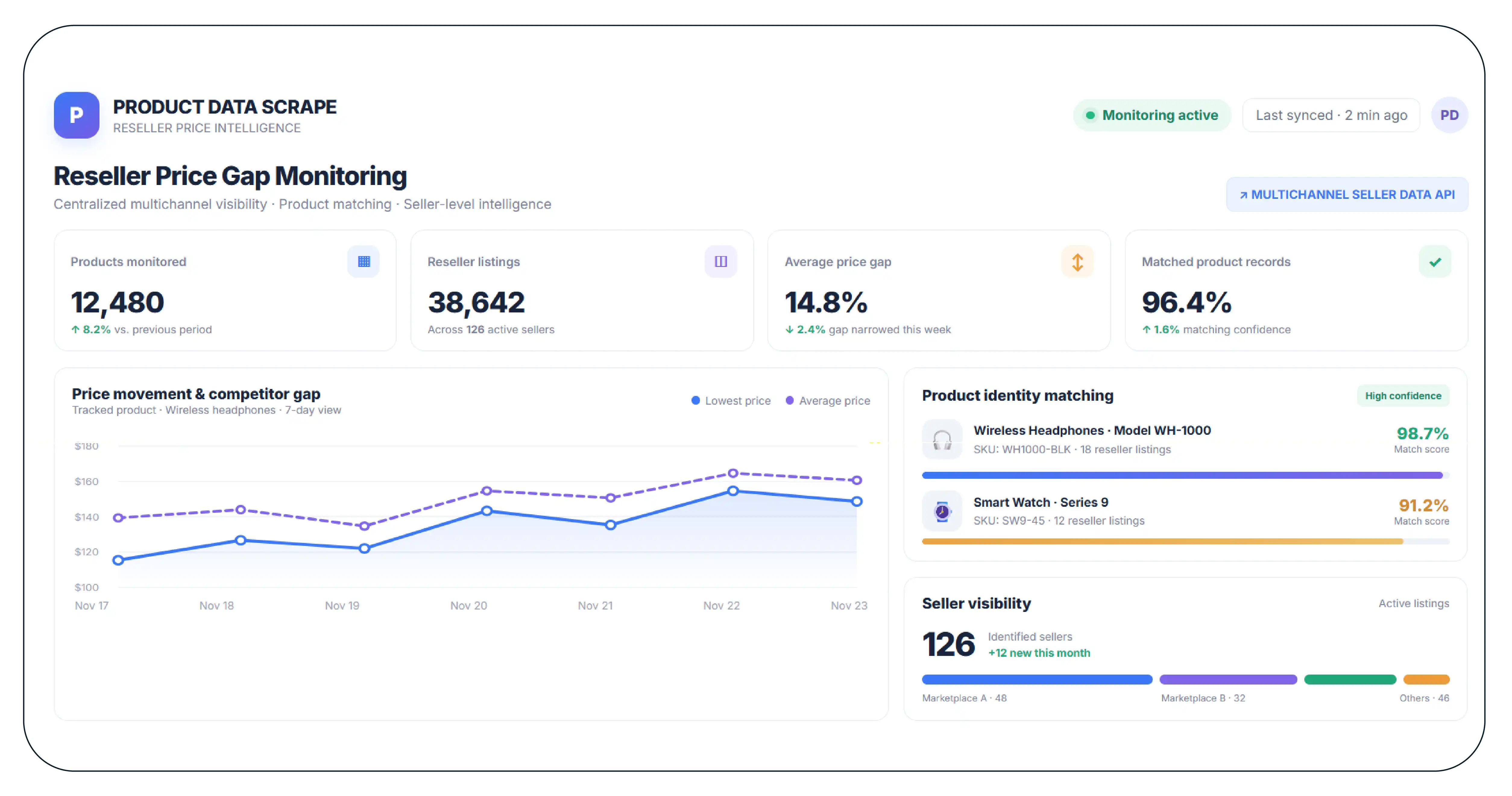
Monitoring reseller prices across marketplace listings involves more than collecting displayed prices. Different sellers can use different product titles, descriptions, images, and variant configurations, making accurate comparisons difficult.
The proposed project addressed five operational challenges.
Inconsistent product identification
The same product could appear under different listing titles or descriptions. Without standardized identifiers, teams risked comparing unrelated products or treating duplicate listings as separate products.
Frequent price changes
Advertised prices, discounts, and promotional offers could change between monitoring sessions. Manual checking could not provide a consistent historical record of these changes.
Seller-level visibility gaps
A product could have multiple reseller listings. Without organized seller identifiers, understanding which sellers listed a product and how their prices differed became difficult.
Data quality problems
Missing attributes, inconsistent product variants, incomplete seller information, and duplicate records could affect reporting accuracy.
Limited reporting efficiency
When information was collected manually, teams had to spend additional time consolidating records, checking inconsistencies, and preparing comparisons.
To address these issues, Product Data Scrape proposed D2C Product Reseller Price Gap Monitoring supported by a centralized Multichannel Seller Data API architecture.
The intended outcome was a standardized dataset that could help marketplace managers distinguish genuine pricing differences from product-matching errors.
Price Genie Auto Repricing - Track competitor prices & automate pricing updates | Shopify App Store
Size the Market - Fast, accurate pricing intelligence for e-commerce
How to Measure Product Data Quality: Ecommerce Scorecard
Our Solution
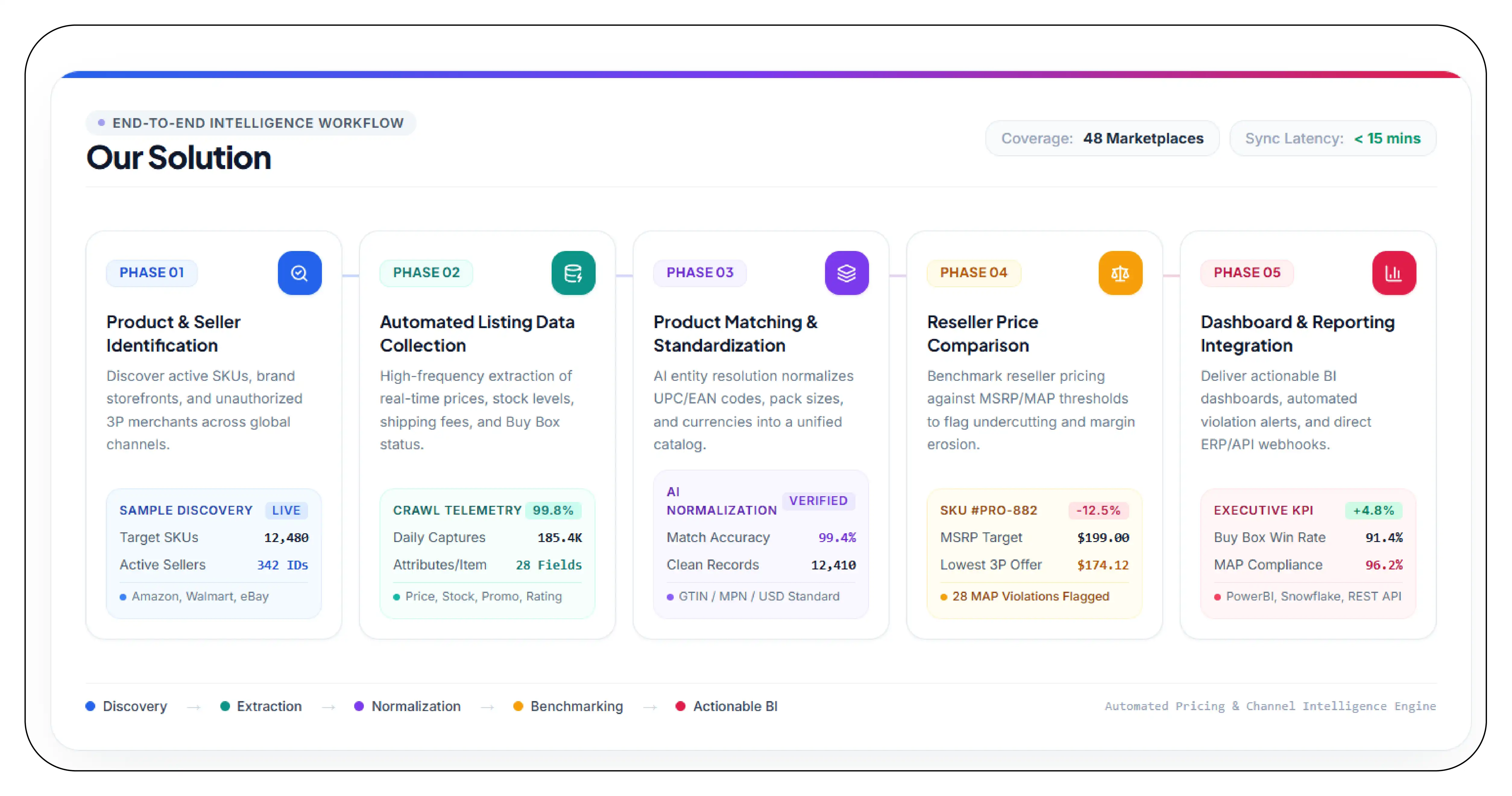
Product Data Scrape proposed a phased data intelligence framework to improve reseller price visibility, streamline listing comparisons, and support repeatable monitoring across Meesho.
Phase 1: Product and Seller Identification
The first phase focused on defining the target product catalog. The team would identify product names, SKUs, brand identifiers, categories, sizes, colors, and other relevant attributes.
The monitoring scope would include publicly accessible Meesho product listings and relevant seller information, subject to platform permissions and applicable access requirements.
Product identifiers and standardized attributes would provide the foundation for matching reseller listings against the client's reference catalog.
Phase 2: Automated Listing Data Collection
The second phase focused on collecting relevant marketplace information through a structured extraction process.
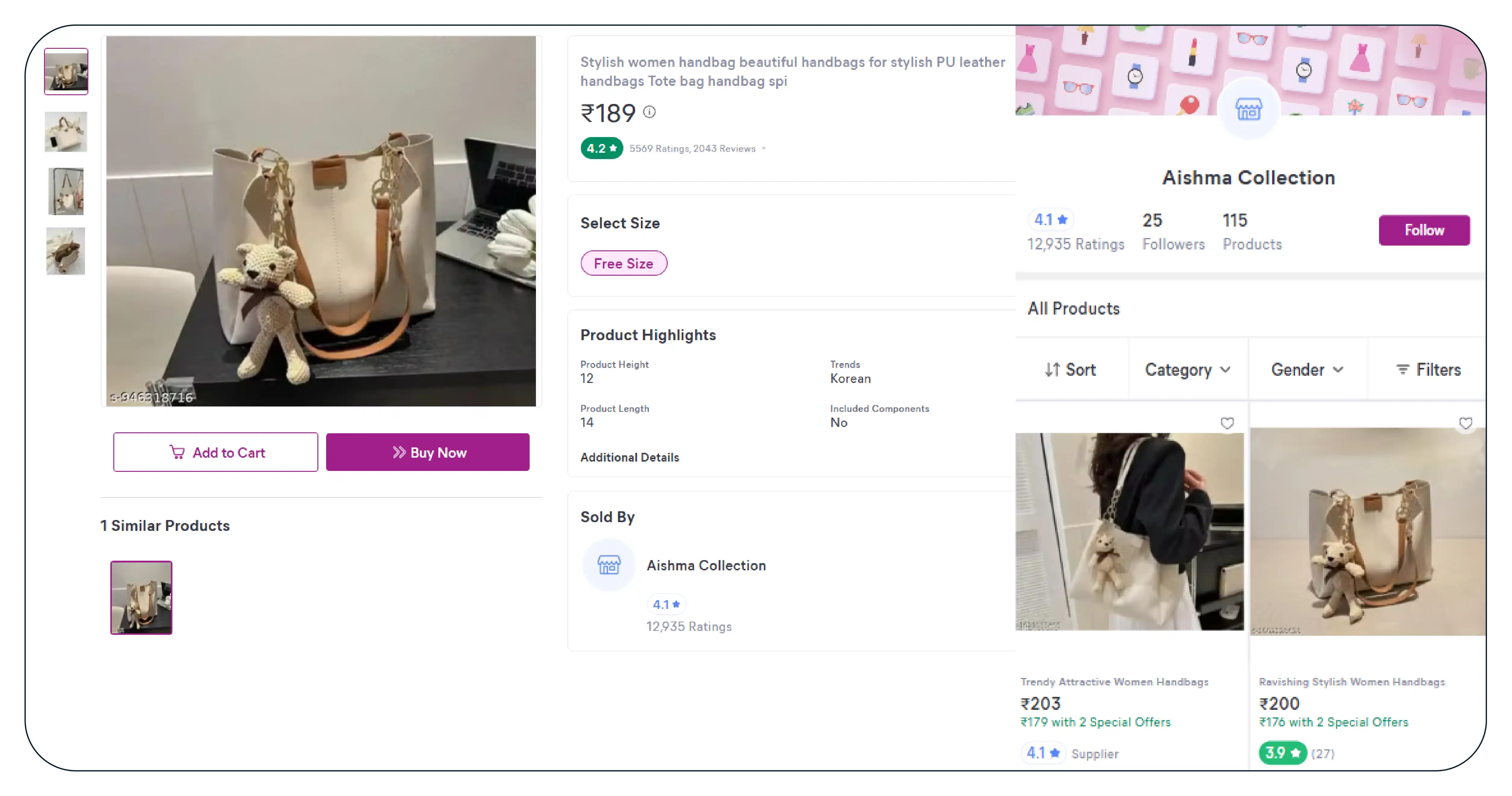
The proposed Meesho Multi-Seller Pricing Dataset would include:
Product title and listing identifier.
Brand and product category, where available.
Seller or supplier identifier, where available.
Displayed product price.
Discounted price and displayed discount, where available.
Product variants and availability indicators.
Product listing URL.
Collection timestamp.
The collection framework would capture the available information without treating unavailable or undisclosed fields as verified data.
Phase 3: Product Matching and Data Standardization
Collected records would undergo normalization and validation.
Product titles would be cleaned, duplicate listings identified, and product attributes standardized. Matching rules would use available SKU identifiers, brand information, product descriptions, and variant attributes.
This phase would help prevent misleading comparisons between products with different sizes, specifications, or configurations.
Phase 4: Reseller Price Comparison
Once product records were standardized, the system would compare corresponding reseller listings.
The proposed Meesho India Reseller Price Monitoring workflow would organize:
Reference product prices.
Reseller-listed prices.
Price differences between comparable listings.
Discount and promotion variations.
Seller-level price distribution.
Historical price observations.
For meaningful comparisons, the system would distinguish displayed selling prices from shipping charges, conditional discounts, and other costs whenever those details were available.
Phase 5: Dashboard and Reporting Integration
The final phase would make the collected information accessible through structured datasets, reporting dashboards, and API-based integrations where supported.
Marketplace teams could use the reporting layer to review pricing patterns, investigate unusual differences, and prioritize products requiring attention.
Historical records would also provide a foundation for identifying recurring reseller pricing patterns and changes in marketplace positioning.
Suggested technology and architecture: Python-based extraction workflows, scheduled data pipelines, structured JSON or CSV outputs, relational databases, validation rules, and dashboard integrations. These are proposed implementation components, not independently verified technologies deployed in this particular engagement.
Results & Key Metrics

The project established a measurement framework for evaluating reseller monitoring quality and operational performance. Since verified before-and-after project figures were not supplied, the following metrics describe the intended evaluation criteria rather than claimed achievements.
The following three primary performance indicators should be validated using project logs and client-approved reporting.
Product listing coverage: Percentage of the client's target product catalog represented in the collected marketplace dataset.
Product matching accuracy: Percentage of manually validated reseller listings correctly matched to the corresponding brand products.
Monitoring freshness: Percentage of scheduled collection cycles completed within the agreed update window.
Additional operational indicators could include duplicate-record rates, missing-field percentages, price-change detection frequency, and exception-resolution time.
The proposed India Brand-to-Reseller Price Intelligence framework would help bring these indicators together in a consistent reporting environment.
The proposed solution addressed the operational need for a structured view of reseller pricing and marketplace listings. Instead of depending on disconnected manual observations, the brand could use standardized records to review comparable product prices and seller-level listing information.
The Meesho India Reseller Price Monitoring framework was designed to support more consistent pricing reviews, improved product identification, and historical comparisons.
For marketplace managers, the key business value would be the ability to identify products requiring investigation, understand differences between comparable reseller listings, and prioritize pricing decisions using organized evidence.
Actual percentage improvements, productivity gains, and business outcomes should be added only after reviewing the client's validated project reports.
What Made Product Data Scrape Different?
Product Data Scrape's proposed approach focused on data reliability, product-level intelligence, and scalable marketplace monitoring rather than simple price collection.
The Meesho SKU Price Benchmark Dataset framework would connect product identifiers with reseller listings, helping teams compare relevant products using standardized attributes.
Its key differentiators included:
Structured product matching: Attribute-based comparison to reduce incorrect product associations.
Automated validation: Rules to identify duplicate, incomplete, or inconsistent records.
Seller-level intelligence: Organized visibility into available reseller listing information.
Historical tracking: Timestamped records to support price comparisons over time.
Flexible integration: Structured datasets designed for reporting and compatible downstream systems.
The Meesho India Reseller Price Monitoring approach emphasized traceable observations, transparent data quality, and actionable marketplace intelligence.
Client's Testimonial
"Product Data Scrape helped us establish a more structured approach to monitoring reseller pricing and marketplace listings on Meesho. The organized product-level data and seller comparisons made it easier to review pricing differences, identify listing inconsistencies, and understand marketplace activity. The solution also provided a useful foundation for improving our pricing analysis and strengthening our e-commerce monitoring strategy. We appreciate the team's focus on data accuracy, structured reporting, and scalable marketplace intelligence."
— Head of E-commerce & Marketplace Operations, Leading D2C Brand
Conclusion
Marketplace competitiveness requires more than knowing a brand's listed price. D2C sellers need reliable visibility into reseller listings, product-level differences, and changing marketplace conditions.
The proposed Meesho Product Data Scraper framework demonstrates how structured product extraction, seller identification, product matching, and automated reporting can support more informed marketplace decisions.
With Meesho India Reseller Price Monitoring, Product Data Scrape aims to help brands establish a scalable approach to reseller price intelligence, improve monitoring consistency, and identify pricing patterns that deserve attention.
Want to strengthen your marketplace intelligence? Partner with Product Data Scrape to develop structured reseller pricing datasets and scalable e-commerce monitoring solutions!
FAQs
1. What is Meesho India Reseller Price Monitoring?
It is a marketplace intelligence process for collecting and comparing publicly accessible reseller listing prices on Meesho. It helps D2C brands understand price variations, seller activity, and product positioning.
2. Why should D2C brands monitor reseller prices on Meesho?
Reseller monitoring helps brands identify pricing inconsistencies, review competing listings, and understand how products are represented across sellers. Meesho's official seller documentation describes a marketplace with manufacturers, wholesalers, and traders participating in its ecosystem. Meesho Supplier+1
3. What information can a Meesho reseller dataset contain?
Depending on data availability, it can include product titles, SKUs, seller identifiers, displayed prices, discounts, variants, listing URLs, and collection timestamps.
4. How does automated product matching improve pricing accuracy?
Product matching uses identifiers and product attributes to compare equivalent listings. It helps prevent incorrect comparisons between different sizes, colors, models, or product variants.
5. How can Product Data Scrape help D2C brands?
Product Data Scrape can develop structured marketplace data collection, product matching, reseller benchmarking, and reporting workflows. These services help brands build consistent pricing intelligence and make better-informed marketplace decisions.


 Singapore
 EMAIL
 PHONE











.webp)