Introduction
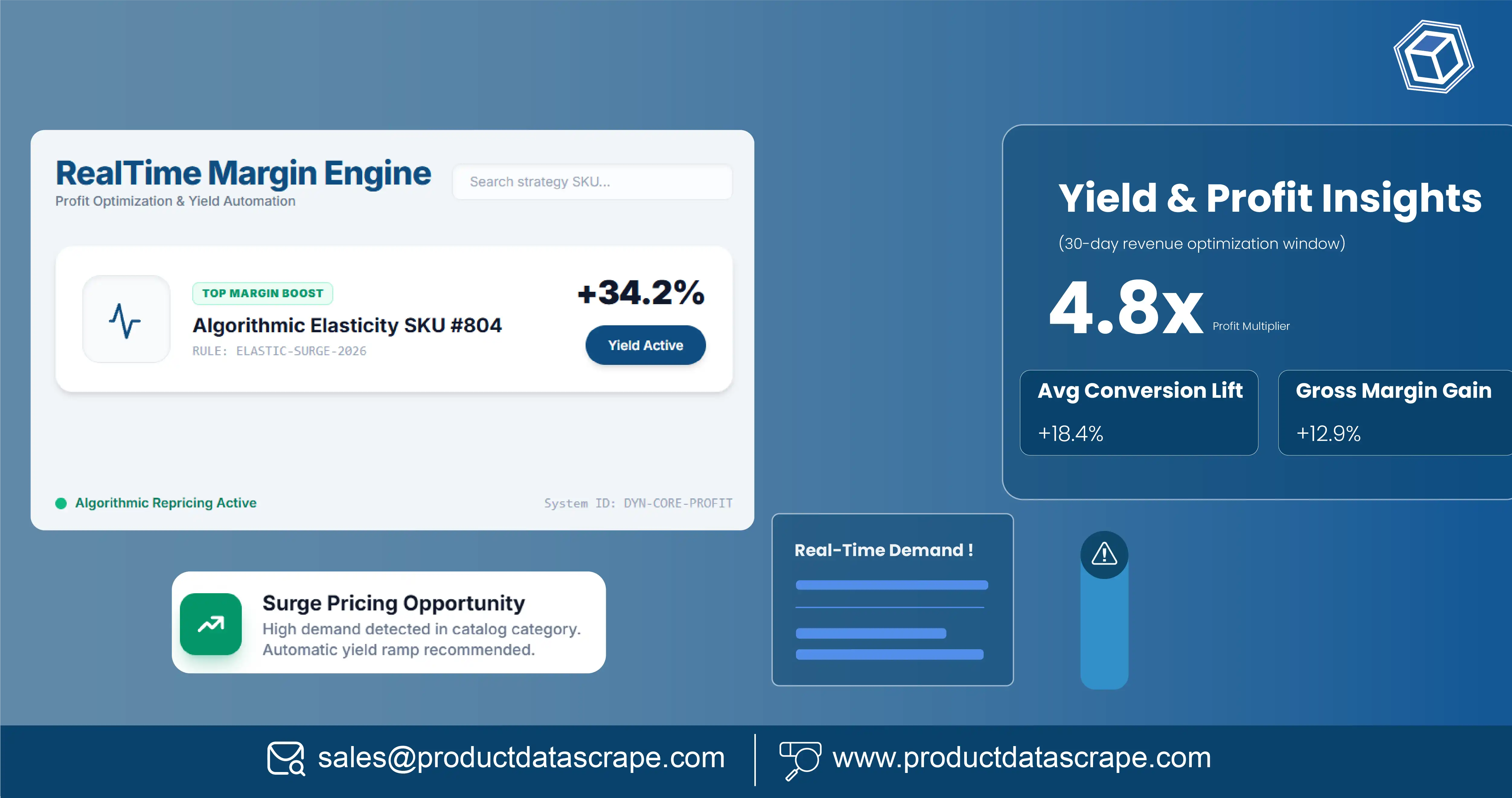
Businesses can increase sales and profitability by using real-time pricing data, competitor monitoring, and automated pricing intelligence. Dynamic pricing helps retailers respond instantly to market changes, improve price competitiveness, maximize margins, and deliver better customer experiences across online marketplaces.
Industry Insight: According to industry reports, over 70% of leading online retailers are expected to adopt AI-driven pricing technologies by 2026. Companies using automated pricing intelligence report revenue improvements of 10–25% and margin increases of up to 15% through data-driven pricing optimization.
The eCommerce industry changes every minute. Prices fluctuate due to competitor actions, inventory levels, customer demand, promotions, and seasonal events. Businesses relying on manual pricing updates often struggle to remain competitive, resulting in lost sales and shrinking profit margins.
Implementing Dynamic Pricing Strategies for E-commerce enables retailers and brands to automatically adjust prices based on real-time market conditions. Instead of reacting after competitors change prices, businesses can proactively optimize pricing decisions using accurate marketplace intelligence. Combined with Track AI shelf, organizations gain visibility into digital shelf performance, product rankings, pricing consistency, promotional activity, and competitor positioning across multiple online marketplaces.
For eCommerce managers, pricing analysts, marketplace teams, and retail decision-makers seeking higher profitability, automated pricing intelligence provides a scalable solution to monitor thousands of products simultaneously. It reduces manual effort, improves pricing accuracy, and supports faster decision-making.
This guide explains how real-time pricing intelligence, AI-powered analytics, historical pricing trends, and marketplace monitoring help businesses maximize sales, improve customer satisfaction, and strengthen competitive positioning from 2020 through 2026.
How Can Businesses Build Smarter Pricing Decisions with Automated Market Data?
Pricing decisions are only as accurate as the data supporting them. Modern retailers manage thousands of SKUs across multiple marketplaces, making manual price tracking nearly impossible. Automated data collection provides continuous visibility into competitor pricing, stock availability, promotional campaigns, and product positioning.
Using Dynamic Pricing Data Scraping, businesses collect fresh pricing information from online marketplaces at scheduled intervals. This allows pricing teams to react immediately to market changes instead of waiting for manual reports. When integrated with Digital Shelf Analytics, organizations can evaluate product visibility, search rankings, Buy Box performance, content quality, ratings, and promotional effectiveness alongside pricing intelligence.
This unified approach enables businesses to understand not only what competitors charge but also why certain products outperform others. Pricing becomes a strategic advantage instead of a reactive process.
Benefits of automated pricing intelligence
- Monitor competitor prices continuously.
- Detect promotional pricing instantly.
- Improve pricing consistency.
- Track stock availability.
- Measure digital shelf visibility.
- Optimize pricing strategies faster.
- Improve profit margins.
- Reduce manual monitoring efforts.
Dynamic Pricing Adoption (2020–2026)
| Year |
Retailers Using Automated Pricing |
Average Revenue Improvement |
| 2020 |
28% |
5% |
| 2021 |
35% |
7% |
| 2022 |
44% |
9% |
| 2023 |
53% |
12% |
| 2024 |
63% |
15% |
| 2025 |
72% |
18% |
| 2026* |
80% |
22% |
*Projected industry estimates.
Businesses adopting automated pricing intelligence gain faster market visibility, improved pricing precision, and stronger competitive positioning across rapidly changing online marketplaces.
Why Is Artificial Intelligence Changing Modern Pricing Strategies?
Artificial intelligence has transformed pricing from a manual activity into a predictive business function. Instead of simply matching competitor prices, AI evaluates demand, customer behavior, inventory levels, seasonality, competitor movements, and promotional performance to recommend the most profitable pricing decisions.
AI-Powered Dynamic Pricing Analytics enables businesses to analyze millions of pricing signals in real time. Machine learning models continuously evaluate changing market conditions and recommend price adjustments that maximize both revenue and profitability. Rather than relying on historical assumptions, pricing becomes adaptive and data driven.
AI also reduces pricing errors by identifying unusual price fluctuations, detecting competitor discounting patterns, and forecasting future pricing opportunities. This allows retailers to remain competitive without sacrificing margins unnecessarily.
Advantages of AI-driven pricing
- Faster pricing decisions.
- Improved demand forecasting.
- Better profit optimization.
- Automated competitor analysis.
- Smarter promotional planning.
- Reduced pricing errors.
- Higher conversion rates.
- Greater operational efficiency.
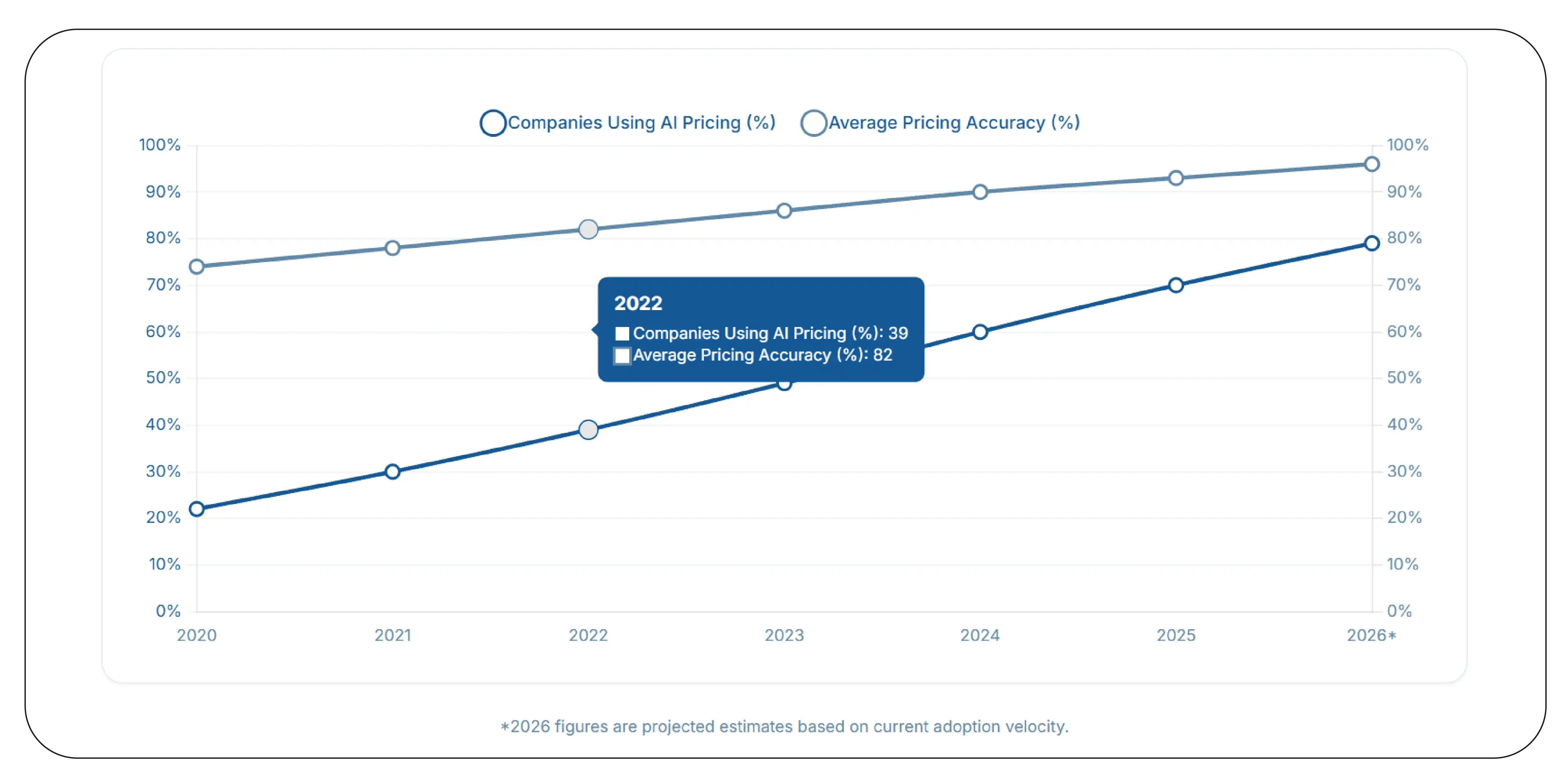
AI Pricing Technology Growth (2020–2026)
| Year |
Companies Using AI Pricing |
Average Pricing Accuracy |
| 2020 |
22% |
74% |
| 2021 |
30% |
78% |
| 2022 |
39% |
82% |
| 2023 |
49% |
86% |
| 2024 |
60% |
90% |
| 2025 |
70% |
93% |
| 2026* |
79% |
96% |
*Projected industry estimates.
As AI capabilities continue to evolve, businesses using intelligent pricing analytics will gain stronger competitive advantages through faster decision-making, better demand forecasting, and sustainable profit growth.
How Can Historical Pricing Improve Future Business Decisions?
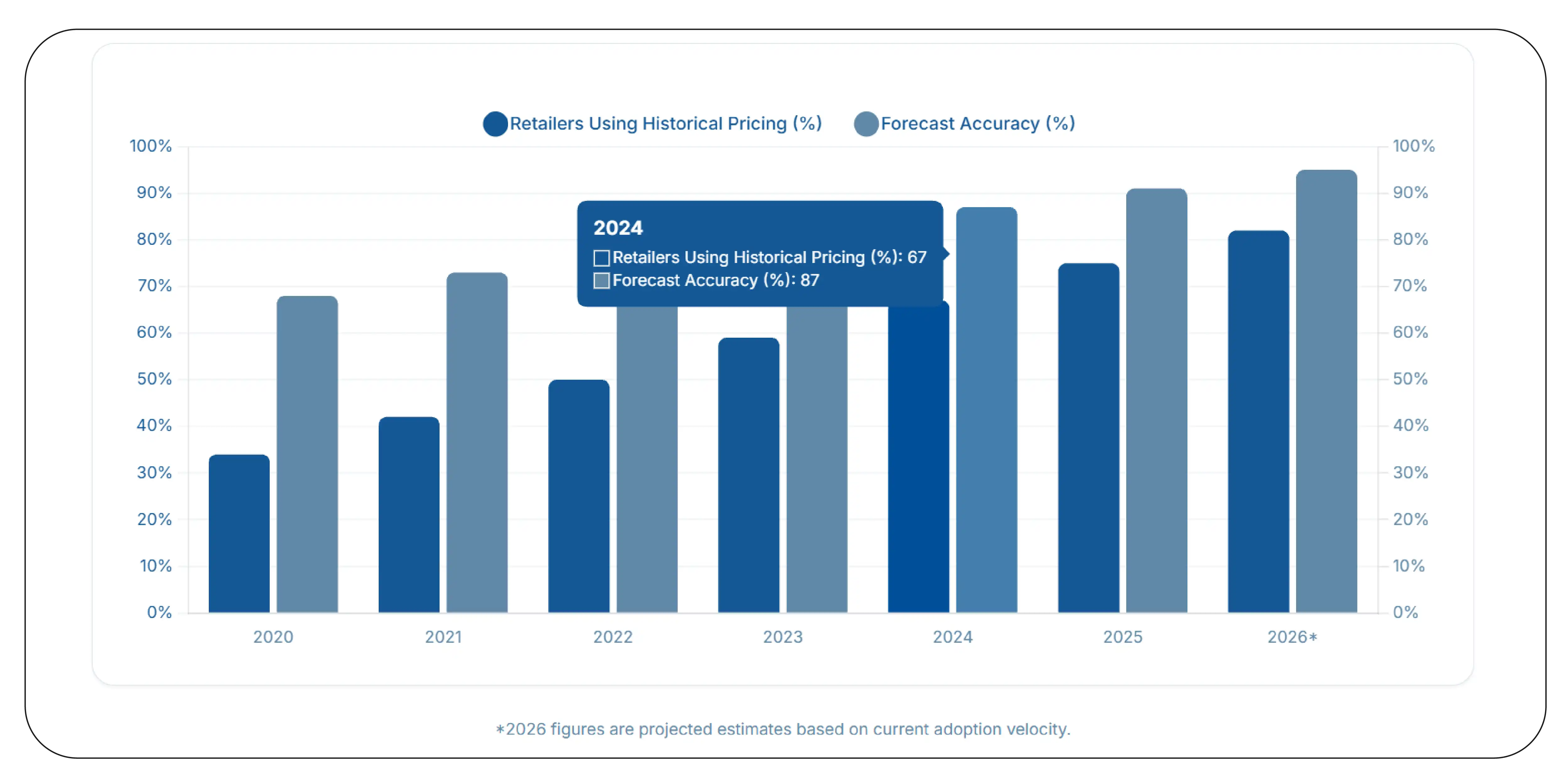
Successful pricing strategies are built on more than today's market conditions. Businesses that analyze long-term pricing patterns gain deeper insights into customer demand, competitor behavior, and seasonal trends. Historical data helps organizations predict future pricing opportunities instead of simply reacting to market changes.
Using Historical Price Data for Pricing Strategy, retailers can compare pricing movements across months and years, identify recurring promotional cycles, evaluate competitor discount frequency, and optimize future campaigns. Historical datasets also support forecasting models that improve inventory planning and revenue optimization.
Another growing application is AI training data. Machine learning algorithms require high-quality historical datasets to recognize pricing patterns, forecast demand, and recommend profitable pricing decisions. The more comprehensive the pricing history, the more accurate AI-driven recommendations become. Businesses can also evaluate how pricing changes affect customer conversions, average order value, and overall profitability.
Benefits of historical pricing analysis
- Identify seasonal pricing patterns.
- Improve demand forecasting.
- Optimize promotional timing.
- Measure competitor pricing history.
- Support inventory planning.
- Train predictive pricing models.
- Improve long-term profitability.
Historical Pricing Data Growth (2020–2026)
| Year |
Retailers Using Historical Pricing |
Forecast Accuracy |
| 2020 |
34% |
68% |
| 2021 |
42% |
73% |
| 2022 |
50% |
78% |
| 2023 |
59% |
83% |
| 2024 |
67% |
87% |
| 2025 |
75% |
91% |
| 2026* |
82% |
95% |
*Projected industry estimates.
Businesses leveraging historical pricing intelligence consistently improve forecasting accuracy, pricing precision, and long-term strategic planning while reducing pricing risks in competitive markets.
Why Is Continuous Market Visibility Critical for Pricing Success?
Online prices can change multiple times within a single day. Competitors launch promotions, inventory levels fluctuate, and customer demand shifts rapidly. Businesses relying on delayed reports often miss valuable opportunities and struggle to maintain competitive pricing.
Implementing Real-Time Ecommerce Price Monitoring enables organizations to monitor competitor prices continuously across marketplaces, brand websites, and retailer platforms. Automated alerts notify pricing teams immediately whenever significant price changes occur, allowing faster reactions that protect revenue and market share.
Real-time monitoring also helps identify unauthorized discounts, pricing anomalies, stock shortages, and promotional campaigns before they affect customer purchasing behavior. Instead of manually checking hundreds of websites, businesses receive accurate pricing intelligence through automated dashboards and reports.
Advantages of continuous monitoring
- Detect price changes instantly.
- Respond to competitor promotions faster.
- Improve pricing consistency.
- Reduce manual tracking.
- Protect profit margins.
- Monitor inventory availability.
- Strengthen pricing governance.
- Support faster business decisions.
Real-Time Monitoring Adoption (2020–2026)
| Year |
Businesses Monitoring Prices Daily |
Average Pricing Response Time |
| 2020 |
31% |
18 Hours |
| 2021 |
39% |
14 Hours |
| 2022 |
48% |
10 Hours |
| 2023 |
58% |
7 Hours |
| 2024 |
67% |
5 Hours |
| 2025 |
75% |
3 Hours |
| 2026* |
84% |
Less than 2 Hours |
*Projected industry estimates.
Continuous pricing visibility allows businesses to stay competitive, improve customer satisfaction, and maximize profitability in rapidly changing digital marketplaces.
How Can Trend Analysis Shape Long-Term Pricing Strategies?
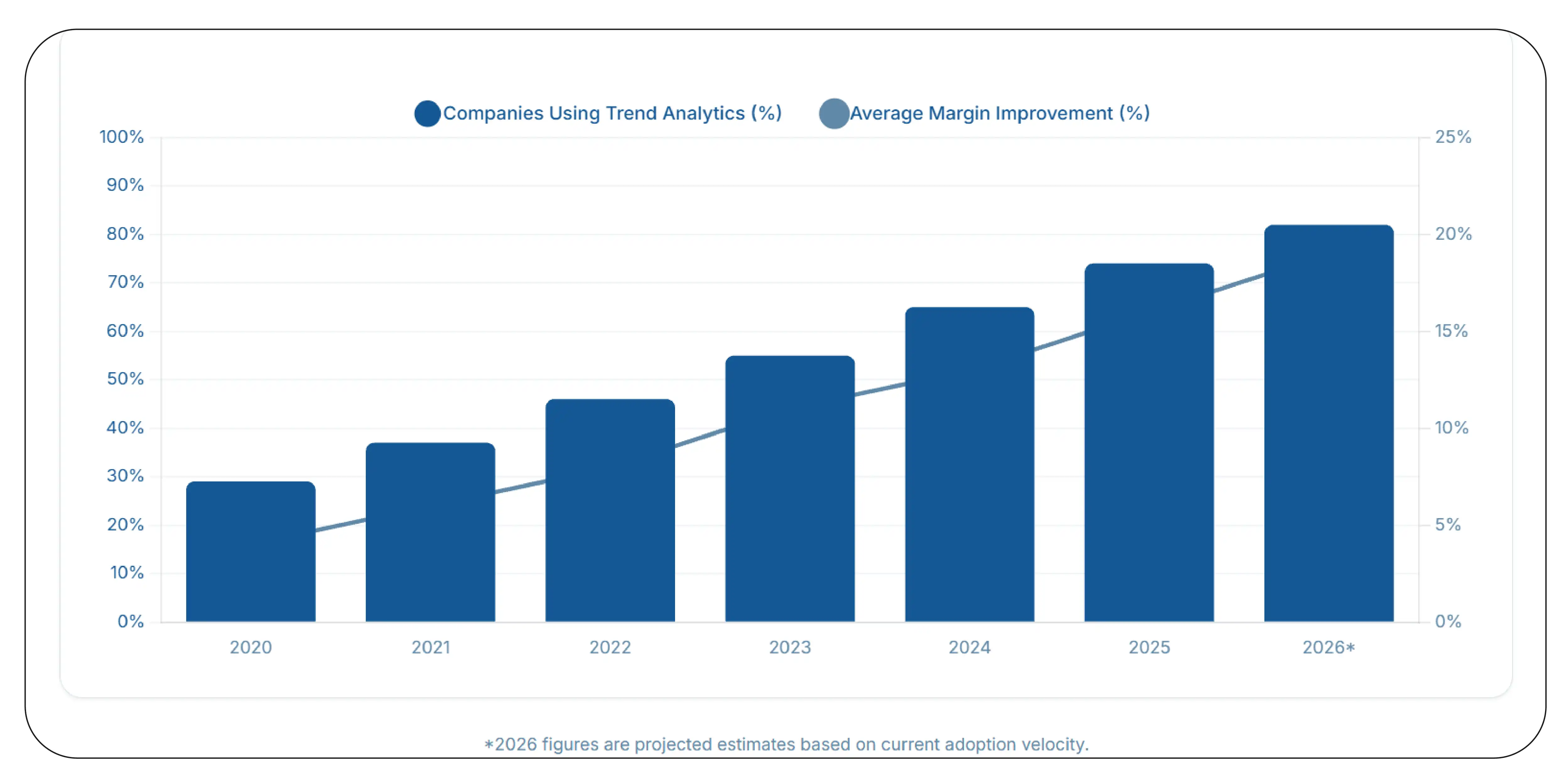
Pricing decisions should consider both immediate market conditions and long-term competitive trends. Understanding how prices evolve over time enables businesses to create sustainable pricing strategies that balance profitability with customer expectations.
Using Ecommerce Price Trend Analysis, organizations evaluate long-term pricing movements across brands, competitors, categories, and marketplaces. These insights reveal seasonal fluctuations, competitor pricing patterns, demand cycles, and promotional effectiveness. Businesses can identify which products require dynamic pricing adjustments and which maintain stable pricing throughout the year.
Many retailers also rely on Technology Guides to understand emerging pricing technologies, AI capabilities, automation frameworks, and analytics platforms. These resources help decision-makers adopt modern pricing tools that improve operational efficiency while reducing manual effort.
Best practices for pricing trend analysis
- Compare multi-year pricing history.
- Monitor category-level price movements.
- Evaluate seasonal demand cycles.
- Benchmark against competitors.
- Measure promotional effectiveness.
- Review pricing anomalies.
- Continuously refine pricing models.
Price Trend Analytics Growth (2020–2026)
| Year |
Companies Using Trend Analytics |
Average Margin Improvement |
| 2020 |
29% |
4% |
| 2021 |
37% |
6% |
| 2022 |
46% |
8% |
| 2023 |
55% |
11% |
| 2024 |
65% |
13% |
| 2025 |
74% |
16% |
| 2026* |
82% |
19% |
*Projected industry estimates.
Organizations that combine trend analysis with intelligent pricing tools gain stronger market visibility, improve strategic planning, and make more informed pricing decisions that support sustainable business growth.
How Can Businesses Turn Pricing Data into a Competitive Advantage?
Winning in eCommerce requires more than collecting pricing data. Businesses must convert raw information into actionable insights that improve pricing decisions, increase profitability, and strengthen competitive positioning. Automated intelligence platforms help organizations analyze competitor pricing, inventory changes, promotions, demand shifts, and customer buying patterns in one place.
By implementing Dynamic Pricing Intelligence, retailers gain real-time recommendations that support smarter pricing decisions across multiple marketplaces. Instead of relying on manual analysis, businesses can automatically identify pricing opportunities, respond to competitor actions, and optimize promotions without sacrificing margins.
An effective pricing intelligence strategy also improves collaboration between pricing teams, marketing departments, sales managers, and business leaders. Shared dashboards and automated reports enable faster decision-making while ensuring pricing remains aligned with business objectives.
Steps to build an intelligent pricing strategy
- Automate competitor price collection.
- Monitor promotions continuously.
- Analyze historical pricing patterns.
- Track inventory availability.
- Identify pricing opportunities.
- Optimize promotional timing.
- Measure pricing performance regularly.
- Refine pricing models using analytics.
Pricing Intelligence Adoption (2020–2026)
| Year |
Companies Using Pricing Intelligence |
Average Margin Growth |
| 2020 |
30% |
5% |
| 2021 |
38% |
7% |
| 2022 |
47% |
9% |
| 2023 |
57% |
12% |
| 2024 |
67% |
15% |
| 2025 |
76% |
18% |
| 2026* |
84% |
22% |
*Projected industry estimates.
Organizations that adopt pricing intelligence gain better visibility into market dynamics, improve decision-making speed, and create sustainable competitive advantages in increasingly competitive eCommerce environments.
Why Choose Product Data Scrape?
Modern retailers need reliable pricing intelligence to stay ahead in competitive online markets. Product Data Scrape delivers automated Price scraping, competitor monitoring, digital shelf analytics, historical pricing datasets, inventory tracking, and real-time market insights across leading eCommerce platforms. By implementing Dynamic Pricing Strategies for E-commerce, businesses can optimize pricing decisions, improve profit margins, respond instantly to competitor actions, and enhance customer satisfaction. Scalable data collection, customizable reporting, and advanced analytics empower pricing teams to make confident, data-driven decisions that support long-term business growth while reducing manual effort and improving operational efficiency.
Conclusion
The future of eCommerce belongs to businesses that make pricing decisions using accurate, real-time market intelligence. Automated monitoring, predictive analytics, and competitive insights enable organizations to maximize profitability while maintaining pricing consistency across every sales channel. Combining E-commerce data scraping with Dynamic Pricing Strategies for E-commerce provides the visibility needed to react quickly to changing market conditions and customer demand.
Ready to transform your pricing strategy with real-time market intelligence? Contact Product Data Scrape today to implement automated pricing solutions, optimize profitability, and stay ahead of the competition!
FAQs
1. What are dynamic pricing strategies in eCommerce?
Dynamic pricing strategies automatically adjust product prices based on competitor pricing, customer demand, inventory levels, promotions, and market conditions to maximize revenue, profitability, and pricing competitiveness.
2. Why is real-time price monitoring important?
Real-time monitoring enables businesses to detect competitor price changes instantly, optimize pricing faster, improve customer experience, protect profit margins, and respond proactively to changing marketplace conditions.
3. How does pricing intelligence improve profitability?
Pricing intelligence analyzes competitor activity, historical trends, demand fluctuations, and promotions to recommend optimal prices that increase conversions, improve margins, and support long-term business growth.
4. Can AI improve pricing decisions?
Yes. AI evaluates millions of pricing signals, predicts market changes, recommends profitable pricing adjustments, improves forecasting accuracy, reduces manual effort, and supports faster business decision-making across online marketplaces.
5. How can businesses implement automated pricing solutions?
Businesses can partner with Product Data Scrape to automate pricing data collection, monitor competitors continuously, generate actionable insights, and build scalable pricing strategies that improve profitability and operational efficiency.


 Singapore
 EMAIL
EMAIL
 PHONE
PHONE










.webp)