Barcode Data Scraping

Executive Summary

The hardest problem in product data is not collecting it. It is knowing when two records describe the same product.

The same item appears on ten platforms under ten different titles, ten different images, and ten different listing IDs. "Same shampoo, 400 ml" is written a dozen ways. Without a shared identifier, matching them is guesswork — fuzzy title matching that is wrong often enough to corrupt any cross-platform analysis built on it. The barcode changes that. A GTIN, UPC, or EAN is a globally unique product identifier, and where it is available it turns an ambiguous matching problem into a lookup. It is the join key the entire product-data world runs on and most datasets lack.

This report covers barcode data scraping for identifier enrichment: what a barcode-enriched dataset provides, why it is the foundation of cross-platform matching, and what the data looks like.

This report is published by Product Data Scrape. Sample figures are illustrative of structure, not a live census.

Why Product Identity Is the Core Problem

Titles are not identity. "Brand X Shampoo 400ml Anti-Dandruff" on one platform and "Brand X Anti Dandruff Shampoo (400 ml)" on another are the same product with different strings. Title matching guesses; it does not know.

Every platform has its own listing ID. Internal IDs are platform-specific. They cannot join across platforms because each platform assigns its own.

The barcode is globally unique. A GTIN (the umbrella term for UPC, EAN, and similar) identifies a product uniquely across the world. Two listings with the same GTIN are the same product — a fact, not an inference.

Barcodes unlock everything downstream. Cross-platform price comparison, catalog deduplication, assortment matching, and inventory reconciliation all depend on knowing when two records are the same product. The barcode is what makes them reliable.

The Traps
The Traps

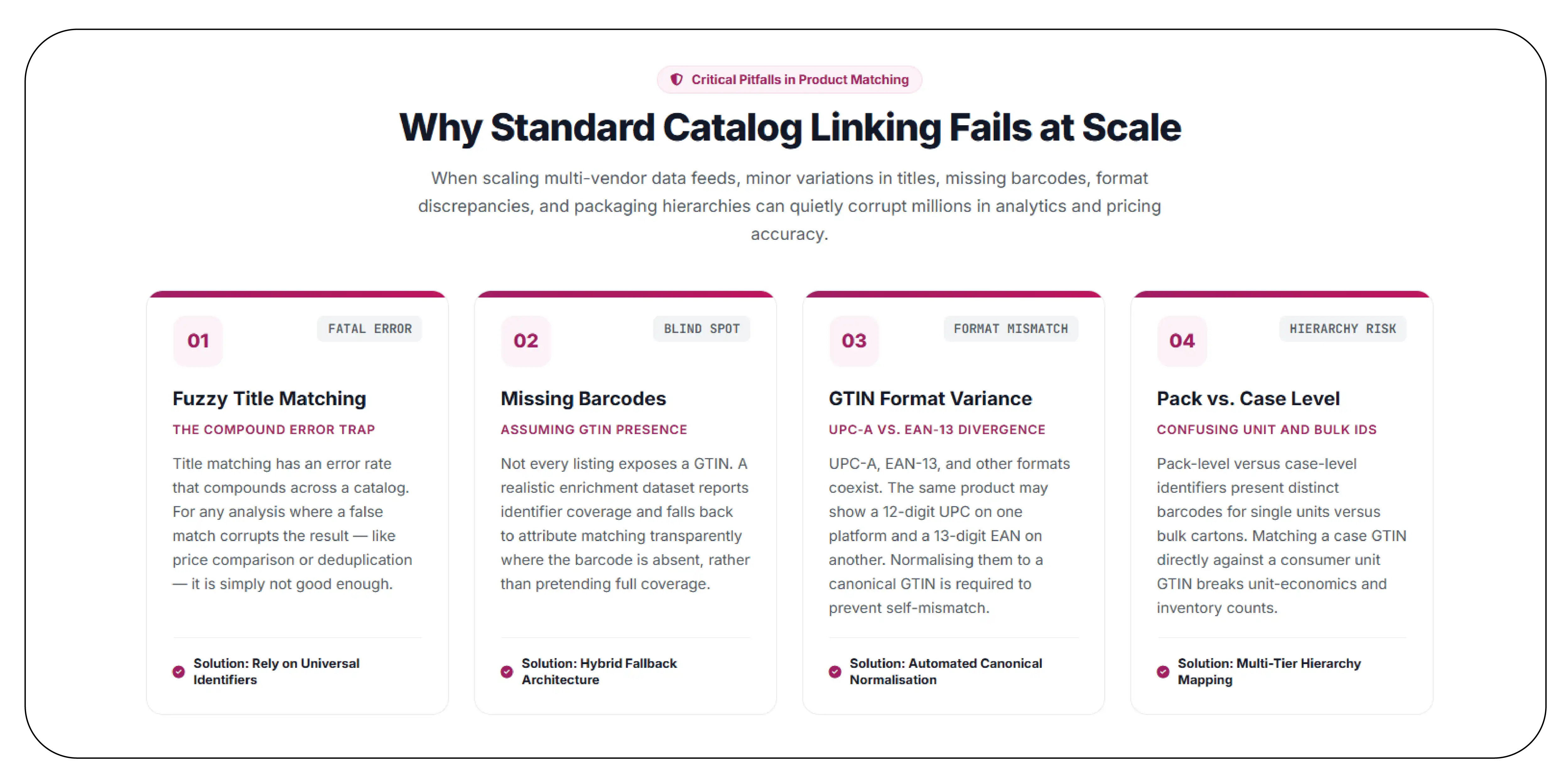
Trap one: relying on fuzzy title matching

Title matching has an error rate that compounds across a catalog. For any analysis where a false match corrupts the result — price comparison, dedup — it is not good enough. The identifier is.

Trap two: assuming barcodes are always present

Not every listing exposes a GTIN. A realistic enrichment dataset reports identifier coverage and falls back to attribute matching transparently where the barcode is absent, rather than pretending full coverage.

Trap three: ignoring GTIN format variance

UPC-A, EAN-13, and other formats coexist, and the same product may show a 12-digit UPC on one platform and a 13-digit EAN on another. Normalising them to a canonical GTIN is required, or the same product fails to match itself.

Trap four: pack-level versus case-level identifiers

A single unit and a multipack can carry different GTINs, and a case a third. Matching has to respect the level, or a single bottle gets matched to a six-pack.

What a Usable Barcode-Enriched Dataset Captures

Field group Fields
Identifiers gtin, upc, ean, canonical_gtin, gtin_format
Product title, brand, category, pack_size, net_quantity
Matching match_method, match_confidence, matched_platforms[]
Coverage gtin_present, fallback_used
Platform platform, platform_listing_id, price
Capture captured_at

canonical_gtin (the normalised join key) and the Matching group (with confidence and method) are what make the dataset a reliable identity resolver rather than a hopeful one.

Sample Data: One Product, Matched Across Platforms

An illustrative barcode-matched record joining the same product across three platforms.

Platform Platform listing ID Title (as listed) GTIN captured Canonical GTIN Price
Platform A A-88213 Brand X Shampoo 400ml Anti-Dandruff 8901234567890 (EAN-13) 8901234567890 249
Platform B B-4471 Brand X Anti Dandruff Shampoo (400 ml) 8901234567890 (EAN-13) 8901234567890 239
Platform C C-99120 Anti-Dandruff Shampoo Brand X 400ml — (no GTIN) 8901234567890 (attr fallback) 259

Illustrative figures.

Three different titles, three different listing IDs, one product — proven by the shared canonical GTIN. Platform C exposes no barcode, so the record transparently notes an attribute-based fallback match with lower confidence. This is what enables a true cross-platform price comparison: the 249 / 239 / 259 prices are known to be the same product, not three products that look similar.

The structured record:


{
  "canonical_gtin": "8901234567890",
  "product": {
    "title": "Brand X Anti-Dandruff Shampoo",
    "brand": "brand_x",
    "category": "haircare",
    "pack_size": "400 ml",
    "net_quantity": "400 ml"
  },
  "identifiers": {
    "gtin": "8901234567890",
    "ean": "8901234567890",
    "upc": null,
    "gtin_format": "EAN-13"
  },
  "matched_across": [
    {"platform": "platform_a", "listing_id": "A-88213", "price": 249, "match_method": "gtin", "confidence": 1.0},
    {"platform": "platform_b", "listing_id": "B-4471",  "price": 239, "match_method": "gtin", "confidence": 1.0},
    {"platform": "platform_c", "listing_id": "C-99120", "price": 259, "match_method": "attribute_fallback", "confidence": 0.82}
  ],
  "coverage": {"gtin_present_ratio": 0.67, "fallback_used": true},
  "captured_at": "2026-07-15T10:00:00+05:30"
}

The per-match match_method and confidence, and the honest gtin_present_ratio, are what let a downstream team trust the join — GTIN matches at confidence 1.0, the fallback flagged at 0.82 so it can be treated with appropriate caution.

What Barcode Enrichment Enables

Reliable cross-platform price comparison. Prices are compared for the same product, proven by GTIN, not guessed by title.

Catalog deduplication. Duplicate listings of one product collapse to a single canonical entry.

Assortment matching. A brand's SKUs match to marketplace listings by identifier, enabling accurate coverage and gap analysis.

Inventory reconciliation. Stock across channels reconciles against one canonical product identity.

Who Uses Barcode Data

Catalog and data teams resolve product identity across sources using GTINs as the canonical key.

Product-matching and comparison tools — the exact need behind "do you also get the barcode?" — build reliable cross-platform matches on identifiers rather than titles.

Marketplaces and aggregators deduplicate and unify catalogs.

Inventory and ERP systems reconcile stock across channels against a shared identity.

Limitations

Barcode coverage is incomplete; not all listings expose a GTIN, and enrichment reports coverage rather than assuming it. Attribute fallback carries lower confidence and is flagged. GTIN formats require normalisation, and pack-level identity must be respected. We capture publicly available identifiers and product data; sample figures illustrate structure rather than audited statistics.

About the Data

This report was produced using barcode data scraping methods from Product Data Scrape. We build GTIN-enriched product datasets across marketplaces — capturing UPC, EAN, and GTIN identifiers, normalising them to a canonical key, matching the same product across platforms with per-match confidence, and reporting identifier coverage honestly with transparent attribute fallback.

Delivered as JSON, CSV, or via API, as the identity layer beneath price comparison, deduplication, and assortment matching.

Need to match products across platforms reliably? Product Data Scrape will deliver a barcode-enriched sample on your categories, so the same product is matched by identifier — not guessed by title — across every platform you track.

Product Data Scrape — turning marketplace complexity into decision-ready data.

LATEST BLOG

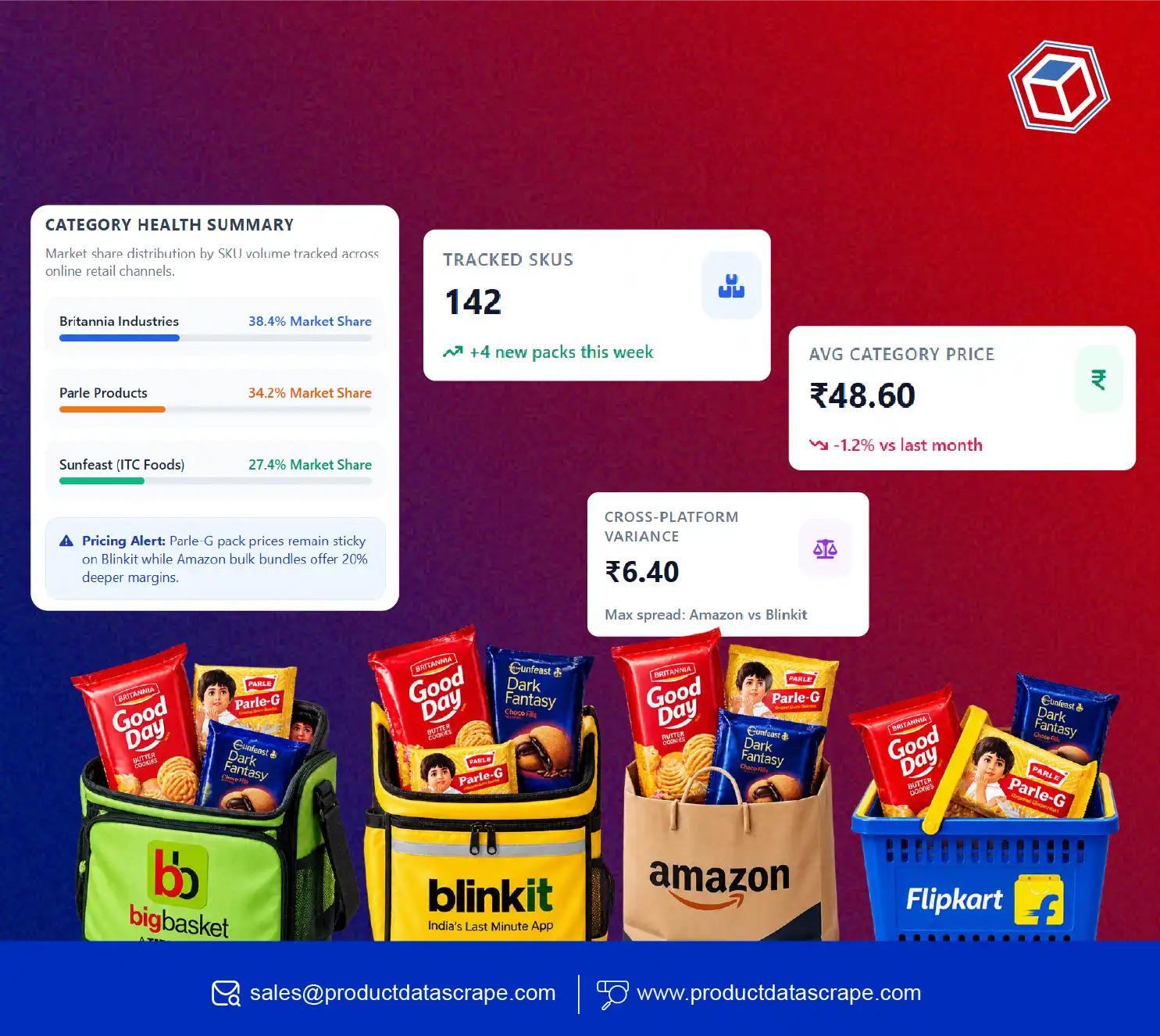
How Britannia, Parle, Sunfeast Market Analysis Dashboard Tracks BigBasket, Blinkit, Amazon, and Flipkart to Power BIFMCG Biscuit Category Pricing

Britannia, Parle, Sunfeast Market Analysis Dashboard tracks pricing, products, promotions, and competitor trends across leading online marketplaces.

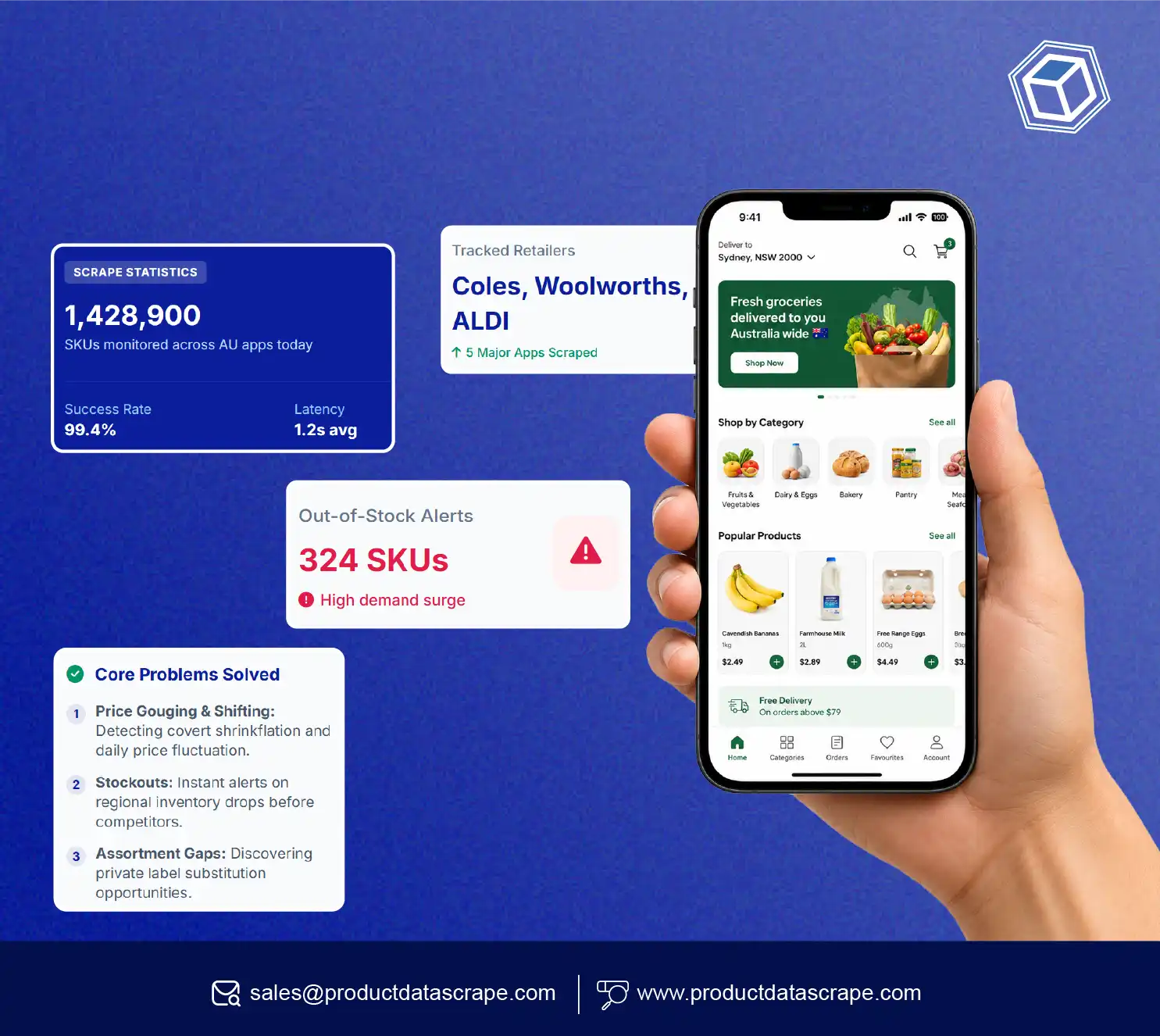
Why Australia Grocery app Data Scraping Is Essential for Solving Product Availability, Pricing, and Market Analysis Problems

Unlock smarter retail insights with Australia Grocery app Data Scraping for real-time pricing, inventory tracking, and competitive market intelligence.

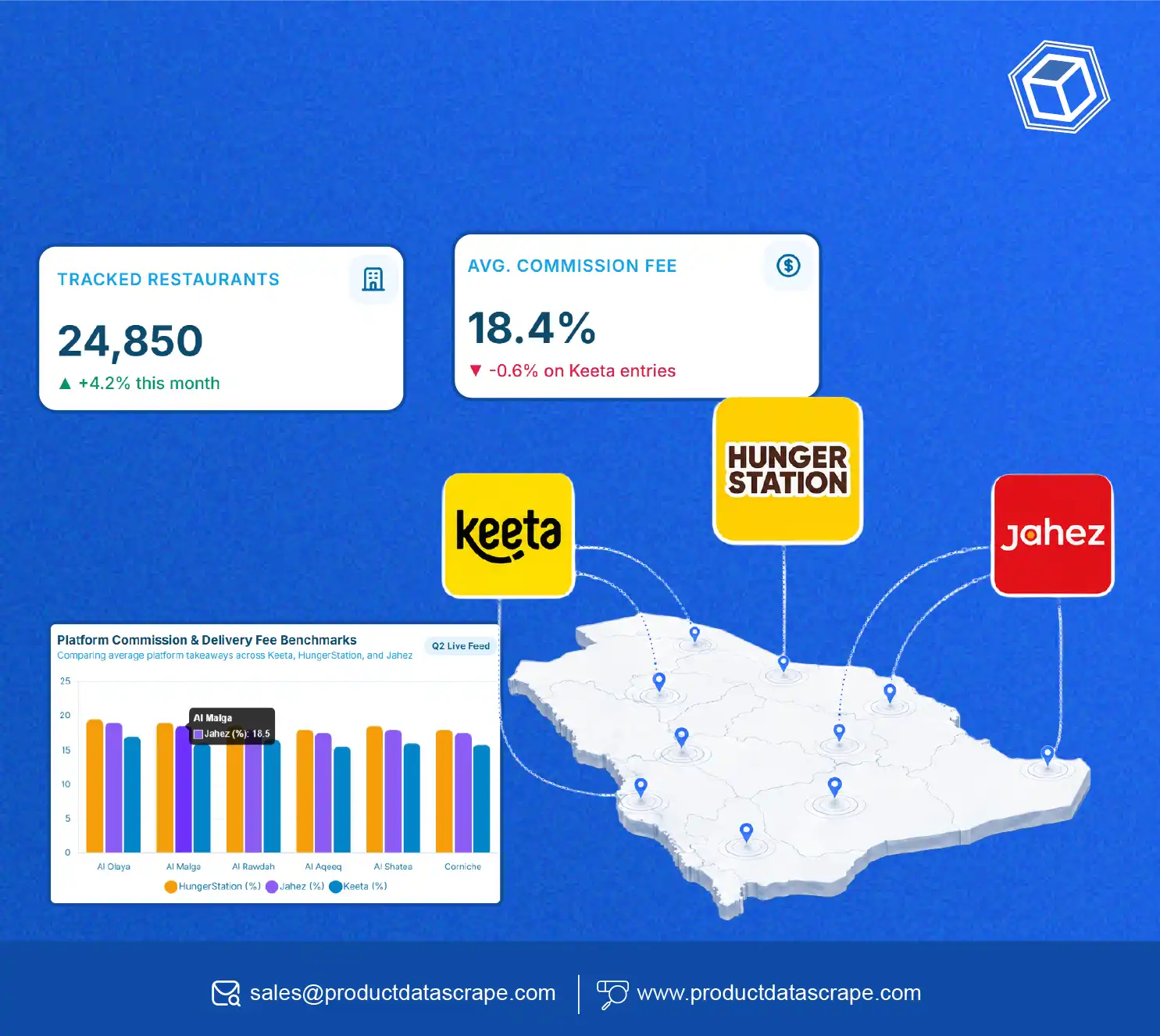
How Saudi F&B Market Intelligence Data Solves Menu, Fee, Rating & Location Intelligence Challenges Across Keeta, HungerStation, Jahez & Google Maps by City and Neighborhood

Saudi F&B Market Intelligence Data delivers insights into Keeta, HungerStation, Jahez, and Google Maps menus, fees, ratings, and neighborhood trends.

Case Studies

Discover our scraping success through detailed case studies across various industries and applications.

WHY CHOOSE US?

Product Data Scrape for Retail Web Scraping

Choose Product Data Scrape to access accurate data, enhance decision-making, and boost your online sales strategy effectively.

Reliable Insights

Reliable Insights

With our Retail Data scraping services, you gain reliable insights that empower you to make informed decisions based on accurate product data and market trends.

Data Efficiency

Data Efficiency

We help you extract Retail Data product data efficiently, streamlining your processes to ensure timely access to crucial market information and operational speed.

Market Adaptation

Market Adaptation

By leveraging our Retail Data scraping, you can quickly adapt to market changes, giving you a competitive edge with real-time analysis and responsive strategies.

Price Optimization

Price Optimization

Our Retail Data price monitoring tools enable you to stay competitive by adjusting prices dynamically, attracting customers while maximizing your profits effectively.

Competitive Edge

Competitive Edge

THIS IS YOUR KEY BENEFIT.
With our competitive price tracking, you can analyze market positioning and adjust your strategies, responding effectively to competitor actions and pricing in real-time.

Feedback Analysis

Feedback Analysis

Utilizing our Retail Data review scraping, you gain valuable customer insights that help you improve product offerings and enhance overall customer satisfaction.

5-Step Proven Methodology

How We Scrape E-Commerce Data?

01
Identify Target Websites

Identify Target Websites

Begin by selecting the e-commerce websites you want to scrape, focusing on those that provide the most valuable data for your needs.

02
Select Data Points

Select Data Points

Determine the specific data points to extract, such as product names, prices, descriptions, and reviews, to ensure comprehensive insights.

03
Use Scraping Tools

Use Scraping Tools

Utilize web scraping tools or libraries to automate the data extraction process, ensuring efficiency and accuracy in gathering the desired information.

04
Data Cleaning

Data Cleaning

After extraction, clean the data to remove duplicates and irrelevant information, ensuring that the dataset is organized and useful for analysis.

05
Analyze Extracted Data

Analyze Extracted Data

Once cleaned, analyze the extracted e-commerce data to gain insights, identify trends, and make informed decisions that enhance your strategy.

Start Your Data Journey
99.9% Uptime
GDPR Compliant
Real-time API

See the results that matter

Read inspiring client journeys

Discover how our clients achieved success with us.

6X

Conversion Rate Growth

“I used Product Data Scrape to extract Walmart fashion product data, and the results were outstanding. Real-time insights into pricing, trends, and inventory helped me refine my strategy and achieve a 6X increase in conversions. It gave me the competitive edge I needed in the fashion category.”

7X

Sales Velocity Boost

“Through Kroger sales data extraction with Product Data Scrape, we unlocked actionable pricing and promotion insights, achieving a 7X Sales Velocity Boost while maximizing conversions and driving sustainable growth.”

"By using Product Data Scrape to scrape GoPuff prices data, we accelerated our pricing decisions by 4X, improving margins and customer satisfaction."

"Implementing liquor data scraping allowed us to track competitor offerings and optimize assortments. Within three quarters, we achieved a 3X improvement in sales!"

Resource Hub: Explore the Latest Insights and Trends

The Resource Center offers up-to-date case studies, insightful blogs, detailed research reports, and engaging infographics to help you explore valuable insights and data-driven trends effectively.

Get In Touch

How Britannia, Parle, Sunfeast Market Analysis Dashboard Tracks BigBasket, Blinkit, Amazon, and Flipkart to Power BIFMCG Biscuit Category Pricing

Britannia, Parle, Sunfeast Market Analysis Dashboard tracks pricing, products, promotions, and competitor trends across leading online marketplaces.

Why Australia Grocery app Data Scraping Is Essential for Solving Product Availability, Pricing, and Market Analysis Problems

Unlock smarter retail insights with Australia Grocery app Data Scraping for real-time pricing, inventory tracking, and competitive market intelligence.

How Saudi F&B Market Intelligence Data Solves Menu, Fee, Rating & Location Intelligence Challenges Across Keeta, HungerStation, Jahez & Google Maps by City and Neighborhood

Saudi F&B Market Intelligence Data delivers insights into Keeta, HungerStation, Jahez, and Google Maps menus, fees, ratings, and neighborhood trends.

Leveraging Personalized Gifting Market Intelligence to Optimize Pricing, Trends, and Sales Performance

Personalized Gifting Market Intelligence helps brands track trends, pricing, competitors, and customer preferences to drive smarter gifting strategies.

How a Pet-Food Brand Monitored Subscription & Repeat-Purchase Pricing Using Pet Food Subscription Pricing Monitoring

Track recurring discounts, subscription pricing, and competitor offers with Pet Food Subscription Pricing Monitoring to boost pricing strategies and customer retention.

How Auto Accessories Fitment Data Mapping Improved Product Discovery and Reduced Return Rates for 10K SKUs

Boost catalog accuracy with Auto Accessories Fitment Data Mapping to improve compatibility, reduce returns, and enhance customer satisfaction.

Albertsons Grocery Delivery Scraper API - Market Intelligence, Inventory Monitoring, and Grocery Retail Benchmarking

ASDA Grocery Data Scraping helps track grocery prices, promotions, inventory, and competitor trends across the UK retail market.

Costco Alcohol & Liquor Price Data scraping to Track Consumer Buying Trends and Inventory Intelligence

Costco Alcohol & Liquor Price Data scraping helps brands track pricing, promotions, inventory trends, and competitor insights.

B&M Stores Pet Supplies Data Scraping for Market Research and Pet Product Trend Analysis in Retail Chains

B&M Stores Pet Supplies Data Scraping helps businesses collect pricing, stock, and product insights to optimize pet retail strategies.

Reducing Returns with Myntra AND AJIO Customer Review Datasets

Analyzed Myntra and AJIO customer review datasets to identify sizing issues, helping brands reduce garment return rates by 8% through data-driven insights.

Before vs After Web Scraping - How E-Commerce Brands Unlock Real Growth

Before vs After Web Scraping: See how e-commerce brands boost growth with real-time data, pricing insights, product tracking, and smarter digital decisions.

Scrape Data From Any Ecommerce Websites

Easily scrape data from any eCommerce website to track prices, monitor competitors, and analyze product trends in real time with Real Data API.

Fresh Citrus Price Wars - Coles vs Aldi — What Does the Data Say?

Fresh Citrus Price Wars — Coles vs Aldi: data-driven comparison of prices, trends, and savings to see which retailer wins on value for shoppers.

Retail Inflation 2025 – Comparing Grocery Baskets in Dubai vs. Abu Dhabi (Noon)

Retail Inflation 2025 – Comparing Grocery Baskets in Dubai vs. Abu Dhabi (Noon) highlights price differences and real-world grocery costs across UAE cities.

Unlock Winning Products on Pinduoduo - How Scraping Bestseller Data Reveals Top Titles, Prices & Sales Trends

Scrape Pinduoduo bestseller data to analyze top-selling products, pricing trends, sales performance, for smarter eCommerce and intelligence decisions.

FAQs

E-Commerce Data Scraping FAQs

Our E-commerce data scraping FAQs provide clear answers to common questions, helping you understand the process and its benefits effectively.

E-commerce scraping services are automated solutions that gather product data from online retailers, providing businesses with valuable insights for decision-making and competitive analysis.

We use advanced web scraping tools to extract e-commerce product data, capturing essential information like prices, descriptions, and availability from multiple sources.

E-commerce data scraping involves collecting data from online platforms to analyze trends and gain insights, helping businesses improve strategies and optimize operations effectively.

E-commerce price monitoring tracks product prices across various platforms in real time, enabling businesses to adjust pricing strategies based on market conditions and competitor actions.

Get a free sample dataset

See the exact fields, accuracy and format — for your products, on your target sites — before you spend a rupee or a dollar.

  • Sample delivered within 24 hours
  • Scoped to your real use case, not a generic demo
  • No obligation, no long contract

Tell us what you need

A specialist replies within one business day.