Quick Overview
A leading global fashion retailer partnered with Product Data Scrape to improve inventory efficiency and demand visibility using Zara Sales and Assortment Velocity Analysis. The project focused on optimizing product movement insights across seasonal collections. The engagement ran for 12 weeks and focused heavily on Fashion data scraping across multiple ecommerce and retail platforms.
The client achieved significant improvements in stock optimization, reduced slow-moving inventory exposure, and improved replenishment accuracy. Key impact metrics included a 32% improvement in inventory turnover, 28% faster decision-making cycles, and 24% better stock allocation efficiency.
The Client
The client is a mid-to-large fashion brand operating across Europe and Asia. The fast-fashion industry was undergoing rapid disruption due to shifting consumer demand patterns, shorter product life cycles, and increased online competition.
Market pressure forced the brand to rethink its inventory planning strategy. Before partnering with us, the company struggled with inconsistent product data, delayed reporting, and limited visibility into fast-moving SKUs.
They needed a scalable solution to Track Zara assortment changes and inventory Data across markets while also enabling Competitor price monitoring to stay competitive in real-time retail environments. Manual reporting methods were no longer effective, especially as product cycles became shorter and demand volatility increased.
The brand required a data-driven transformation to remain competitive in a highly dynamic fashion ecosystem.
Goals & Objectives
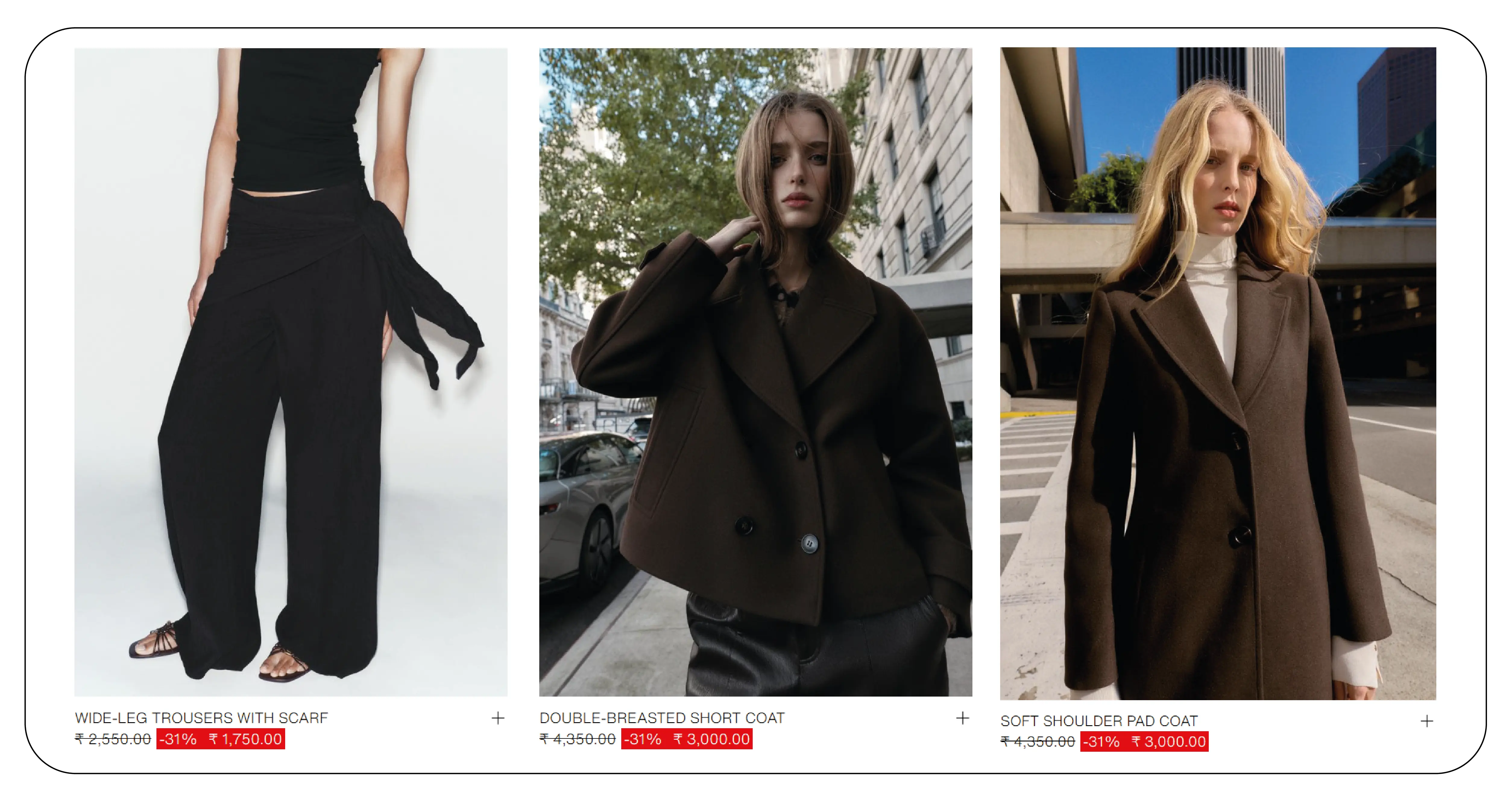
Improve inventory decision accuracy
Enable faster data-driven merchandising
Build scalable data pipelines for real-time insights
Implement automated scraping workflows for product tracking
Integrate real-time analytics dashboards
Improve SKU-level visibility across categories using Zara SKU monitoring for fashion market intelligence
30% improvement in inventory turnover rate
40% reduction in reporting lag time
25% increase in assortment efficiency supported by Assortment and availability monitoring
The Core Challenge

Before implementation, the brand faced major operational bottlenecks in managing fast-changing fashion catalogs. Data was fragmented across multiple systems, leading to inconsistencies in reporting.
The team struggled to monitor Zara new arrivals and discontinued products effectively. Product lifecycle tracking was manual and delayed, resulting in lost sales opportunities and overstock situations.
Additionally, E-commerce data scraping capabilities were limited, making it difficult to maintain updated datasets across multiple regions. This created gaps in pricing visibility, stock accuracy, and competitor benchmarking.
The lack of real-time insights directly impacted merchandising decisions, leading to inefficient stock allocation and missed demand signals.
Our Solution
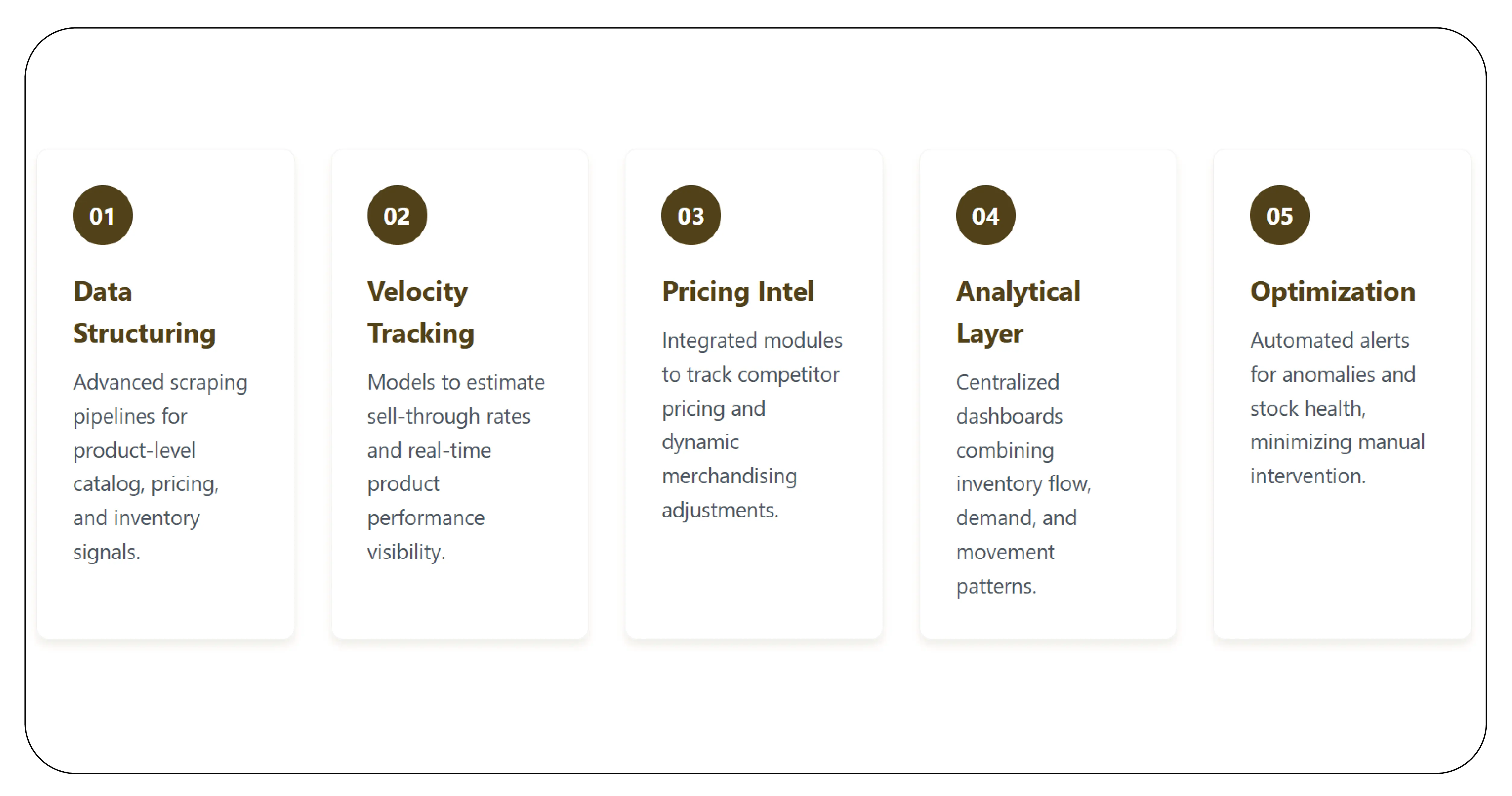
We implemented a phased, automation-driven framework to solve the client's inventory and assortment challenges.
Phase 1: Data Collection & Structuring
We deployed advanced scraping pipelines to extract product-level data from ecommerce platforms. This included catalog structure, pricing, and inventory signals. This helped establish a clean, unified dataset foundation.
Phase 2: Velocity Tracking System
We built tracking models to estimate Zara sell-through rates using product tracking, enabling real-time visibility into product performance across regions.
Phase 3: Pricing & Promotion Intelligence
We integrated modules to Track Product Pricing and Promotions, allowing the brand to compare pricing strategies across competitors and adjust merchandising decisions dynamically.
Phase 4: Analytical Layer
We developed dashboards that combined inventory flow, demand patterns, and assortment movement into a single view. This allowed decision-makers to react faster to market changes.
Phase 5: Optimization & Automation
Automated alerts were configured for stock anomalies, fast-selling SKUs, and underperforming products. This reduced manual intervention and improved decision speed.
The solution created a continuous feedback loop between data collection and merchandising decisions.
Results & Key Metrics
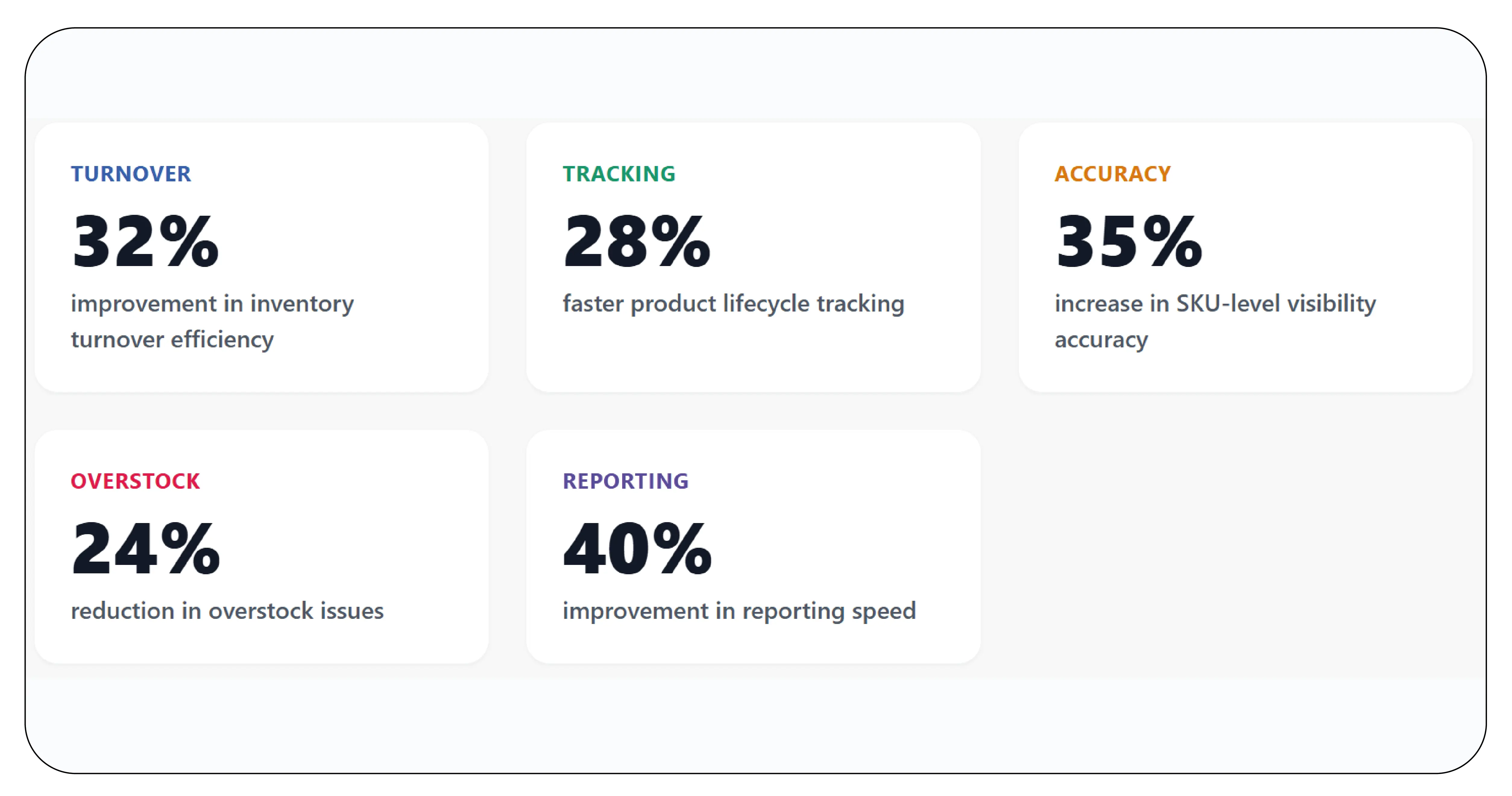
32% improvement in inventory turnover efficiency
28% faster product lifecycle tracking
35% increase in SKU-level visibility accuracy
24% reduction in overstock issues
40% improvement in reporting speed
Results Narrative
The implementation of fashion demand intelligence from Zara assortment data significantly improved decision-making accuracy. The brand gained real-time visibility into product movement and demand fluctuations.
The integration of Zara Sales and Assortment Velocity Analysis enabled teams to identify high-performing products faster and adjust stock allocation strategies accordingly. Inventory planning became more predictive rather than reactive.
As a result, the brand achieved stronger sales performance, reduced markdown dependency, and improved overall merchandising efficiency across multiple regions.
What Made Product Data Scrape Different
Product Data Scrape delivered a highly scalable architecture built specifically for fashion retail intelligence. The system enabled Zara product velocity tracking across categories, providing granular insights into SKU-level performance.
Our proprietary automation framework combined structured scraping, data normalization, and predictive analytics. This allowed faster processing of large-scale ecommerce datasets while maintaining high accuracy.
The ability to unify pricing, inventory, and assortment signals into a single intelligence layer differentiated the solution. This made Zara Sales and Assortment Velocity Analysis more actionable for business users.
Client Testimonial
"The transformation we achieved with Product Data Scrape completely changed how we manage inventory. Their Zara Sales and Assortment Velocity Analysis framework gave us real-time visibility into product performance and helped us optimize assortment planning across regions. We now make faster, data-backed decisions with far greater confidence."
— Head of Merchandising, Global Fashion Brand
Conclusion
This project demonstrated how advanced data intelligence can transform fashion retail operations. By leveraging Buy E-Commerce Datasets, the client built a foundation for scalable inventory optimization and demand forecasting.
The integration of Zara Sales and Assortment Velocity Analysis enabled the brand to shift from reactive planning to predictive merchandising. This resulted in improved profitability, reduced inefficiencies, and stronger market responsiveness.
With continued expansion of data-driven retail strategies, the brand is now positioned to scale its analytics capabilities globally.
FAQs
1. What is Zara Sales and Assortment Velocity Analysis?
It is a method used to evaluate product performance, inventory movement, and assortment efficiency across fashion retail channels to improve decision-making.
2. How does Product Data Scrape support fashion brands?
It provides structured ecommerce data, enabling brands to track product performance, pricing changes, and inventory movement in real time.
3. Why is assortment velocity important in fashion retail?
It helps brands identify fast and slow-moving products, optimize stock levels, and improve overall merchandising strategy efficiency.
4. Can this solution scale across multiple regions?
Yes, the system is designed to handle multi-region ecommerce datasets and normalize them for unified reporting and analytics.
5. What impact does velocity analysis have on inventory?
It improves stock accuracy, reduces overstock situations, and ensures better alignment between supply and customer demand.


 Singapore
 EMAIL
EMAIL
 PHONE
PHONE


.webp)
.webp "thumb")
.webp "thumb")
.webp "thumb")









.webp)