Introduction
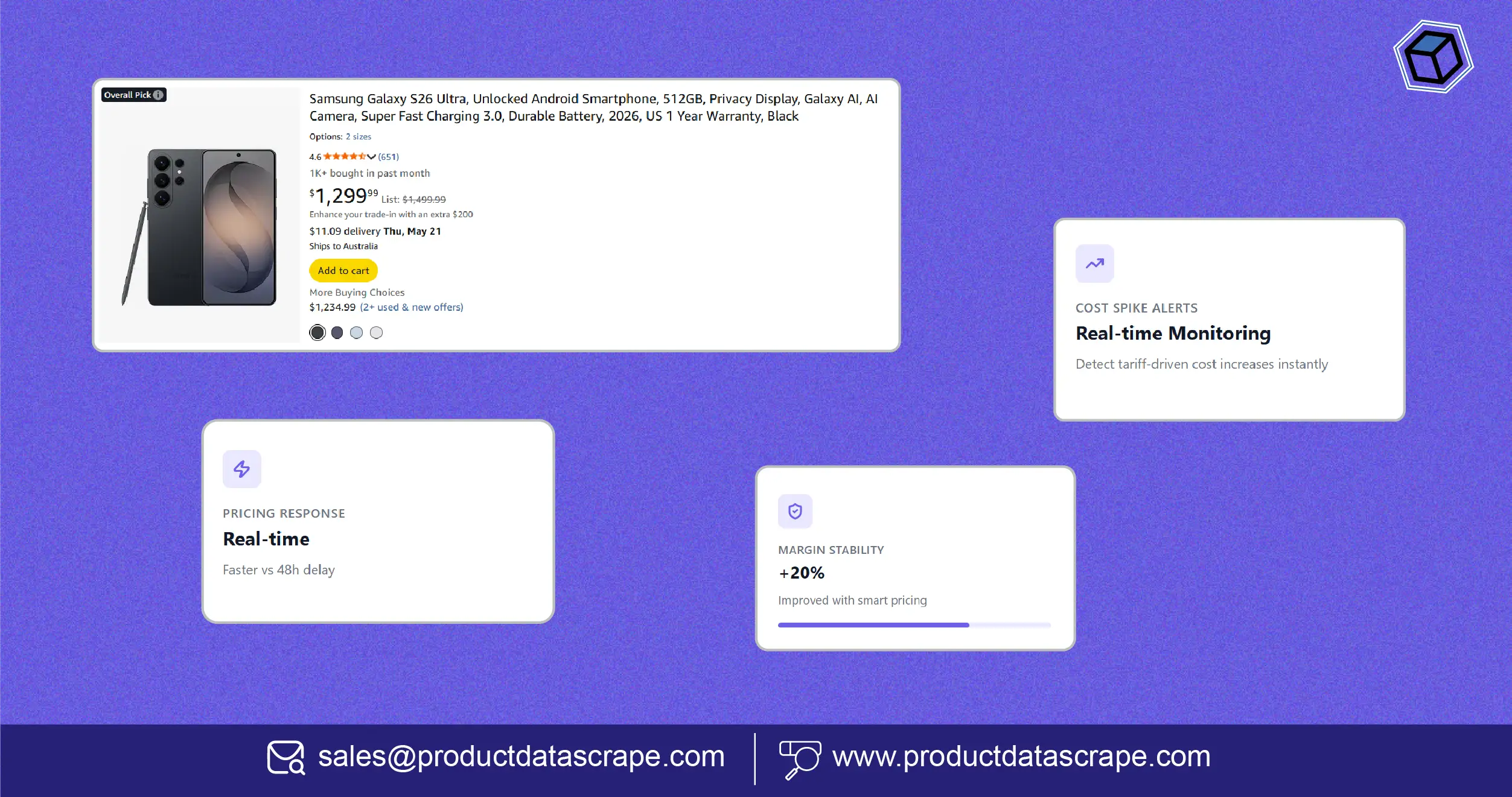
Global trade disruptions and fluctuating import duties are reshaping retail pricing strategies. Businesses today face constant uncertainty due to shifting tariffs that directly impact product costs and profit margins. To remain competitive, organizations are increasingly relying on Tariff-Driven Cost Spikes Monitoring for Retail pricing 2026 to track cost fluctuations and respond proactively.
In this environment, Product Competitive Pricing Services play a crucial role in helping retailers align pricing strategies with real-time market conditions. By combining tariff intelligence with pricing analytics, businesses can identify cost spikes early and adjust their pricing models accordingly.
From 2020 to 2026, retailers adopting tariff-aware pricing systems have seen improved margin control, better forecasting accuracy, and reduced revenue leakage. This blog explores how data-driven monitoring systems can help businesses manage cost volatility and build resilient pricing strategies in an unpredictable global economy.
Understanding tariff-driven volatility in retail markets
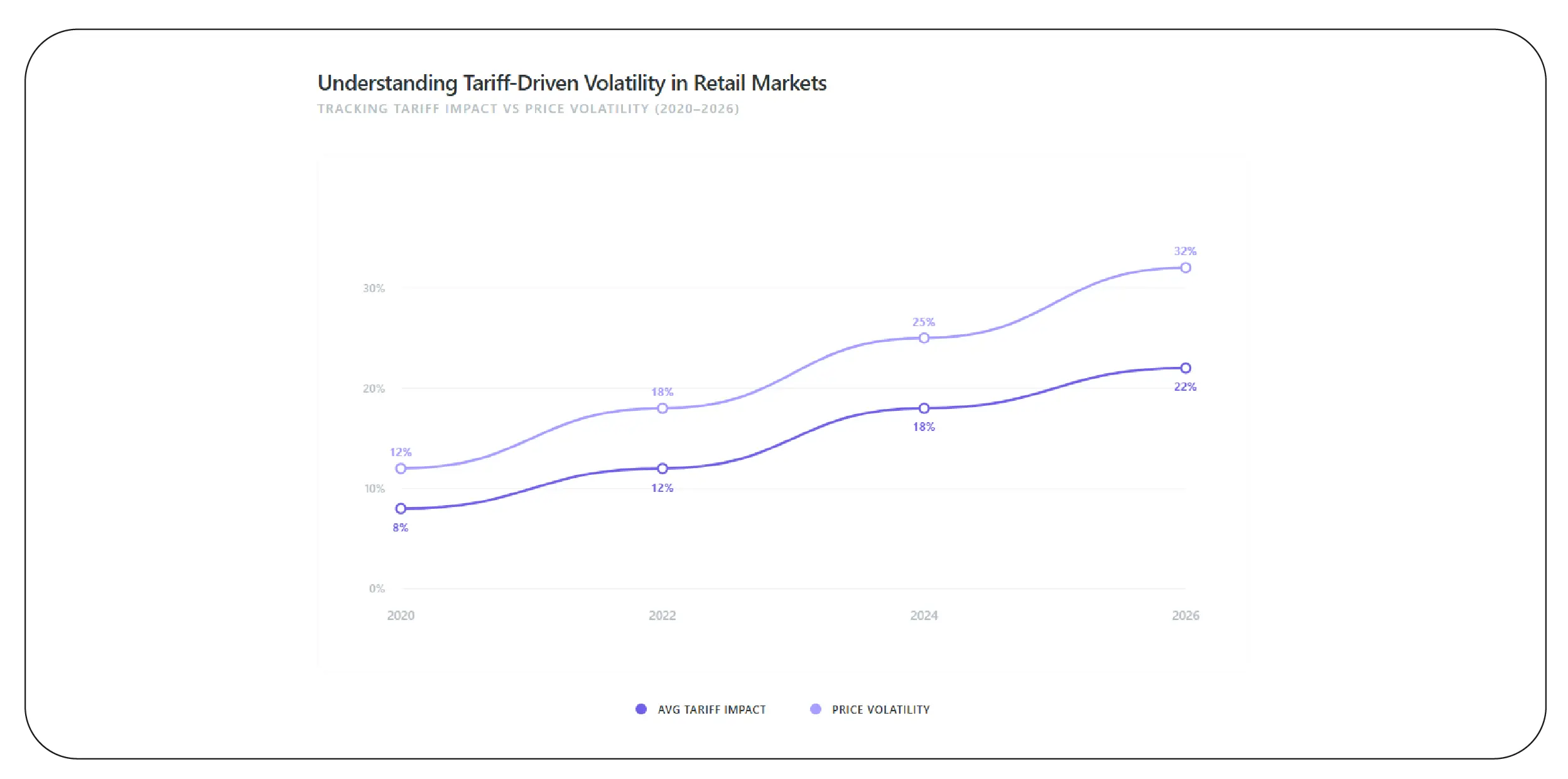
Retailers today must Retailers Monitor Tariff-Driven Price Volatility as part of their core pricing strategy. When combined with Price Monitoring, businesses gain real-time visibility into how tariffs impact product pricing across supply chains.
Between 2020 and 2026, tariff fluctuations have significantly affected retail pricing structures:
| Year |
Avg Tariff Impact (%) |
Price Volatility (%) |
| 2020 |
8% |
12% |
| 2022 |
12% |
18% |
| 2024 |
18% |
25% |
| 2026 |
22% |
32% |
These trends highlight the growing importance of monitoring tariff-driven changes. Retailers can identify which product categories are most affected and adjust pricing strategies accordingly.
By leveraging real-time insights, businesses can reduce risk exposure, maintain profitability, and ensure competitive pricing even during volatile market conditions.
Responding quickly to cost fluctuations
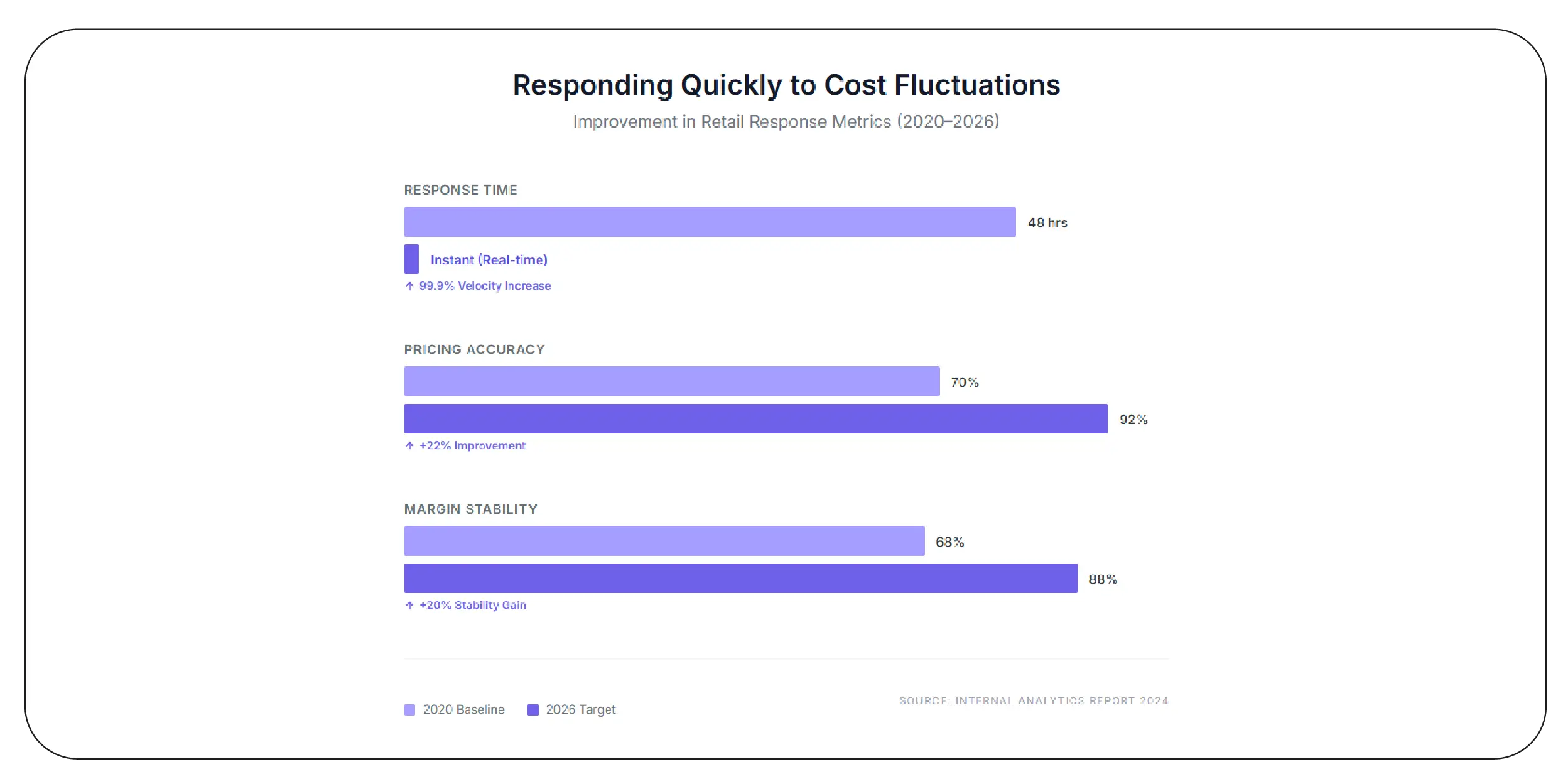
To maintain profitability, companies must implement Real-time Tariff Cost Spike monitoring for Retailers supported by Product Pricing Strategies that adapt dynamically to market changes.
From 2020 to 2026, response times to cost changes have improved significantly:
| Metric |
2020 |
2026 |
| Response Time |
48 hrs |
Real-time |
| Pricing Accuracy |
70% |
92% |
| Margin Stability |
68% |
88% |
Real-time monitoring enables businesses to detect sudden tariff increases and adjust pricing instantly. This reduces revenue loss and improves customer trust.
By integrating tariff data into pricing strategies, retailers can ensure consistent profitability even during unpredictable cost surges. This proactive approach helps businesses stay ahead of competitors and market volatility.
Optimizing pricing with tariff intelligence
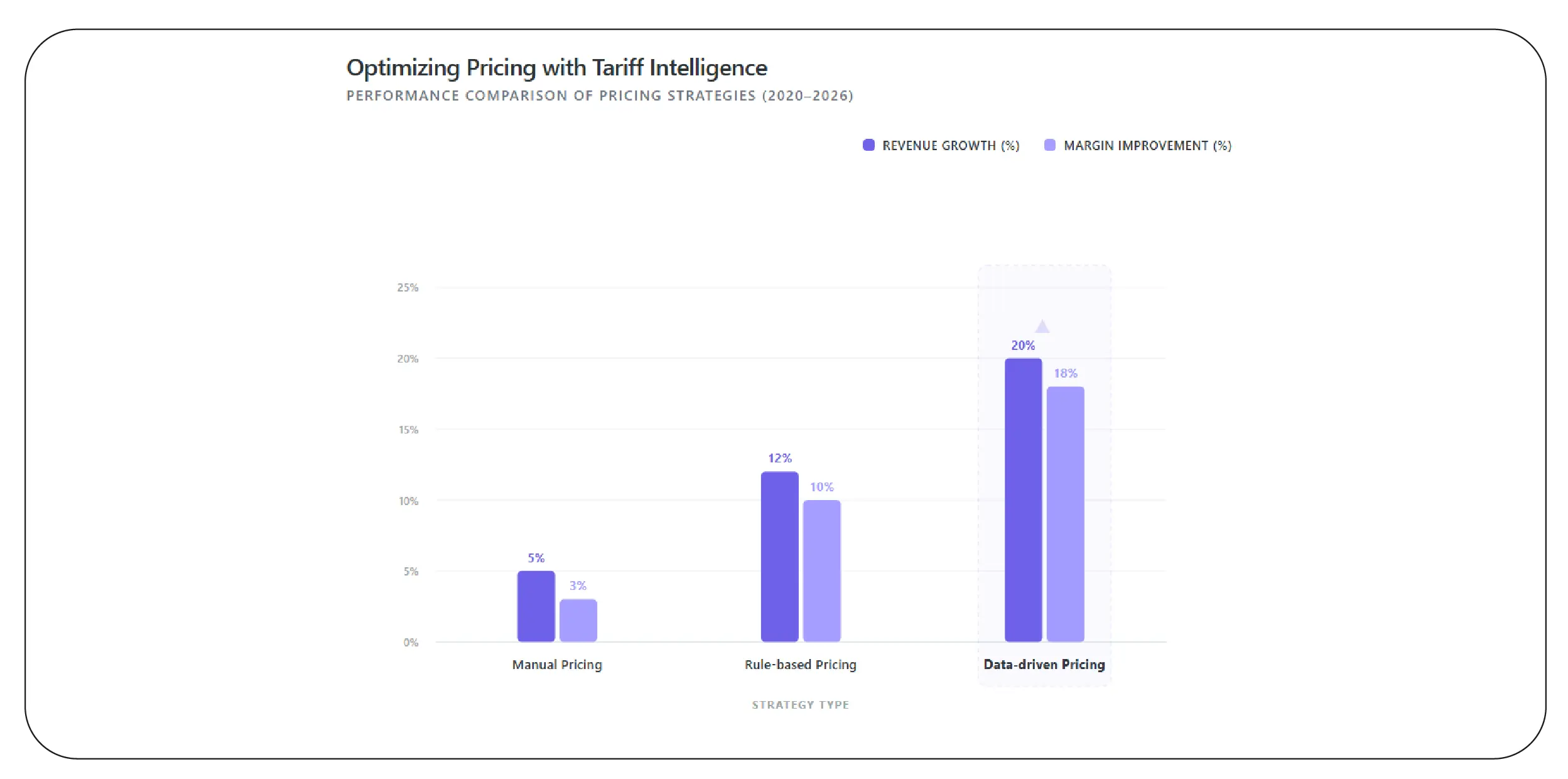
Businesses can Extract Tariff Cost-based Price optimization using Web Scraping API Services to collect real-time data from global trade and pricing sources.
Between 2020 and 2026, data-driven pricing optimization has shown strong performance improvements:
| Strategy Type |
Revenue Growth (%) |
Margin Improvement (%) |
| Manual Pricing |
5% |
3% |
| Rule-based Pricing |
12% |
10% |
| Data-driven Pricing |
20% |
18% |
Tariff-based optimization allows retailers to adjust prices based on actual cost inputs rather than estimates. This ensures more accurate pricing and better profit control.
By leveraging API-driven data pipelines, businesses can continuously refine their pricing strategies and respond effectively to market changes.
Building adaptive pricing systems for ecommerce
Modern retailers must Scrape Tariff-based Dynamic Pricing strategy for Retailers using Ecommerce Website Data Scraping to remain competitive in fast-changing markets.
From 2020 to 2026, dynamic pricing adoption has increased significantly:
| Year |
Adoption Rate (%) |
Revenue Impact (%) |
| 2020 |
25% |
8% |
| 2022 |
40% |
15% |
| 2024 |
55% |
22% |
| 2026 |
70% |
30% |
Dynamic pricing systems adjust automatically based on tariff fluctuations and competitor behavior. This ensures optimal pricing at all times.
Ecommerce scraping enables continuous monitoring of competitor prices, allowing businesses to align their strategies with market conditions and maintain profitability.
Enhancing visibility through tariff monitoring systems
Effective Tariff data Monitoring for Retail Pricing Intelligence enables businesses to track cost changes and identify pricing risks before they impact margins.
Between 2020 and 2026, tariff monitoring systems have improved decision-making accuracy:
| Metric |
2020 |
2026 |
| Pricing Accuracy |
65% |
90% |
| Forecast Accuracy |
60% |
88% |
| Risk Reduction |
50% |
85% |
These systems provide actionable insights into how tariffs affect product categories and supply chains. Businesses can proactively adjust pricing strategies and reduce financial exposure.
Tariff monitoring also supports long-term planning by identifying patterns in cost fluctuations across global markets.
Strengthening supply chain resilience with data
Retailers must adopt Supply Chain cost monitoring using Tariff data to ensure operational stability and pricing accuracy.
From 2020 to 2026, supply chain visibility improvements have significantly reduced cost inefficiencies:
| Year |
Cost Reduction (%) |
Efficiency Gain (%) |
| 2020 |
5% |
10% |
| 2022 |
10% |
18% |
| 2024 |
15% |
25% |
| 2026 |
20% |
32% |
By monitoring tariff impacts across the supply chain, businesses can identify cost-saving opportunities and improve procurement strategies.
This ensures better coordination between pricing, sourcing, and logistics teams, leading to improved profitability and reduced volatility.
Why Choose Product Data Scrape?
Product Data Scrape provides advanced solutions for businesses aiming to manage pricing volatility effectively. With powerful Retailers Tariff Price Volatility Monitoring, organizations can track cost fluctuations and adjust pricing strategies in real time.
By leveraging Ecommerce Website Data Scraping, businesses gain access to structured, real-time data from multiple sources, enabling accurate tariff tracking and pricing optimization.
With scalable infrastructure, high data accuracy, and customizable solutions, we help retailers build resilient pricing systems that adapt to market volatility and protect profitability.
Conclusion
In an era of unpredictable global trade, businesses must rely on data-driven strategies to stay competitive. Leveraging Digital Shelf Analytics combined with Ecommerce Website Data Scraping enables retailers to understand tariff impacts and optimize pricing in real time.
By implementing Tariff-Driven Cost Spikes Monitoring for Retail pricing 2026, companies can reduce revenue leakage, improve pricing accuracy, and strengthen decision-making processes.
Now is the time to embrace intelligent pricing systems. Start using tariff-driven insights today with Product Data Scrape to stabilize margins and build a future-ready retail pricing strategy!
FAQs
1. What is Tariff-Driven Cost Spikes Monitoring for retail pricing?
Tariff-driven cost spikes monitoring involves tracking changes in import/export duties and their impact on product costs. It helps retailers adjust pricing strategies proactively to maintain margins and avoid sudden profitability losses.
2. How do tariffs impact retail pricing and profitability?
Tariffs increase the cost of goods, especially for imported products. Without proper monitoring, retailers may absorb these costs, reducing margins, or pass them to customers, risking demand decline. Monitoring helps balance both.
3. How can data scraping help manage tariff-driven cost volatility?
Data scraping collects real-time pricing, supplier costs, and competitor reactions. This enables retailers to quickly respond to tariff changes, optimize pricing, and stay competitive while protecting profit margins.
4. What industries benefit most from tariff cost monitoring?
Industries heavily reliant on imports—such as electronics, fashion, automotive, and FMCG—benefit the most. These sectors face frequent cost fluctuations due to global trade policies and supply chain changes.
5. How can retailers implement tariff-based pricing strategies effectively?
Retailers should integrate tariff data with pricing systems, use real-time analytics, and adopt dynamic pricing models. This ensures quick adjustments based on cost changes while maintaining competitiveness and profitability.


 Singapore
 EMAIL
EMAIL
 PHONE
PHONE










.webp)