Introduction
The rapid rise of quick commerce has transformed how consumers purchase groceries and FMCG products, especially during weekends when demand surges dramatically. These spikes often lead to unexpected stockouts, delayed deliveries, and lost revenue opportunities. This is where Quick Commerce weekend demand spikes stockouts prediction becomes essential for maintaining operational efficiency and customer satisfaction.
Using Quick Commerce Grocery & FMCG Data Scraping, businesses can gather real-time insights into demand patterns, inventory levels, and product performance across platforms. This allows retailers to anticipate sudden order surges and proactively adjust stock levels.
By combining predictive analytics with continuous data extraction, companies can eliminate blind spots in inventory planning. This ensures product availability even during peak demand periods.
In this blog, we explore how data-driven forecasting, scraping technologies, and automation can help quick commerce platforms prevent stockouts, optimize supply chains, and maximize revenue during high-demand weekends.
Understanding Demand Surges and Inventory Gaps
Weekend demand fluctuations are one of the biggest challenges in quick commerce. Using Weekend demand spikes predict stockouts, Pricing Intelligence Services, businesses can analyze patterns and anticipate shortages before they occur.
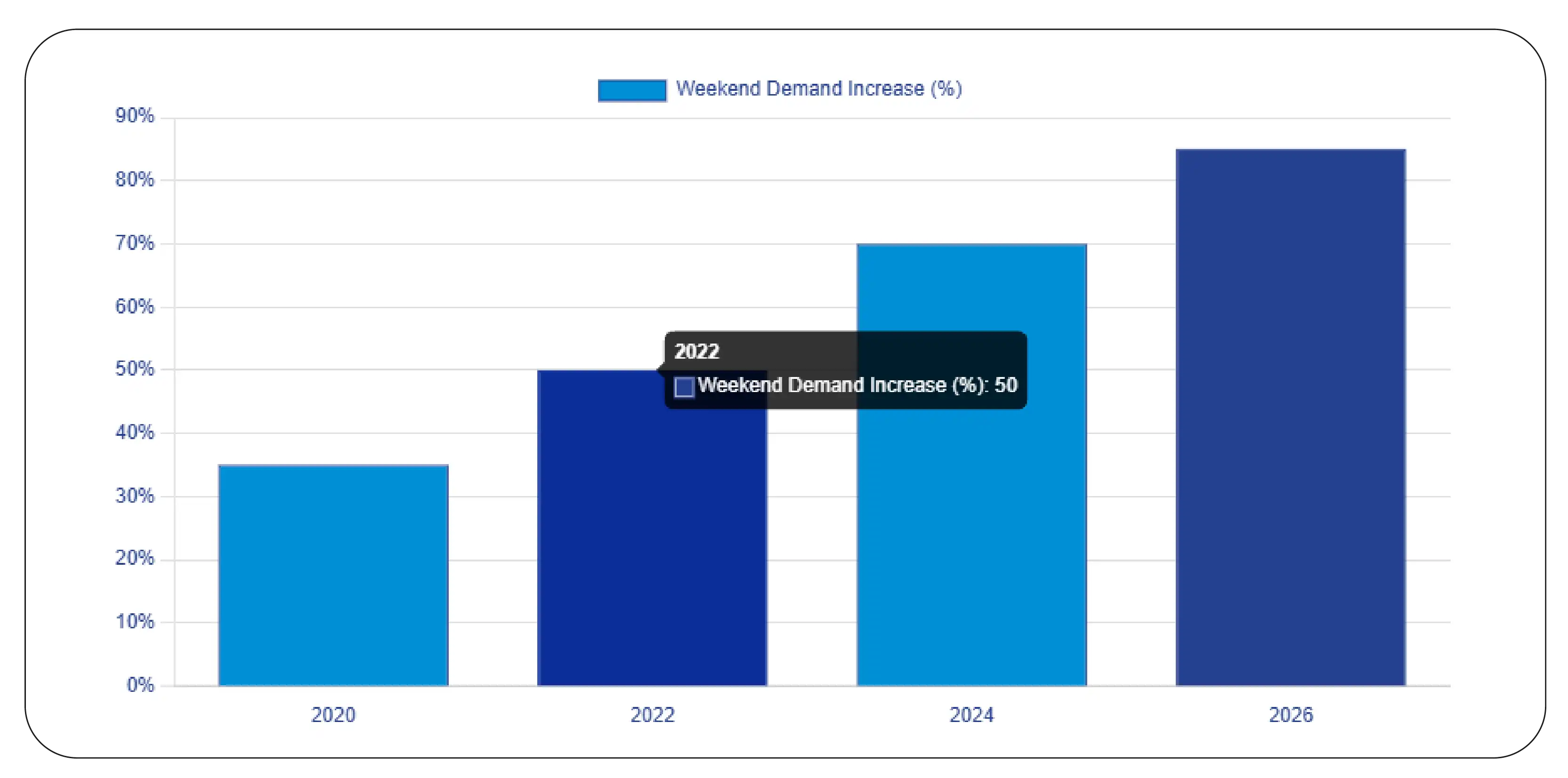
Between 2020 and 2026, weekend order volumes in quick commerce platforms have increased significantly due to changing consumer behavior.
| Year |
Weekend Demand Increase |
Stockout Risk |
| 2020 |
35% |
Medium |
| 2022 |
50% |
High |
| 2024 |
70% |
Very High |
| 2026 |
85% |
Critical |
Demand spikes often occur due to promotions, seasonal trends, and last-minute purchases. Without predictive systems, businesses struggle to meet this demand.
Pricing intelligence also plays a role, as fluctuating prices can influence buying patterns.
By leveraging predictive models, retailers can align inventory with demand trends, reducing stockouts and improving customer experience.
Leveraging Data Patterns for Predictive Insights
Analyzing historical data is key to predicting future demand. With Scraping patterns predict Stockouts Quick commerce, Digital Shelf Analytics, businesses can track customer behavior and product performance trends.
From 2020 to 2026, data-driven demand forecasting adoption has grown by over 75% in quick commerce.
| Data Type |
Insight Value |
| Historical Sales |
High |
| Customer Behavior |
High |
| Product Trends |
Medium |
| Seasonal Demand |
High |
Digital shelf analytics helps identify which products are frequently out of stock and why.
Scraping patterns across platforms provides a comprehensive view of demand signals, enabling more accurate forecasting.
This approach allows businesses to optimize inventory allocation and ensure product availability during peak demand periods.
SKU-Level Insights for Accurate Forecasting
Granular data is essential for precise forecasting. Using SKU-level demand spikes predict stockouts, Grocery store dataset, businesses can analyze demand at the product level.
Between 2020 and 2026, SKU-level analytics adoption has increased significantly in grocery and FMCG sectors.
| Metric |
Importance |
| SKU Demand Trends |
High |
| Category Performance |
High |
| Regional Demand |
Medium |
| Stock Turnover Rate |
High |
SKU-level insights help identify high-demand products that are more likely to experience stockouts.
By analyzing grocery datasets, businesses can forecast demand more accurately and adjust inventory accordingly.
This ensures that critical products remain available, even during peak demand periods.
Automating Data Collection for Inventory Optimization
Automation plays a crucial role in managing large-scale inventory systems. Implementing Quick commerce weekend demand stockouts data scrape enables continuous monitoring of stock levels and demand patterns.
From 2020 to 2026, automated data scraping adoption has increased by over 70% in retail analytics.
| Process |
Benefit |
| Data Collection |
Real-time |
| Data Processing |
Accurate |
| Inventory Updates |
Instant |
| Demand Analysis |
Scalable |
Automated scraping ensures that businesses always have up-to-date information on product availability.
This reduces manual effort and improves decision-making speed.
With automation, companies can respond quickly to demand changes and prevent stockouts effectively.
Real-Time Prediction Systems for Inventory Management
Real-time analytics is critical for preventing stockouts. Using Real-time stockout prediction Quick commerce, businesses can detect potential shortages before they occur.
Between 2020 and 2026, real-time prediction systems have reduced stockout incidents by up to 50% in quick commerce platforms.
| Feature |
Impact |
| Real-time Alerts |
High |
| Demand Forecasting |
High |
| Inventory Sync |
Medium |
| Replenishment Speed |
High |
These systems use machine learning algorithms to analyze live data and predict demand spikes.
This enables proactive inventory management and ensures continuous product availability.
Real-time prediction is essential for maintaining efficiency in fast-paced delivery environments.
Forecasting Demand at Scale for Weekend Peaks
Scaling demand forecasting is essential for large platforms. Using SKU-level weekend demand forecasting Quick commerce, businesses can optimize inventory planning for peak periods.
From 2020 to 2026, advanced forecasting systems have improved inventory efficiency by over 60%.
| Metric |
Improvement |
| Forecast Accuracy |
High |
| Inventory Efficiency |
High |
| Stockout Reduction |
High |
| Revenue Growth |
Medium |
Forecasting models analyze multiple variables, including historical sales, weather patterns, and promotional events.
This helps businesses prepare for demand spikes and avoid shortages.
By scaling forecasting systems, companies can ensure consistent performance across multiple locations and platforms.
Why Choose Product Data Scrape?
Product Data Scrape offers advanced Web Scraping API Services designed to support Quick Commerce weekend demand spikes stockouts prediction. It provides real-time data extraction, scalable infrastructure, and accurate insights for inventory optimization.
With automated pipelines and high-frequency data updates, businesses can monitor demand patterns and stock levels across platforms. This ensures better forecasting, reduced stockouts, and improved operational efficiency in quick commerce environments.
Conclusion
Managing sudden demand surges is one of the biggest challenges in quick commerce. By leveraging Price Monitoring Services and implementing Quick Commerce weekend demand spikes stockouts prediction, businesses can eliminate inventory gaps and prevent revenue loss.
Data-driven forecasting, real-time analytics, and automated scraping systems enable retailers to stay ahead of demand fluctuations.
Ready to optimize your inventory strategy? Partner with Product Data Scrape today and unlock real-time insights to prevent stockouts and maximize revenue!
FAQs
1. How does stockout prediction help quick commerce businesses?
Stockout prediction helps businesses anticipate demand surges, optimize inventory levels, and prevent product shortages, ensuring better customer satisfaction and improved revenue during peak shopping periods.
2. What data is required for accurate demand forecasting?
Accurate forecasting requires historical sales data, customer behavior insights, seasonal trends, and real-time inventory data to predict demand patterns effectively.
3. How does scraping improve inventory management?
Data scraping provides real-time insights into product availability, demand patterns, and competitor trends, enabling better decision-making and inventory optimization.
4. Can small businesses benefit from stockout prediction systems?
Yes, even small businesses can use predictive systems to manage inventory efficiently, reduce losses, and improve customer satisfaction by maintaining product availability.
5. How can Product Data Scrape support quick commerce analytics?
Product Data Scrape provides scalable data extraction solutions, helping businesses collect, process, and analyze real-time data for better forecasting and inventory management.


 Singapore
 EMAIL
EMAIL
 PHONE
PHONE


.webp)
.webp "thumb")
.webp "thumb")
.webp "thumb")









.webp)