Introduction
Businesses can connect grocery product and pricing information to web
applications using APIs that deliver structured product details, price updates, inventory
status, and market insights in real time.
Industry Insight: By 2026, more than 75% of digital grocery
platforms are expected to rely on automated data integrations to improve pricing decisions,
inventory visibility, and customer experiences.
Modern grocery applications need accurate and updated information to deliver
better shopping experiences. Manual data collection creates delays and makes it difficult to
track thousands of products across multiple categories.
The ability to Integrate Grocery Product & Price Data allows businesses to
create smarter applications with real-time product discovery, pricing updates, and inventory
monitoring.
A structured Grocery store dataset
provides valuable information such as:
- Product names
- Categories
- Prices
- Discounts
- Availability
- SKU details
- Brand information
Target Audience:
- Grocery retailers
- eCommerce platforms
- Marketplace developers
- Consumer brands
- Retail analytics companies
Business Challenge:
Companies need faster access to product information, accurate pricing updates,
and automated inventory tracking to compete in the digital grocery market. API-based solutions
solve these challenges by connecting reliable grocery data sources directly with web
applications.
How Does API Integration Improve Grocery Application Performance?
API integration connects grocery data sources with applications, allowing
businesses to automate product updates, monitor pricing changes, and improve customer-facing
features.
Industry Insight: Retail applications using automated APIs can
reduce manual catalog management efforts by 50% or more while improving data accuracy.
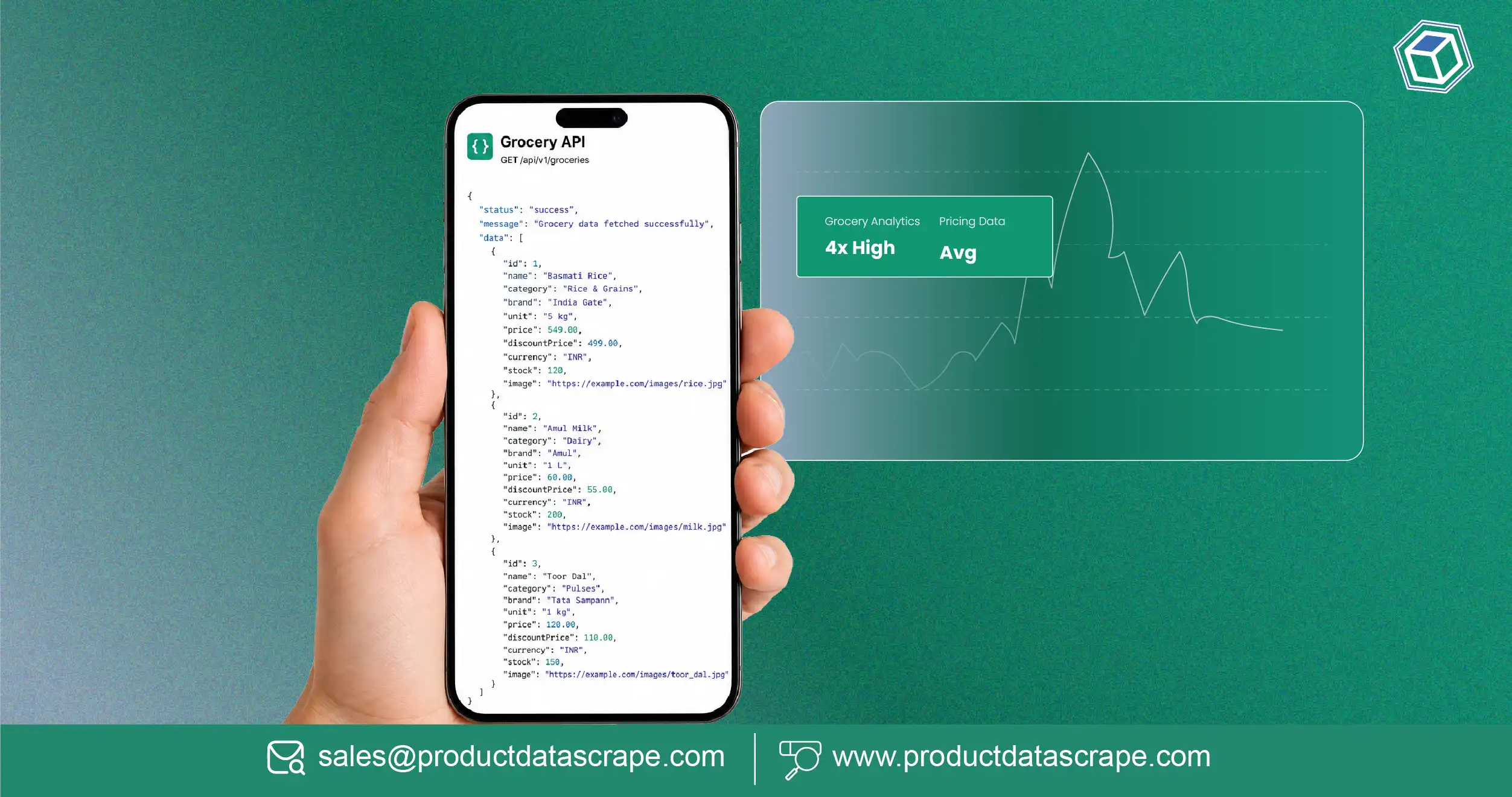
A grocery API acts as a bridge between data providers and web applications. It
allows developers to request, process, and display grocery information without manually
collecting product records.
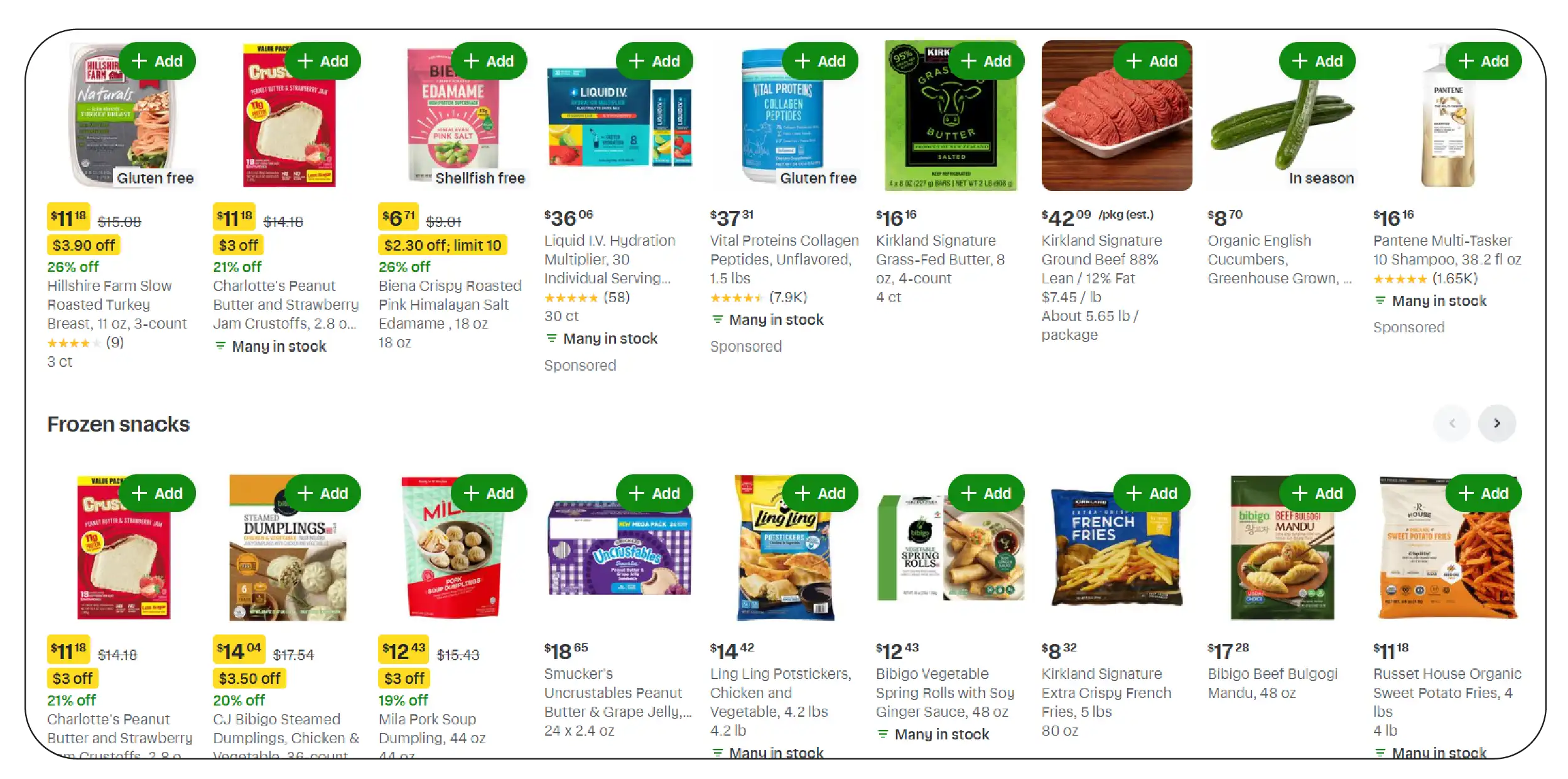
Common API Data Elements
Businesses can integrate:
- Product information
- Current pricing
- Discount details
- Stock availability
- Product categories
- Images
- SKU information
Benefits of API-Based Grocery Data
API integration helps businesses:
- Improve product search
- Automate updates
- Reduce operational workload
- Deliver accurate customer information
- Analyze market trends
2020–2026 API Adoption Growth
| Year |
Integration Stage |
Business Focus |
| 2020 |
Basic data connections |
Product listing updates |
| 2021 |
Automated feeds |
Catalog management |
| 2022 |
API expansion |
Pricing automation |
| 2023 |
Real-time integrations |
Inventory visibility |
| 2024 |
Advanced analytics |
Customer personalization |
| 2025 |
AI-powered systems |
Predictive insights |
| 2026 |
Intelligent automation |
Fully connected retail apps |
How Can Businesses Build Better Pricing Intelligence Through APIs?
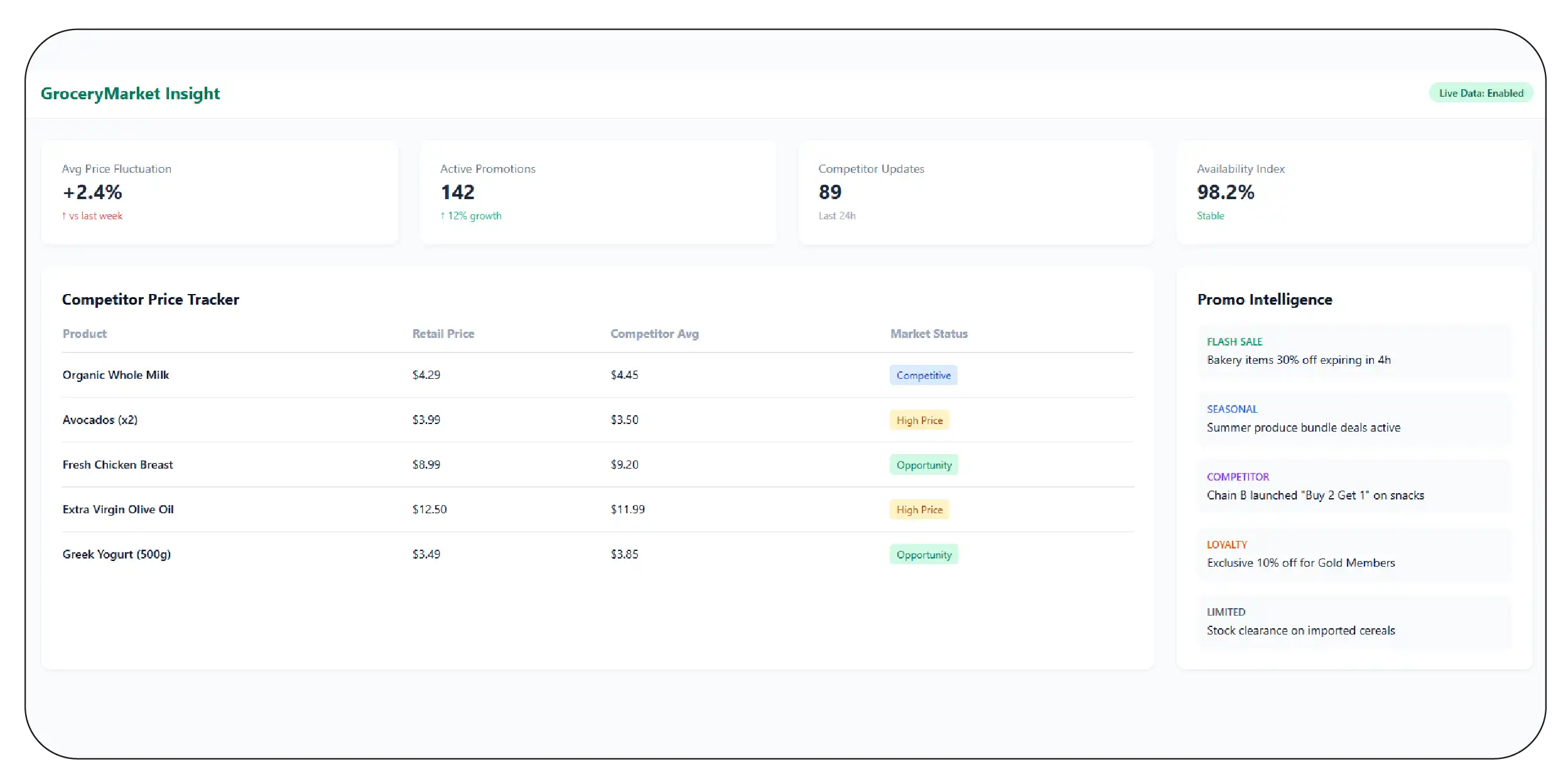
Businesses can improve pricing decisions by connecting applications with APIs
that provide updated product prices, competitor information, and promotional changes.
Industry Insight: Retailers using automated pricing systems
can identify market changes significantly faster than businesses relying on manual tracking
methods.
What Does a Pricing API Integration Process Include?
A grocery product and price data API integration guide helps businesses
understand how to connect grocery datasets with applications.
The process includes:
- Step 1: Select a Data Source – Grocery platforms, product
databases, retail feeds
- Step 2: Connect API Endpoints – API keys, authentication,
data requests, response formats
- Step 3: Process Data – Product details, pricing records,
availability information
- Step 4: Display Insights – Updated prices, product
comparisons, market trends
Why Is Price Monitoring Important?
Price monitoring helps businesses:
- Track competitor movements
- Identify pricing opportunities
- Improve promotions
- Maintain competitive offers
Pricing Data Example
| Data Type |
Application Use |
| Product Price |
Customer display |
| Discount Data |
Promotion analysis |
| Historical Price |
Trend forecasting |
| Competitor Price |
Market comparison |
How Can Web Apps Manage Inventory Information Automatically?
Web applications can manage inventory automatically by connecting with APIs
that provide real-time stock updates, availability information, and product movement data.
Industry Insight: Businesses using automated inventory systems
can improve stock visibility and reduce product availability issues.
How Does Inventory API Integration Work?
Grocery Inventory API Integration for Web Apps enables applications to receive
updated inventory information directly from grocery data sources.
Important inventory fields include:
- Stock availability
- Product status
- Location-based availability
- Delivery options
- Inventory changes
Benefits of Automated Inventory Integration
Businesses can:
- Prevent stock-related customer issues
- Improve product recommendations
- Manage supply decisions
- Track product performance
Inventory Workflow
- API collects inventory information
- Application processes data
- Database stores updates
- User interface displays availability
Inventory Monitoring Impact
| Year |
Inventory Technology |
Result |
| 2020 |
Manual tracking |
Limited visibility |
| 2021 |
Digital records |
Better organization |
| 2022 |
API connections |
Faster updates |
| 2023 |
Automated monitoring |
Improved accuracy |
| 2024 |
Real-time inventory |
Better customer service |
| 2025 |
Predictive inventory |
Demand forecasting |
| 2026 |
AI optimization |
Automated decisions |
How Can Businesses Track Grocery Market Changes Automatically?
Businesses can track grocery market changes by using APIs that collect
real-time product prices, promotional details, and availability information from grocery
platforms.
Industry Insight: Retail companies using real-time market
monitoring solutions can react to pricing changes faster and improve promotional performance.
How Does Real-Time Data Improve Retail Decisions?
The Real-Time Grocery Price Tracking API allows businesses to monitor product
prices continuously and identify market movements quickly.
Businesses can analyze:
- Price fluctuations
- Discount changes
- Competitor pricing
- Product availability
- Seasonal trends
How Does Promotion Intelligence Support Growth?
Promotion and deal intelligence
helps businesses analyze discount campaigns, limited-time offers, seasonal promotions, bundle
deals, and brand campaigns.
Retailers can use promotional insights to create better offers, improve
campaign timing, increase customer engagement, and measure competitor activity.
Benefits of Real-Time Grocery Monitoring
| Business Need |
Data Solution |
Result |
| Price comparison |
Real-time pricing data |
Better pricing decisions |
| Promotion analysis |
Offer tracking |
Improved campaigns |
| Market research |
Product trends |
Better forecasting |
| Customer experience |
Availability updates |
Higher satisfaction |
How Can Grocery Platforms Monitor Product Information Efficiently?
Grocery platforms can monitor product information efficiently by connecting
APIs that provide updated product details, pricing records, and availability information.
Industry Insight: Digital grocery businesses increasingly
depend on automated monitoring systems to manage thousands of products across multiple
categories.
How Does Product Monitoring Work?
Businesses use a Monitor product and pricing data API for grocery platforms
solution to collect and analyze product descriptions, categories, prices, stock details, brand
information, and SKU records.
Why Is Product Monitoring Important?
Product monitoring helps businesses detect price changes, identify missing
products, track competitor activity, and improve product listings.
Key Monitoring Areas
Product Information
- Product name
- Brand
- Category
- Specifications
Pricing Information
- Current price
- Discounted price
- Historical pricing
Availability Information
- Stock status
- Delivery options
- Regional availability
Product Monitoring Growth (2020–2026)
| Year |
Monitoring Capability |
Main Benefit |
| 2020 |
Basic product tracking |
Catalog updates |
| 2021 |
Automated monitoring |
Faster collection |
| 2022 |
Pricing analysis |
Competitive insights |
| 2023 |
Real-time tracking |
Better decisions |
| 2024 |
AI analytics |
Market prediction |
| 2025 |
Advanced automation |
Retail optimization |
| 2026 |
Intelligent monitoring |
Automated strategy |
How Can Businesses Improve Digital Grocery Experiences?
Businesses improve digital grocery experiences by integrating accurate product,
pricing, and availability information into customer-facing applications.
Industry Insight: Digital shoppers increasingly expect
accurate product details, transparent pricing, and real-time availability when purchasing
groceries online.
Why Is Accurate Product Data Important?
A strong grocery application depends on reliable information. Businesses using
grocery pricing API integration can provide updated product prices, accurate availability,
better search results, and personalized recommendations.
How Does Data Improve the Digital Shelf?
The digital shelf represents how products appear and perform online. Businesses
optimize their digital shelf through better product
descriptions, accurate images, updated prices, and complete product attributes.
Digital Shelf Benefits
| Area |
Improvement |
| Product visibility |
Better search ranking |
| Customer trust |
Accurate information |
| Conversion rate |
Improved buying decisions |
| Brand performance |
Stronger online presence |
Business Applications
Companies use integrated grocery data for online grocery stores, mobile
shopping apps, product comparison websites, and retail dashboards.
How Does SKU Integration Improve Grocery Data Management?

SKU integration helps businesses organize product information, track inventory,
and analyze product-level performance across grocery platforms.
Industry Insight: SKU-level tracking improves inventory
accuracy and enables retailers to understand individual product performance.
Why Is SKU Data Important?
Grocery SKU data integration allows businesses to connect unique product
identifiers with product information, pricing details, inventory records, and sales analytics.
SKU Integration Benefits
- Prevent duplicate products
- Track product variations
- Improve inventory planning
- Analyze category performance
SKU Data Structure
| SKU Field |
Purpose |
| SKU ID |
Product identification |
| Product Name |
Catalog management |
| Category |
Classification |
| Price |
Pricing analysis |
| Stock Status |
Inventory tracking |
Common SKU Use Cases:
- Product catalog management
- Retail analytics
- Inventory optimization
- Demand forecasting
Why Choose Product Data Scrape?
Product Data Scrape helps businesses access structured grocery datasets and
integrate accurate retail information into applications for better decision-making.
Industry Insight: Modern retailers need automated data
solutions to handle growing product catalogs and changing market conditions.
Businesses benefit from:
- Structured grocery datasets
- Reliable API solutions
- Real-time market insights
- Product-level analytics
- Scalable data collection
Our solutions support brands, retailers, and technology companies that need
accurate information for pricing, inventory, and market analysis. A powerful grocery market
intelligence data feed helps businesses understand customer demand, competitor activity, and
product trends.
Product Data Scrape enables organizations to transform complex grocery
information into actionable insights for smarter retail operations.
Conclusion
Integrating grocery data into web applications helps businesses automate
product updates, improve pricing decisions, and deliver better digital shopping experiences.
Modern grocery platforms require accurate and timely information to compete
effectively. API-based solutions simplify data collection by connecting applications with
product details, pricing updates, inventory information, and market trends.
Businesses using Grocery
data scraping can analyze competitor movements, improve inventory strategies, and create
better customer experiences.
The ability to Integrate Grocery Product & Price Data allows retailers and
developers to build smarter applications with reliable information.
With Product Data Scrape, businesses can unlock scalable grocery intelligence
and improve their digital retail strategies.
Ready to enhance your grocery application with accurate product and pricing
insights? Partner with Product Data Scrape
today and build a smarter data-driven retail platform!
FAQs
1. What is grocery product and price data integration?
It connects grocery datasets with applications through APIs to provide updated product details,
pricing information, availability data, and market insights.
2. How does a grocery API improve web applications?
A grocery API automates data updates, improves product accuracy, supports price tracking, and
enhances customer shopping experiences.
3. What information can grocery APIs provide?
Grocery APIs provide product names, prices, discounts, SKUs, categories, availability, and
promotional details.
4. How can Product Data Scrape help businesses?
Product Data Scrape helps companies access structured grocery data for analytics, pricing
strategies, inventory monitoring, and retail intelligence.
5. Why is SKU integration important for grocery platforms?
SKU integration helps businesses organize products, track inventory, compare pricing, and
improve product-level analytics.


 Singapore
 EMAIL
EMAIL
 PHONE
PHONE


.webp "thumb")








.webp)