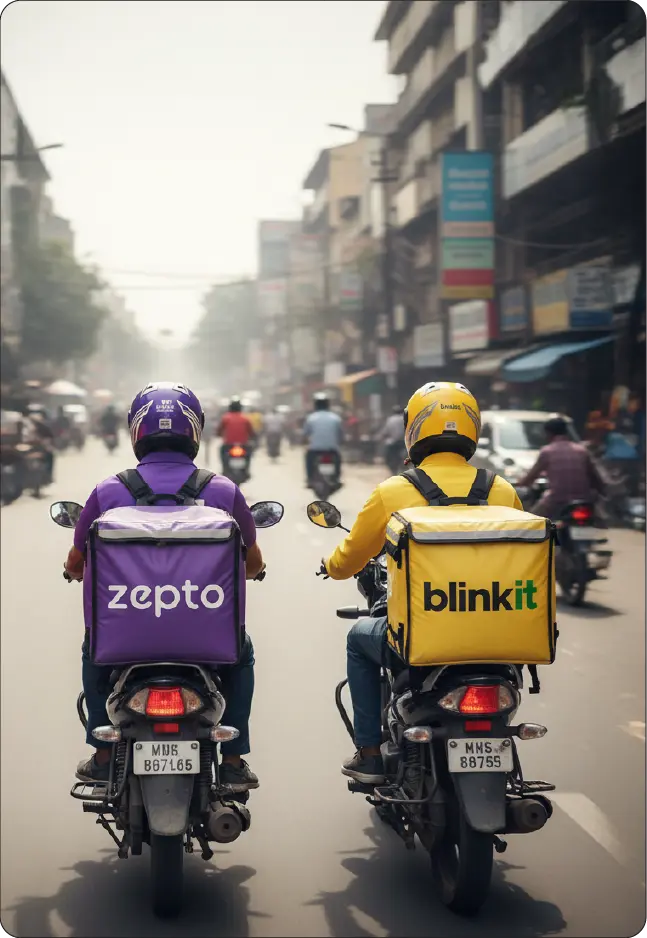
Quick Overview
A leading grocery aggregator partnered with Product Data Scrape to improve pricing visibility across India's rapidly growing quick-commerce ecosystem. The objective was to Tracked Daily Prices Across 7 Quick-Commerce Apps In Real Time while collecting accurate Promotion and deal intelligence to help the client monitor price fluctuations, promotional campaigns, and product availability. Over a four-month implementation period, our automated data extraction platform delivered continuous market insights that enabled the client to respond quickly to pricing changes. The solution significantly improved pricing transparency, accelerated decision-making, and strengthened competitive benchmarking. Key outcomes included a 98% data accuracy rate, a 70% reduction in manual monitoring effort, and real-time visibility into pricing and promotional changes across multiple quick-commerce platforms.
The Client
The client is a fast-growing grocery aggregation platform that helps consumers compare products, prices, discounts, and delivery options from multiple quick-commerce applications through a single interface. As the quick-commerce market expanded rapidly, pricing changed several times each day due to flash sales, location-based offers, and inventory availability. This created a growing challenge for maintaining reliable and current product information.
To remain competitive, the client needed to Track Daily Grocery Prices Across Quick-Commerce Apps while ensuring that customers always viewed the latest prices and promotions. Manual data collection could no longer keep pace with the increasing number of products, frequent price updates, and expanding geographic coverage. Inconsistent information affected customer trust, delayed business decisions, and limited competitive analysis.
The client also required scalable Grocery data scraping capabilities that could automatically collect product prices, discounts, availability, delivery estimates, and promotional offers from multiple quick-commerce platforms throughout the day. Beyond collecting data, they wanted standardized datasets that could feed internal dashboards, support pricing comparisons, and improve category-level analytics.
Partnering with Product Data Scrape enabled the client to automate data collection, improve data consistency, and build a real-time pricing intelligence platform capable of supporting future business growth.
Goals & Objectives
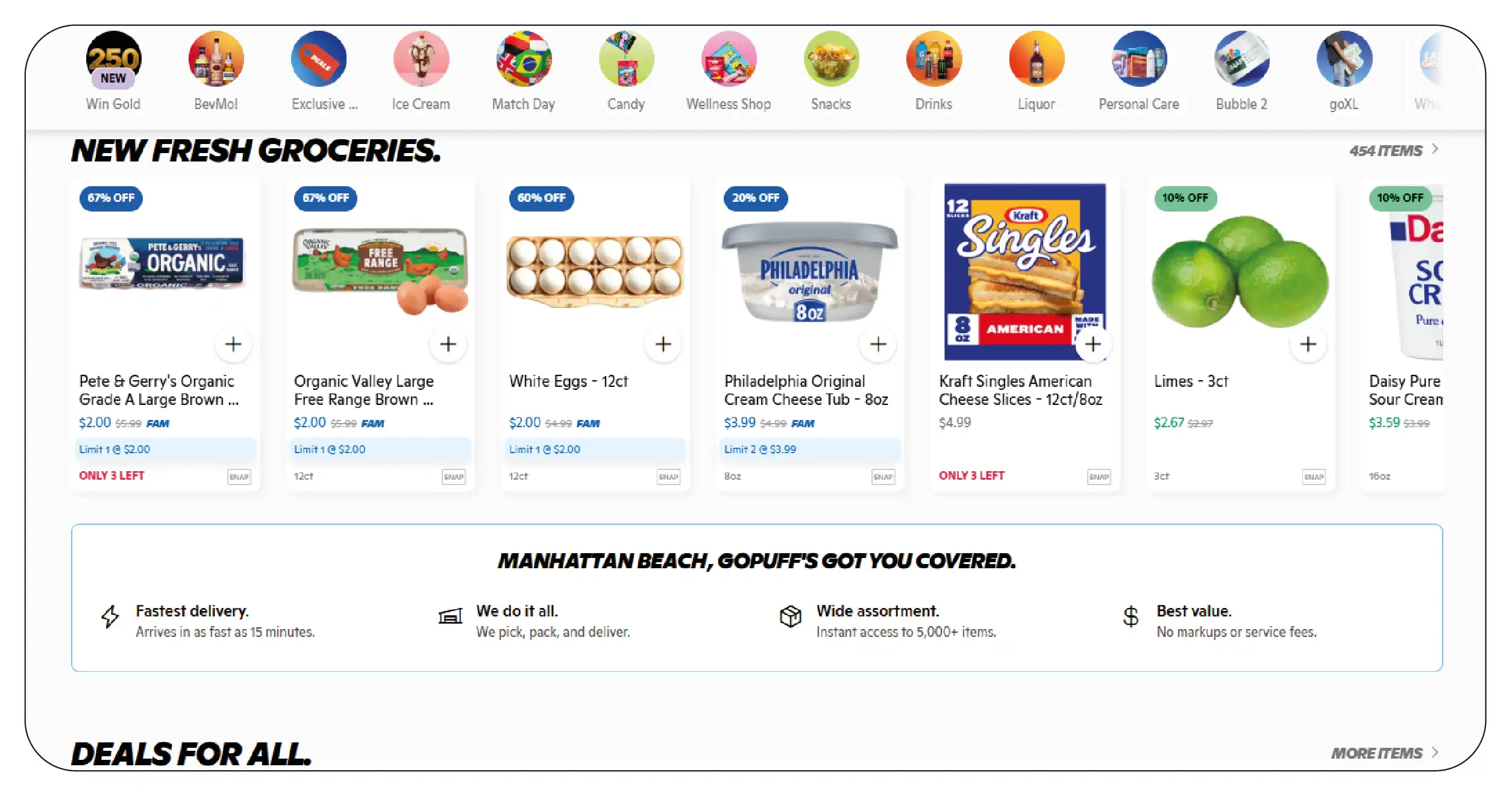
The project focused on building an automated market intelligence solution capable of monitoring thousands of grocery products across seven quick-commerce platforms. The client required a scalable system that could deliver reliable data with minimal manual intervention while supporting business growth and competitive intelligence.
The primary business goal was to Scrape Grocery Prices From Multiple Quick-Commerce Platforms to create a centralized pricing database. The client wanted greater market visibility, faster competitor comparisons, improved pricing transparency, and the ability to monitor promotions throughout the day without relying on manual processes.
From a technical perspective, the objective was to develop an automated platform using Quick commerce & FMCG data that continuously collected, validated, standardized, and delivered structured datasets through scheduled workflows. The system also needed to integrate seamlessly with the client's analytics dashboards, ensuring real-time reporting and scalable performance as additional retailers and product categories were introduced.
The project established clear performance indicators to measure success:
Achieve more than 98% pricing accuracy across monitored products.
Reduce manual monitoring effort by over 70%.
Refresh product prices multiple times daily.
Improve promotional tracking across seven quick-commerce platforms.
Standardize product information for consistent reporting.
Increase dashboard update speed through automated workflows.
Support scalable expansion into new cities and product categories.
Deliver near real-time pricing intelligence for faster business decisions.
The Core Challenge
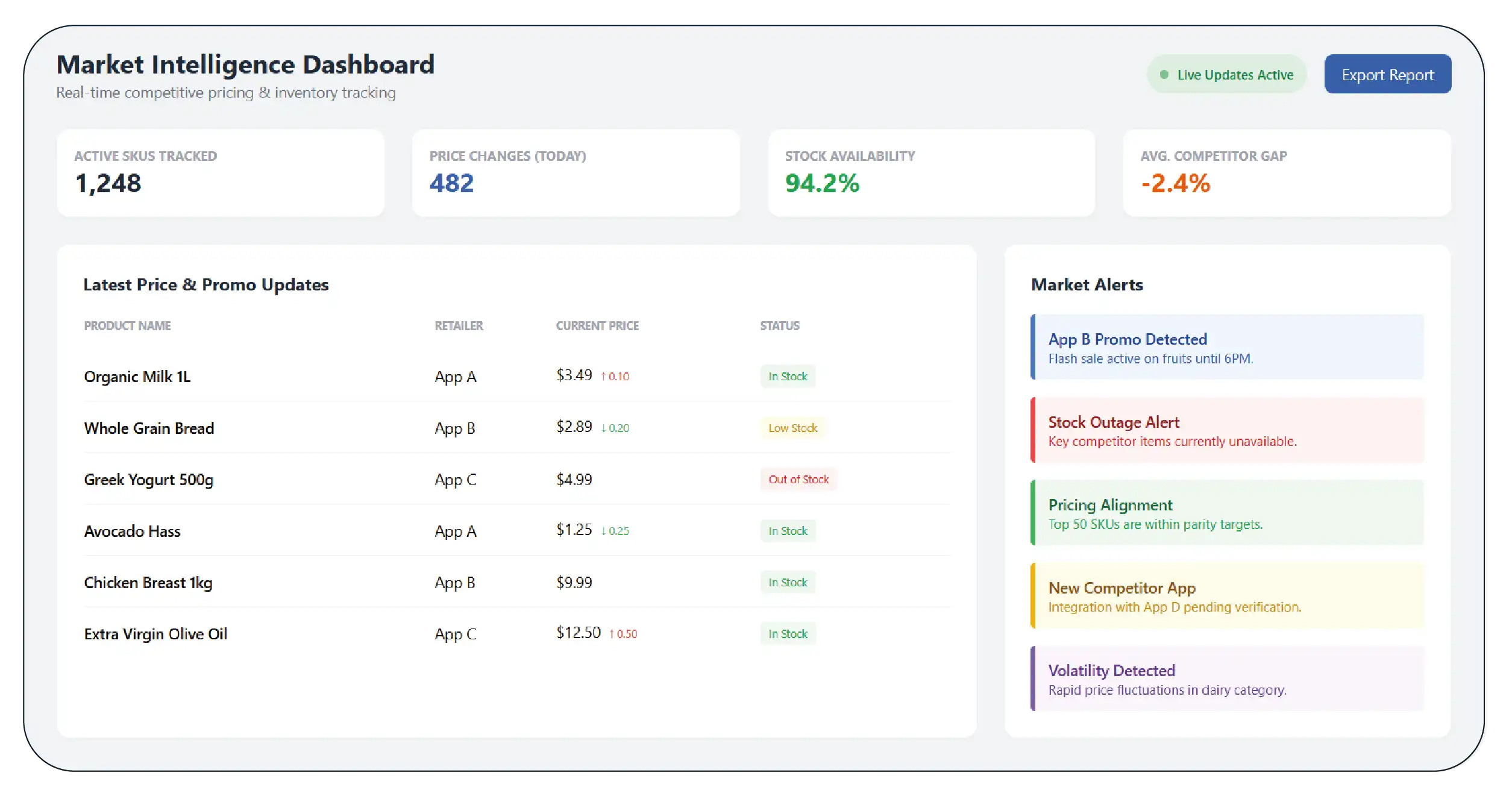
The client faced increasing operational complexity as product prices, promotional offers, and inventory availability changed several times each day across multiple quick-commerce applications. Each platform used different product structures, pricing formats, and promotional mechanisms, making manual monitoring inefficient and prone to errors. The business needed Real-Time Grocery Pricing Analytics Across Delivery Apps to provide a unified view of market movements without relying on repetitive manual processes.
Several operational bottlenecks slowed decision-making. Teams spent hours collecting product information from different apps, validating data, and updating internal dashboards. Because prices frequently changed throughout the day, the collected information often became outdated before analysis could begin. This delayed competitive responses and reduced the effectiveness of pricing strategies.
Maintaining consistent product mapping across retailers was another major challenge. Different product names, package sizes, and promotional labels made accurate comparisons difficult. As the number of monitored SKUs continued to grow, manual workflows could no longer deliver the required speed or accuracy.
The client also needed dependable Real-time price tracking that could capture multiple daily price updates, promotional changes, stock availability, and delivery estimates without interrupting business operations. Without automation, inconsistent datasets limited competitive benchmarking, reduced reporting quality, and made it difficult for stakeholders to make confident business decisions based on current market conditions.
Our Solution
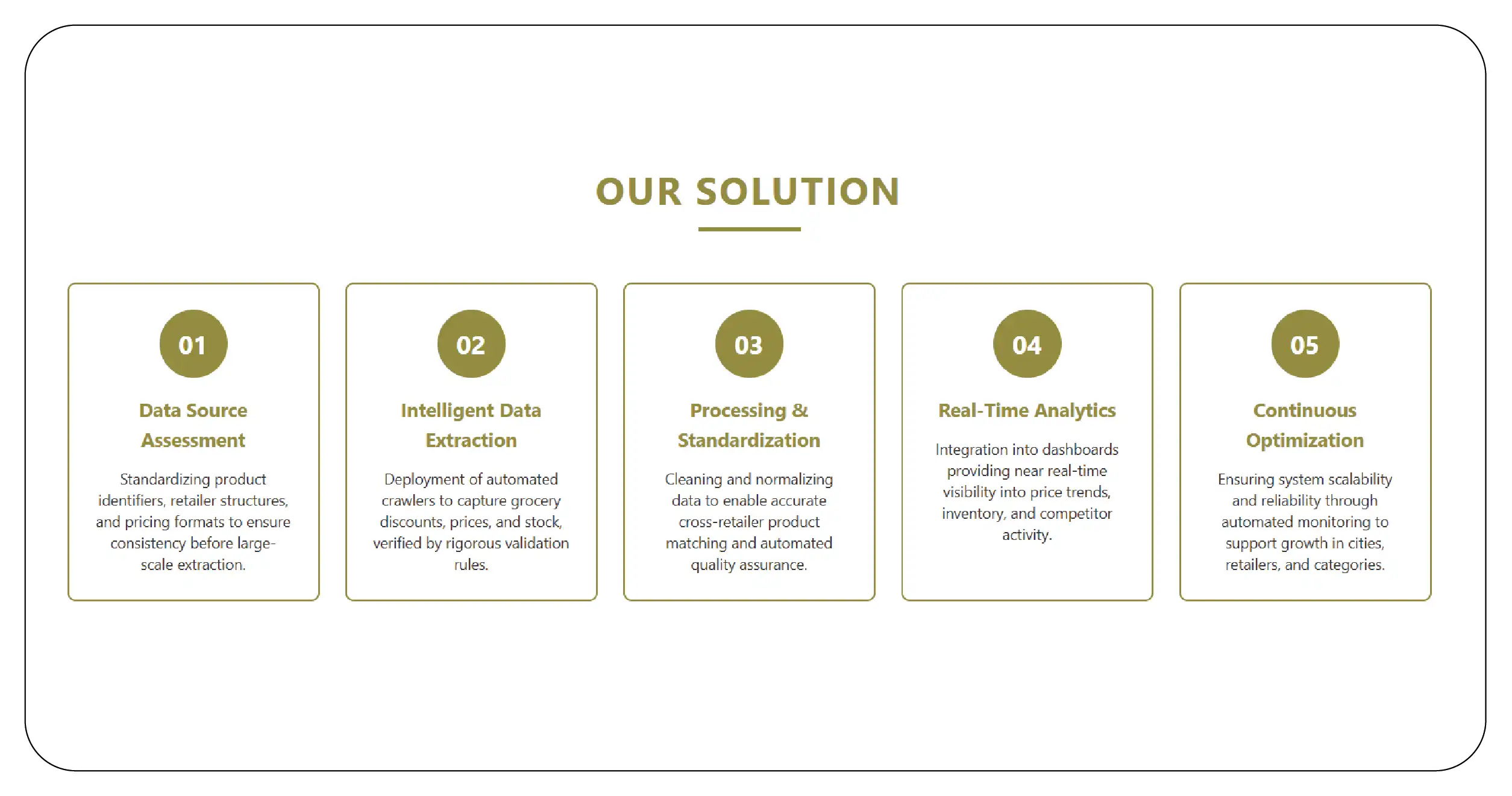
Product Data Scrape designed and implemented a fully automated grocery intelligence platform that continuously monitored pricing, promotions, inventory availability, and delivery information across seven leading quick-commerce applications. The solution was deployed in carefully planned phases to ensure accuracy, scalability, and seamless integration with the client's existing reporting infrastructure.
Phase 1: Data Source Assessment
The first phase involved identifying target product categories, retailer structures, pricing formats, and promotional patterns. Product identifiers were standardized to ensure accurate comparisons across multiple applications. This foundation reduced duplicate records and improved data consistency before large-scale extraction began.
Phase 2: Intelligent Data Extraction
Next, automated crawlers were deployed to Scrape Grocery App Discounts And Promotional Offers along with product prices, stock availability, estimated delivery times, and category information. Multiple validation rules verified extracted data before it entered the processing pipeline, improving overall reliability and minimizing inconsistencies.
Phase 3: Data Processing and Standardization
Collected information was cleaned, normalized, and matched across retailers. Products with different naming conventions but identical specifications were grouped together, enabling accurate cross-platform comparisons. Automated quality checks ensured high data accuracy while reducing manual intervention.
Phase 4: Real-Time Analytics Integration
The standardized datasets were integrated directly into the client's analytics dashboards. Interactive reports displayed price changes, promotional trends, inventory movements, and competitor activity in near real time. Automated alerts notified business teams whenever significant pricing or promotional changes occurred.
Phase 5: Continuous Optimization
The final phase focused on performance optimization and scalability. Automated monitoring ensured uninterrupted data collection while supporting additional cities, retailers, and product categories. The platform was designed to adapt quickly to website changes, ensuring long-term reliability and consistent delivery of actionable market intelligence.
Results & Key Metrics
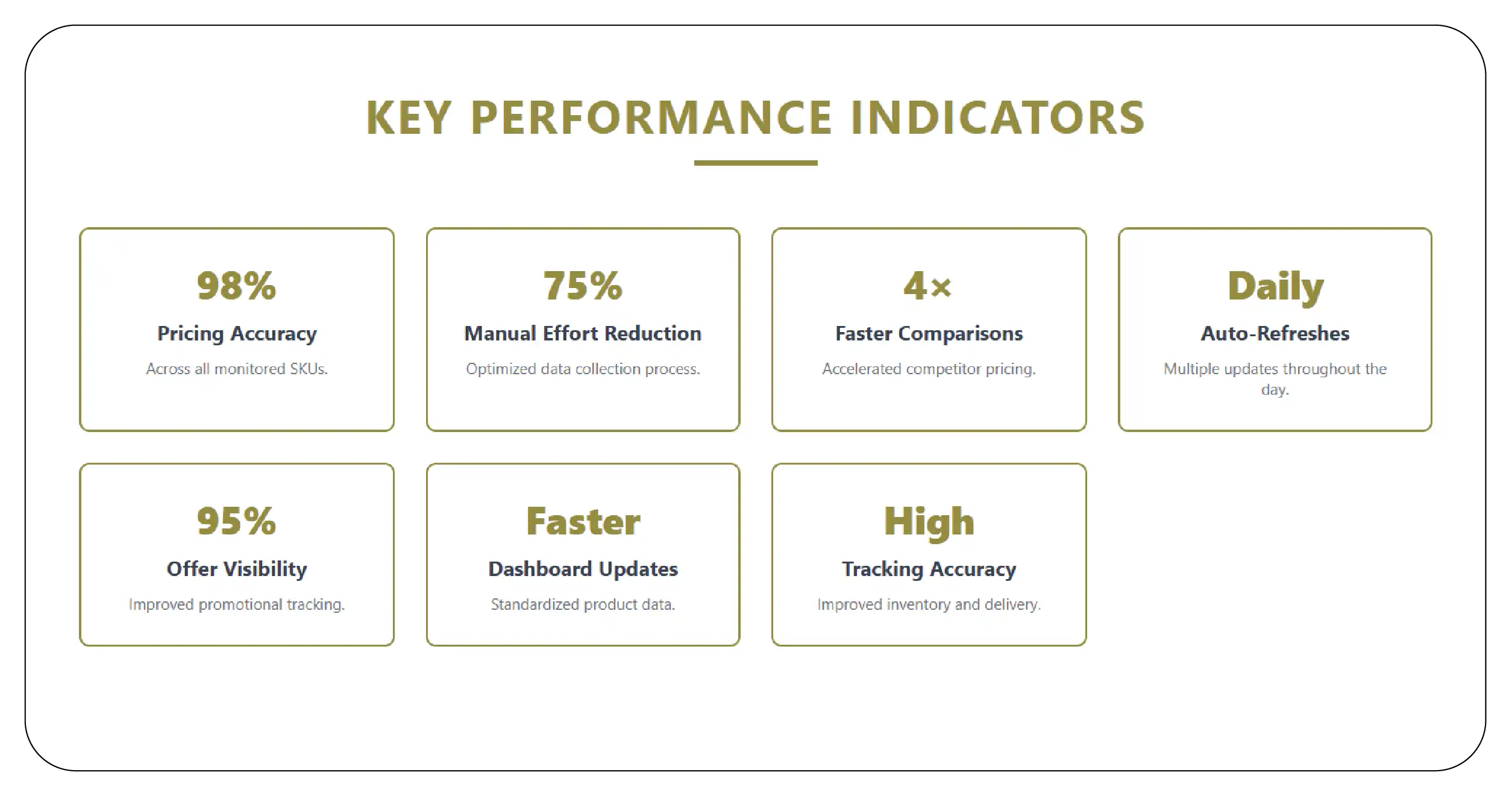
The automated solution delivered measurable improvements in pricing intelligence, operational efficiency, and competitive monitoring. By replacing manual workflows with automated data collection, the client gained continuous visibility into product prices, promotions, delivery timelines, and inventory movements across seven quick-commerce platforms.
The implementation generated significant business improvements through automation and real-time analytics. Using Grocery Offers, Discounts & Delivery Time Monitoring Across Quick-Commerce Apps, the client achieved the following outcomes:
98% pricing data accuracy across monitored SKUs.
75% reduction in manual data collection effort.
4× faster competitor price comparisons.
Multiple automated price refreshes throughout the day.
95% improvement in promotional offer visibility.
Faster dashboard updates with standardized product data.
Improved inventory and delivery tracking accuracy.
Enhanced decision-making through centralized market intelligence.
Results Narrative
The client successfully transformed its pricing intelligence process from a manual, time-consuming operation into a fully automated monitoring system. Business teams could instantly identify pricing fluctuations, promotional campaigns, stock availability, and delivery changes across multiple quick-commerce platforms. This improved response time for pricing decisions and strengthened competitive analysis. Leadership gained greater confidence in market reporting because dashboards reflected current market conditions instead of outdated information. The scalable platform also positioned the client for future expansion into additional cities, retailers, and grocery categories while maintaining high-quality data and operational efficiency.
What Made Product Data Scrape Different
At Product Data Scrape, we combine advanced automation, intelligent data validation, and scalable extraction frameworks to deliver reliable grocery market intelligence. Our proprietary workflows continuously monitor pricing, inventory, promotional offers, and delivery updates while automatically adapting to changing retailer website structures. Unlike traditional scraping solutions, our platform supports high-frequency updates with built-in quality controls that ensure consistent and structured datasets. Our capability to Track Competitor Product Pricing and Promotions in near real time enables businesses to make faster pricing decisions, improve competitive benchmarking, and maintain accurate market visibility. The result is a dependable, future-ready data intelligence platform designed specifically for rapidly evolving quick-commerce environments.
Client Testimonial
"Working with Product Data Scrape completely transformed how we monitor the quick-commerce market. Their automated platform enabled us to Tracked Daily Prices Across 7 Quick-Commerce Apps In Real Time, eliminating manual effort while significantly improving pricing visibility and reporting accuracy. Our teams now receive reliable market intelligence throughout the day, allowing us to respond quickly to competitor activity, promotional campaigns, and pricing changes. The solution has strengthened our analytics capabilities, improved operational efficiency, and given us greater confidence in every strategic decision we make. Their technical expertise, responsive support, and scalable approach have made them a valuable long-term technology partner."
— Head of Business Intelligence, Leading Grocery Aggregator
Conclusion
The grocery aggregation industry depends on fast, accurate, and continuously updated market intelligence. By automating data collection across multiple quick-commerce platforms, the client significantly improved pricing visibility, promotional monitoring, and operational efficiency. The solution provided reliable insights that enabled quicker business decisions and stronger competitive positioning. Additionally, Extract Customer Ratings and Reviews helped enrich product intelligence by capturing valuable customer feedback alongside pricing and promotional data. With a scalable automation framework in place, the client is well-equipped to expand into new markets, monitor additional retailers, and continue delivering an exceptional shopping experience while adapting to the rapidly evolving quick-commerce landscape.
Frequently Asked Questions
1. Why is daily price tracking important for grocery aggregators?
Daily price tracking helps grocery aggregators monitor changing product prices, promotions, stock availability, and delivery timelines. Accurate market data enables better pricing comparisons, faster business decisions, and improved customer experiences.
2. How does automated grocery data collection improve business performance?
Automation eliminates manual monitoring, reduces errors, delivers real-time pricing intelligence, and provides standardized datasets for reporting. This improves operational efficiency while supporting faster competitive analysis and pricing optimization.
3. What types of data can be collected from quick-commerce applications?
Businesses can collect product prices, discounts, promotional offers, inventory availability, delivery estimates, customer ratings, product descriptions, categories, brands, package sizes, and seller information for detailed market intelligence.
4. How frequently should grocery pricing data be updated?
For quick-commerce businesses, pricing should be monitored several times throughout the day because promotions, stock availability, and delivery conditions change frequently, requiring timely and accurate competitive intelligence.
5. How does Product Data Scrape support grocery intelligence projects?
Product Data Scrape delivers scalable data extraction, automated monitoring, standardized datasets, and real-time analytics that help grocery aggregators improve pricing intelligence, competitive benchmarking, operational efficiency, and long-term business growth.


 Singapore
 EMAIL
EMAIL
 PHONE
PHONE


.webp)
.webp "thumb")
.webp "thumb")
.webp "thumb")








.webp)