Introduction
Businesses can automate grocery data collection by using a structured API solution that gathers product details, pricing, availability, promotions, and SKU-level information from online grocery platforms. This helps retailers improve market analysis, inventory planning, and pricing decisions.
Industry Insight: The online grocery sector is expected to continue expanding rapidly, with automated retail intelligence systems becoming essential for businesses managing thousands of products across digital marketplaces.
Modern retailers need accurate and timely information to compete in the fast-changing grocery ecosystem. Manual tracking of product prices, stock levels, and promotional campaigns is slow and difficult to scale. A technology-driven approach allows companies to collect and analyze large volumes of grocery information efficiently.
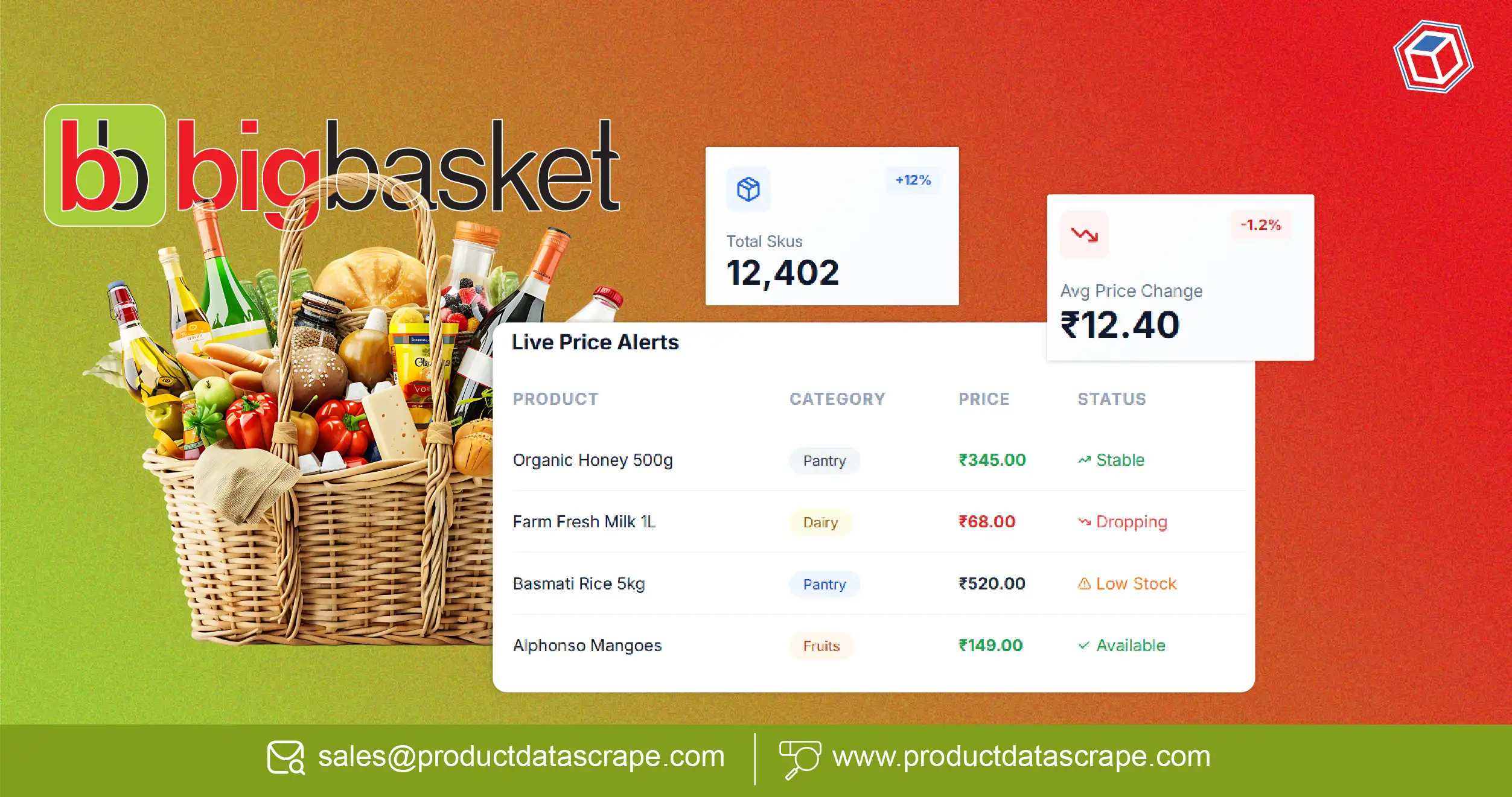
The BigBasket Data Scraping API enables businesses to access structured grocery data for analytics, monitoring, and decision-making. It helps brands track product movements, understand competitor activities, and improve operational strategies.
The rise of quick commerce has increased the demand for instant product insights. The BigBasket Quick Commerce Scraper supports businesses that need faster visibility into product availability, pricing changes, and customer-focused trends.
Target Audience:
- Grocery retailers
- eCommerce businesses
- Consumer brands
- Market research companies
- Retail analysts
Business Challenge:
Companies struggle with changing prices, incomplete product visibility, and limited competitor insights. Automated grocery data collection solves these challenges with accurate and scalable information.
What Product Information Can Businesses Collect From Grocery Platforms?
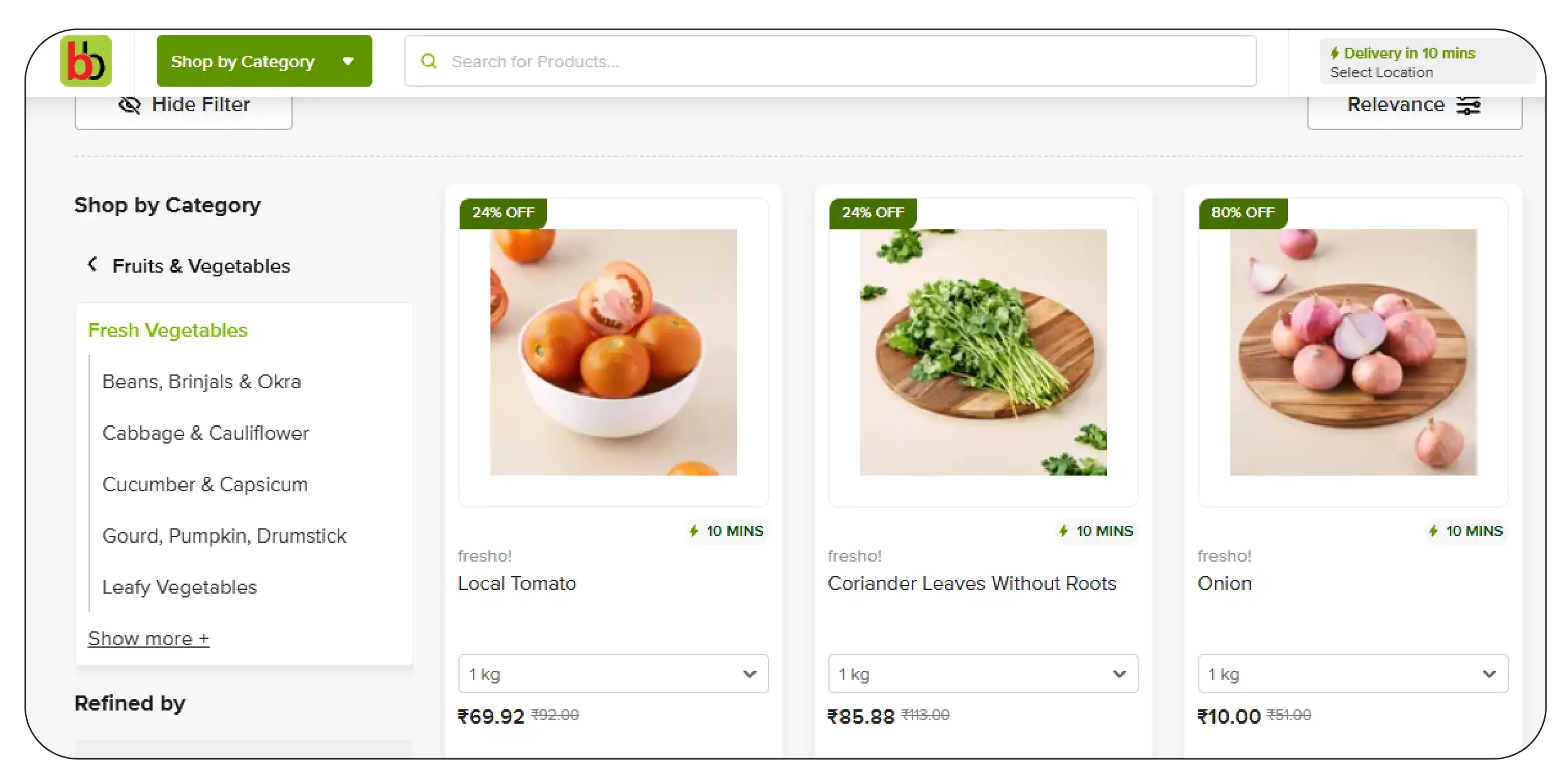
Businesses can collect product names, categories, prices, discounts, availability, ratings, SKUs, and promotional information to build detailed retail intelligence systems.
Industry Insight: Retail analytics platforms processing structured product datasets can improve product monitoring efficiency by more than 60% compared with manual tracking methods.
Businesses can extract multiple data points that support different retail operations.
Product Data Fields
Companies can collect:
- Product name
- Brand details
- Category information
- Product descriptions
- Images and specifications
- Pack size and quantity
- Product variants
Pricing Information
Pricing extraction helps businesses monitor:
- Current selling price
- Discounted price
- Promotional pricing
- Price changes
- Competitive pricing trends
Inventory Information
Businesses can track:
- Product availability
- Stock status
- Delivery availability
- Regional availability
Customer Engagement Data
Useful customer-focused fields include:
- Ratings
- Reviews
- Popular products
- Frequently purchased items
Common Use Cases
Grocery data collection supports:
| Use Case |
Business Benefit |
| Price monitoring |
Better pricing decisions |
| Inventory tracking |
Reduced stock issues |
| Competitor analysis |
Improved market positioning |
| Product analytics |
Better assortment planning |
How Can Businesses Improve Product Visibility With Real-Time Data?
Businesses improve product visibility by collecting updated marketplace information and analyzing product availability, assortment changes, and pricing movements.
Industry Insight: By 2026, retailers using real-time monitoring systems are expected to achieve faster inventory responses and improved customer satisfaction.
How Does Product Availability Tracking Help Retailers?
Product Availability Tracking APIs help businesses monitor product presence, stock changes, and regional availability patterns across grocery and retail platforms.
Industry Insight: Retailers using automated availability tracking systems can identify stock gaps faster, improve replenishment planning, and reduce missed sales opportunities.
Availability monitoring provides valuable insights that support inventory optimization and demand forecasting.
Availability Tracking Benefits
Retailers use availability insights to:
- Detect unavailable products
- Track inventory movement
- Identify high-demand categories
- Improve replenishment planning
Business Advantages
Real-time availability monitoring helps businesses:
- Prevent missed sales opportunities
- Identify supply gaps
- Understand regional demand patterns
- Improve inventory allocation
Importance of Assortment Analytics
Assortment analytics helps businesses evaluate:
- Product category performance
- Brand distribution
- SKU growth
- Consumer demand patterns
Strategic Retail Insights
Retailers can identify:
- Which products require promotion
- Which categories need expansion
- Which items have declining demand
2020–2026 Retail Data Evolution
Retail data analytics has evolved significantly over recent years:
| Year |
Retail Data Focus |
Business Impact |
| 2020 |
Basic product tracking |
Manual market analysis |
| 2021 |
Price monitoring |
Better competitor awareness |
| 2022 |
Inventory insights |
Improved stock planning |
| 2023 |
Automated analytics |
Faster decision-making |
| 2024 |
Real-time monitoring |
Better customer experience |
| 2025 |
AI-powered insights |
Predictive retail planning |
| 2026 |
Automated optimization |
Smarter retail operations |
How Can Businesses Track Grocery Offers and Promotions?
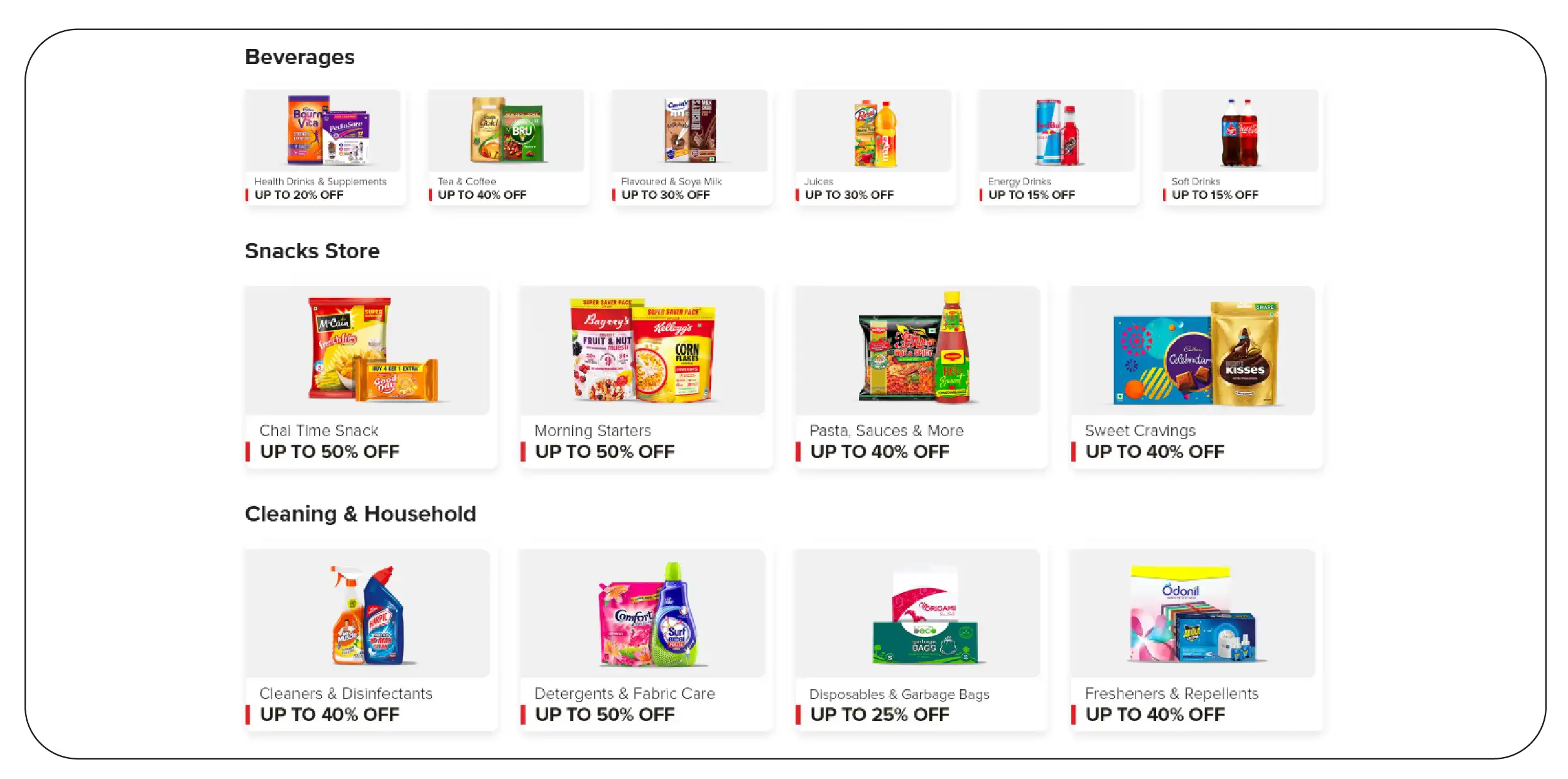
Businesses can monitor grocery promotions by collecting discount details, campaign information, and pricing changes from online grocery platforms.
Industry Insight: Promotional intelligence helps brands identify market opportunities and adjust campaigns based on competitor activity.
How Does Discount Monitoring Improve Retail Strategies?
BigBasket Offer and Discount Data Scraping helps businesses analyze:
- Discount percentages
- Promotional campaigns
- Limited-time offers
- Seasonal deals
- Bundle promotions
Market Intelligence Benefits
Brands use this information to understand:
- Competitor strategies
- Customer buying patterns
- Market demand changes
Key Benefits
Businesses can:
- Compare promotional pricing
- Measure campaign effectiveness
- Improve promotional planning
- Identify discount trends
Example Data Structure
| Data Field |
Purpose |
| Product Name |
Product identification |
| Original Price |
Price comparison |
| Discount Price |
Offer analysis |
| Discount Percentage |
Promotion tracking |
| Offer Duration |
Campaign planning |
Promotional insights allow retailers to create better pricing strategies and improve customer engagement.
How Can Businesses Extract Grocery Product Information Automatically?
Businesses can automatically collect grocery information by using API-based extraction systems that gather structured product details for analytics and reporting.
Industry Insight: Automated extraction reduces repetitive data collection work and enables businesses to analyze thousands of products quickly.
How Does API-Based Extraction Work?
Businesses can Extract Product Data from BigBasket Using API solutions to collect:
- Product information
- Category details
- Pricing data
- Availability updates
- SKU details
Extraction Workflow
The process usually includes:
- Connecting to data extraction systems
- Collecting product information
- Cleaning and organizing datasets
- Analyzing retail trends
Benefits of Automated Collection
- Faster data processing
- Higher accuracy
- Reduced manual effort
- Scalable product monitoring
Supporting Retail Operations
Assortment and availability monitoring helps retailers understand:
- Product expansion opportunities
- Stock performance
- Category trends
Businesses can use these insights to optimize catalogs and improve customer experiences.
How Can Businesses Build Better Product Catalog Intelligence?
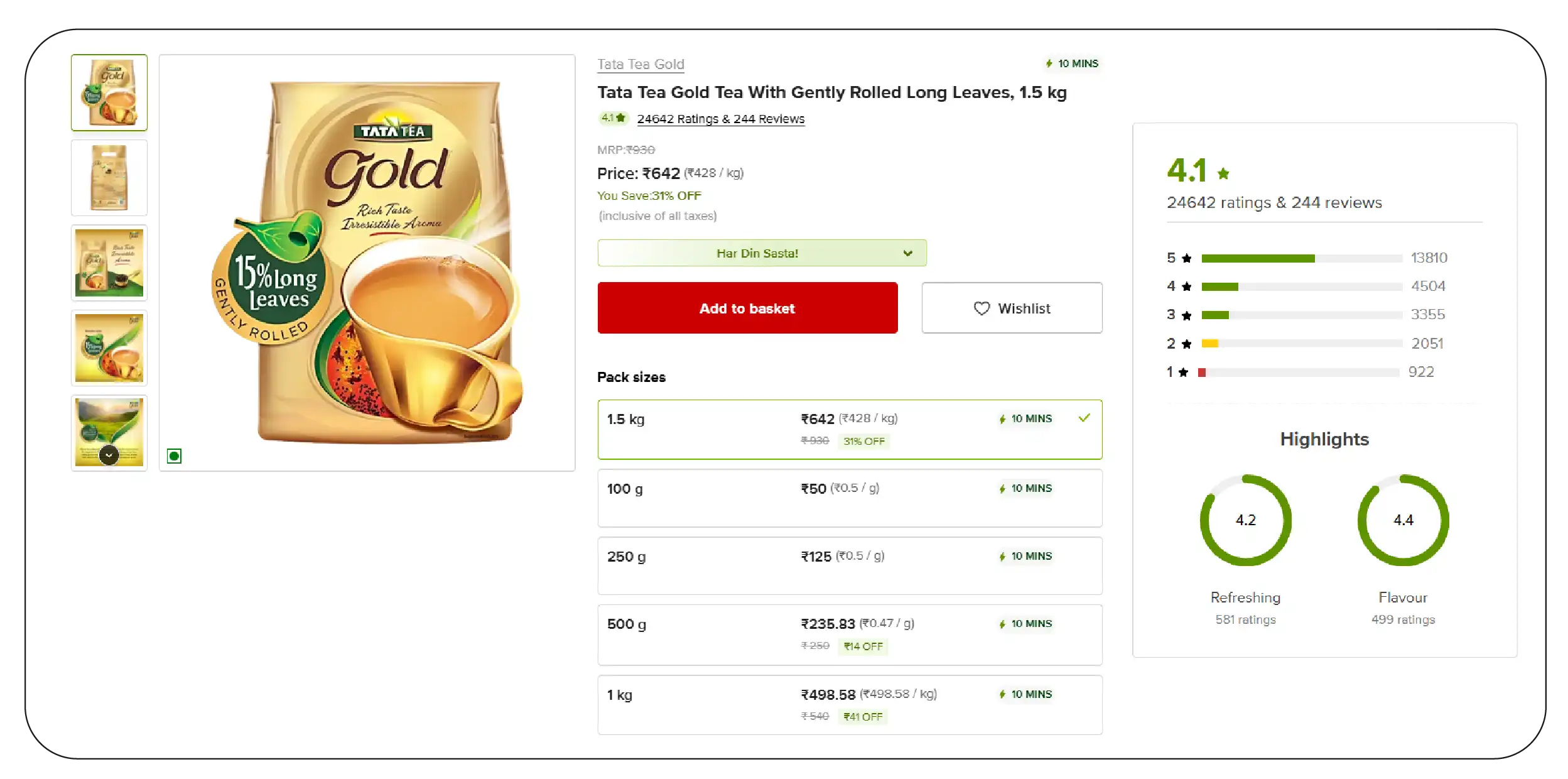
Businesses can improve catalog management by collecting complete product information, organizing SKUs, and analyzing product changes across grocery platforms.
Industry Insight: Retail organizations using automated catalog intelligence systems can reduce product management workload by 50–65% through improved automation and structured data processing.
How Does Product Catalog Data Support Retail Growth?
BigBasket Product Catalog Data Extraction enables businesses to collect detailed product information and maintain accurate digital catalogs.
Important Catalog Fields
- Product names
- Product descriptions
- Brand information
- Category hierarchy
- Product images
- Pack sizes
- Product variants
- Availability status
A well-maintained catalog helps businesses improve:
- Search accuracy
- Customer experience
- Product discovery
- Inventory decisions
Why Is Catalog Standardization Important?
Different grocery platforms often use different formats for product information. Businesses need standardized datasets to compare products accurately.
Catalog standardization helps with:
- Removing duplicate products
- Matching similar SKUs
- Organizing categories
- Improving analytics accuracy
Product Catalog Analysis Benefits
| Business Area |
Impact of Catalog Data |
| Product Management |
Better product organization |
| Marketing |
Improved campaign targeting |
| Sales Planning |
Better demand prediction |
| Customer Experience |
Faster product discovery |
A complete product catalog gives businesses a clear view of market changes and customer preferences.
How Can Businesses Analyze Product, SKU, and Pricing Information?
Businesses can analyze product, SKU, and pricing information to understand market trends, optimize promotions, and improve competitive positioning.
Industry Insight: Pricing analytics platforms help retailers identify market movements faster by continuously tracking product-level changes.
What Data Can Be Collected?
Businesses can Extract Product, SKU and Pricing Data from BigBasket to monitor:
- Product names
- SKU identifiers
- Current prices
- Discount changes
- Product availability
- Category movement
SKU-level information provides deeper visibility into individual product performance.
Why Is SKU Data Important?
- Identify fast-moving products
- Monitor inventory changes
- Compare product variations
- Improve assortment planning
How Does Pricing Analysis Support Retailers?
Retailers use pricing information to:
- Compare competitor prices
- Identify pricing gaps
- Improve promotions
- Increase profitability
Brands can use this intelligence to price and promote products more effectively based on market conditions.
Pricing Monitoring Table (2020–2026)
| Year |
Pricing Approach |
Retail Advantage |
| 2020 |
Manual price checks |
Limited insights |
| 2021 |
Automated tracking |
Faster comparisons |
| 2022 |
Competitive analysis |
Better pricing decisions |
| 2023 |
Real-time monitoring |
Quick adjustments |
| 2024 |
Dynamic pricing |
Improved margins |
| 2025 |
AI recommendations |
Predictive pricing |
| 2026 |
Automated optimization |
Maximum efficiency |
What Are the Major Business Applications of Grocery Data Extraction?
Grocery data extraction supports pricing analysis, inventory management, competitor research, assortment planning, and retail forecasting.
Industry Insight: Businesses using retail data intelligence can improve operational decision-making by analyzing real-time marketplace signals.
How Do Companies Use Grocery Data?
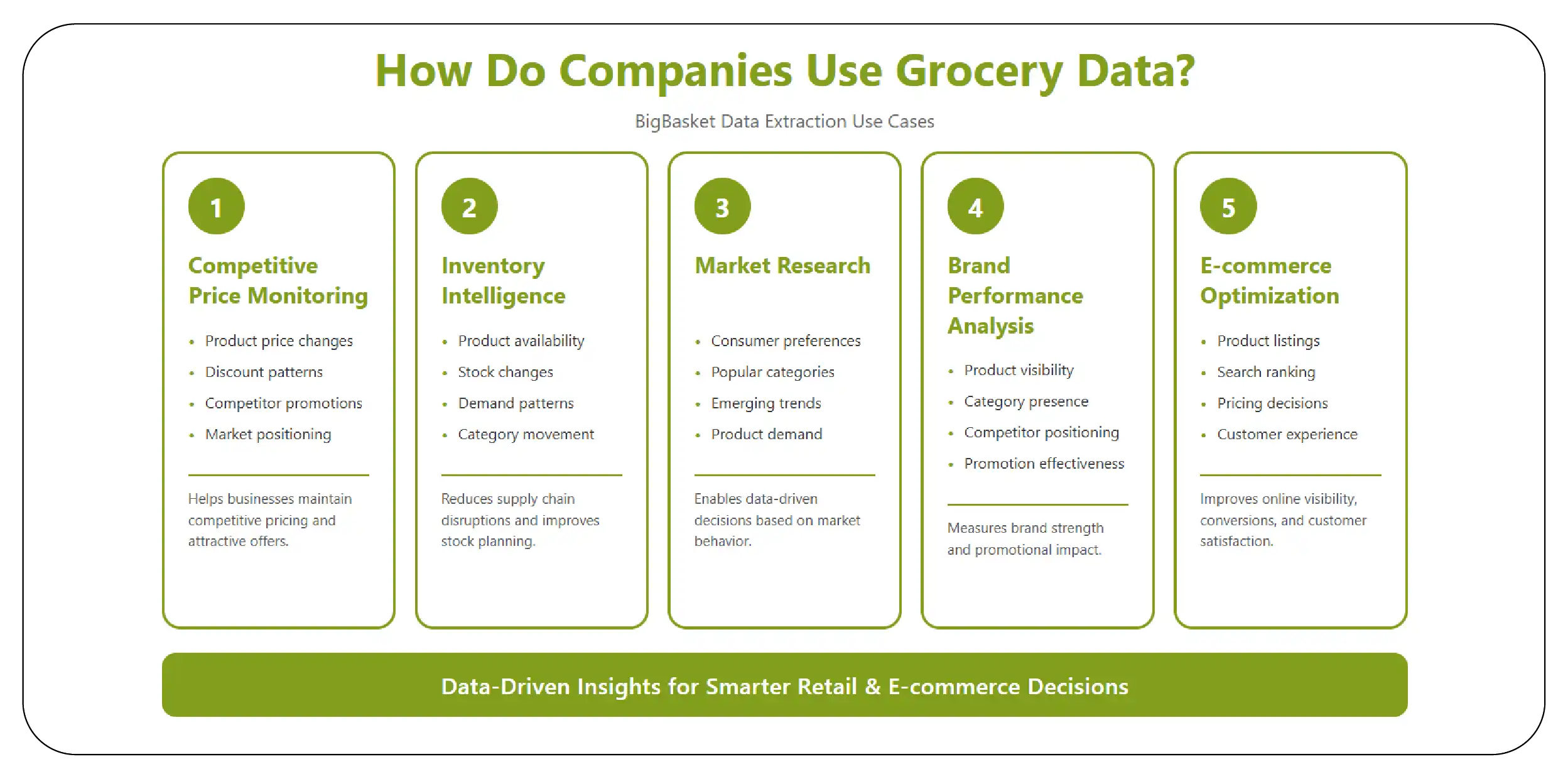
BigBasket Data Extraction Use Cases include multiple business applications:
1. Competitive Price Monitoring
Companies track:
- Product price changes
- Discount patterns
- Competitor promotions
- Market positioning
This helps businesses maintain competitive offers.
2. Inventory Intelligence
Retailers analyze:
- Product availability
- Stock changes
- Demand patterns
- Category movement
This reduces supply chain issues.
3. Market Research
Businesses use extracted data to understand:
- Consumer preferences
- Popular categories
- Emerging trends
- Product demand
4. Brand Performance Analysis
Brands can measure:
- Product visibility
- Category presence
- Competitor positioning
- Promotion effectiveness
5. E-commerce Optimization
Online retailers use data to improve:
- Product listings
- Search ranking
- Pricing decisions
- Customer experience
Common Use Case Overview
| Use Case |
Extracted Data |
Business Outcome |
| Competitor analysis |
Price and promotions |
Better market strategy |
| Inventory planning |
Stock information |
Reduced shortages |
| Catalog management |
Product details |
Accurate listings |
| Demand forecasting |
Product trends |
Smarter decisions |
| Promotion analysis |
Discount data |
Better campaigns |
Why Choose Product Data Scrape?
Product Data Scrape provides scalable grocery data solutions that help businesses collect accurate retail information for analytics, pricing, and market research.
Industry Insight: Modern retail companies increasingly depend on automated data systems to improve operational speed and reduce manual monitoring efforts.
Our solutions help businesses access structured grocery intelligence through advanced extraction methods.
Key advantages include:
- Scalable data collection
- Clean and organized datasets
- Product-level monitoring
- Competitive analysis support
- Real-time retail insights
A powerful Web Data Intelligence API allows businesses to transform marketplace information into actionable business strategies.
With reliable data pipelines, companies can monitor product trends, analyze market shifts, and make informed decisions faster.
Product Data Scrape supports retailers, brands, and analysts with customized solutions designed for modern eCommerce challenges.
Conclusion
Automated grocery data collection helps businesses improve pricing decisions, inventory planning, and competitive analysis by converting marketplace information into valuable insights.
The retail industry is becoming increasingly data-driven. Businesses need accurate product information to understand market movements, manage catalogs, and respond quickly to customer demands.
The BigBasket Data Scraping API enables organizations to collect structured grocery information efficiently and use it for analytics, forecasting, and optimization.
Advanced data solutions help businesses improve competitive pricing by tracking market changes and understanding competitor strategies.
With Product Data Scrape, companies can build smarter retail intelligence systems and unlock valuable marketplace insights.
Start optimizing your grocery data strategy today with Product Data Scrape and discover how automated extraction can improve pricing, inventory, and business growth!
FAQs
1. What is BigBasket Data Scraping API used for?
BigBasket Data Scraping API helps businesses collect grocery product information, pricing details, availability data, and marketplace insights for retail analytics.
2. How can businesses track grocery prices automatically?
Businesses use automated extraction systems to monitor product prices, discounts, and competitor changes without manual tracking.
3. What data can be collected from grocery platforms?
Companies can collect product names, SKUs, prices, categories, availability, ratings, and promotional information.
4. How does Product Data Scrape support grocery analytics?
Product Data Scrape provides structured retail datasets that help businesses analyze products, pricing trends, and inventory movements.
5. Why is SKU-level grocery data important?
SKU-level data helps retailers track individual products, manage inventory, compare prices, and improve assortment decisions.


 Singapore
 EMAIL
EMAIL
 PHONE
PHONE


.webp)
.webp "thumb")
.webp "thumb")
.webp "thumb")








.webp)