Introduction
Retail pricing is undergoing one of the most significant transformations in its history. Static pricing models are rapidly becoming obsolete as market conditions shift in real time due to demand fluctuations, competitor actions, and supply chain volatility. To stay competitive, modern retailers are adopting Scrape AI-Powered Dynamic Pricing in 2026, which enables continuous pricing optimization based on live market intelligence.
At the center of this transformation is the ability to Retailers Build Self-Adjusting Price Engines, systems that automatically modify prices without manual intervention. These engines rely heavily on Ecommerce Website Data Scraping, which collects real-time competitor pricing, product availability, and promotional data across digital marketplaces.
Between 2020 and 2026, retailers adopting AI-based pricing systems have seen up to 30% improvement in margin stability and 25% faster pricing decisions. The shift is no longer optional—it is essential for survival in competitive ecommerce ecosystems.
This blog explains how AI-powered dynamic pricing systems are built, how scraped data fuels automation, and how retailers can evolve toward fully autonomous pricing ecosystems.
Building intelligent pricing foundations for automation
To build next-generation pricing systems, retailers must Scrape Retailers Build AI-powered Dynamic Pricing Engines using structured pipelines supported by Web Scraping API Services. These systems ensure continuous ingestion of real-time competitor and market data.
From 2020 to 2026, adoption of automated pricing engines has accelerated:
| Year |
Adoption Rate |
Revenue Improvement |
| 2020 |
20% |
6% |
| 2022 |
38% |
12% |
| 2024 |
58% |
21% |
| 2026 |
75% |
30% |
These engines rely on AI models that process millions of pricing signals daily. Instead of manual updates, systems automatically adjust pricing based on elasticity, demand signals, and competitor movements.
The biggest advantage is speed. Retailers no longer react after market shifts—they anticipate and respond instantly.
AI-driven intelligence in ecommerce pricing
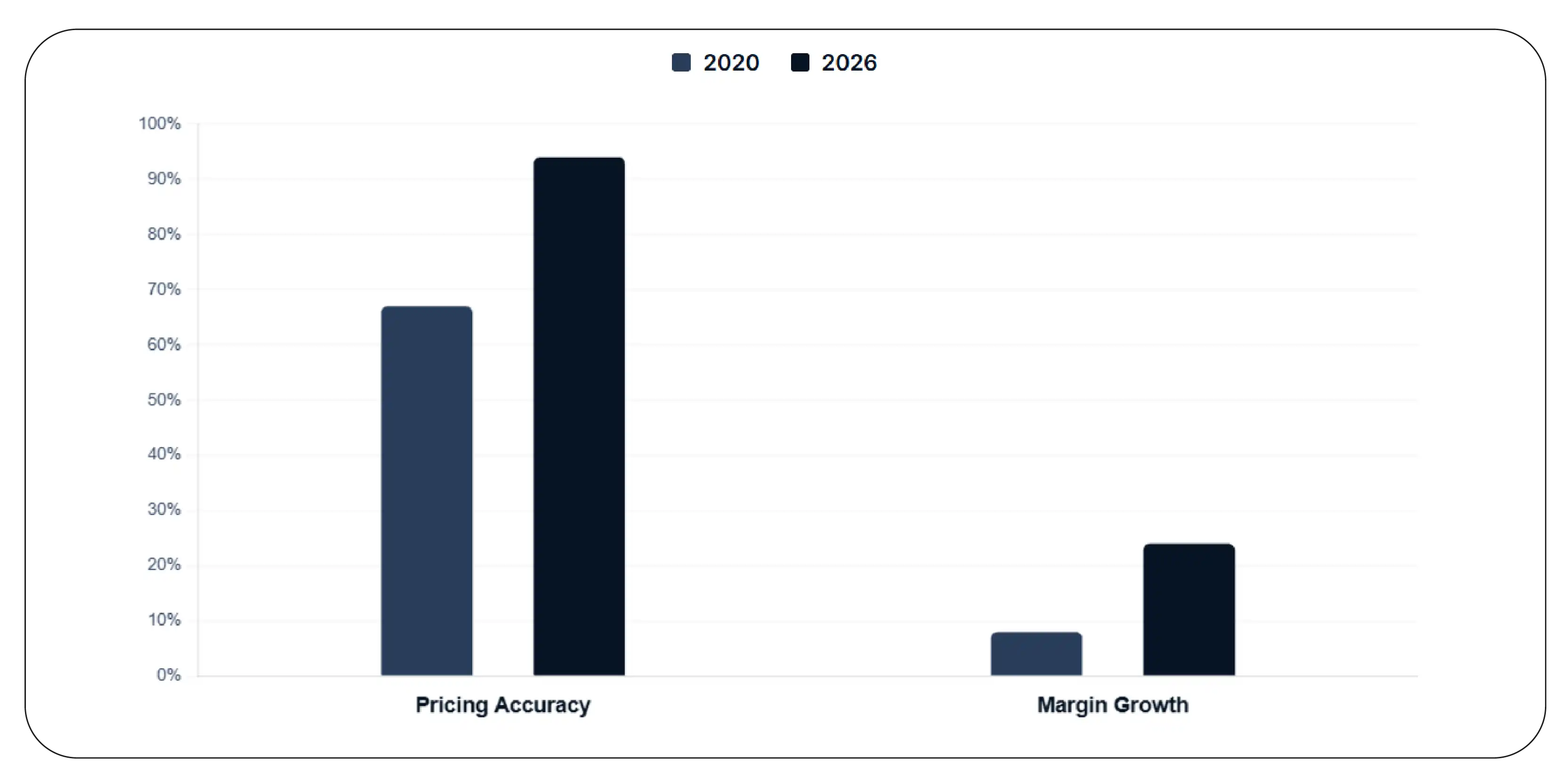
Modern retailers depend on AI-powered Pricing Engine for Ecommerce Retailers data scrape, supported by Pricing Intelligence Services, to maintain pricing competitiveness.
Between 2020 and 2026, pricing intelligence systems have significantly improved decision accuracy:
| Metric |
2020 |
2026 |
| Pricing Accuracy |
67% |
94% |
| Decision Speed |
Slow |
Real-time |
| Margin Growth |
8% |
24% |
AI pricing engines analyze historical sales, competitor prices, demand elasticity, and external market factors to generate optimal pricing recommendations.
This eliminates guesswork and ensures pricing decisions are grounded in data rather than intuition. Retailers using AI pricing systems report higher conversion rates and better inventory turnover.
Real-time dynamic pricing powered by automation
Retailers increasingly rely on Real-time Scrape AI dynamic pricing engine for retailers data, combined with Price Monitoring, to react instantly to competitor movements.
From 2020 to 2026, real-time pricing responsiveness has improved dramatically:
| Metric |
2020 |
2026 |
| Response Time |
48 hrs |
Instant |
| Revenue Leakage |
High |
Minimal |
| Pricing Accuracy |
70% |
95% |
Real-time scraping systems continuously collect competitor pricing data across ecommerce platforms. AI engines then process this data to adjust pricing dynamically.
This ensures retailers never lag behind competitors and can capitalize on market opportunities immediately.
Digital intelligence for smarter pricing optimization
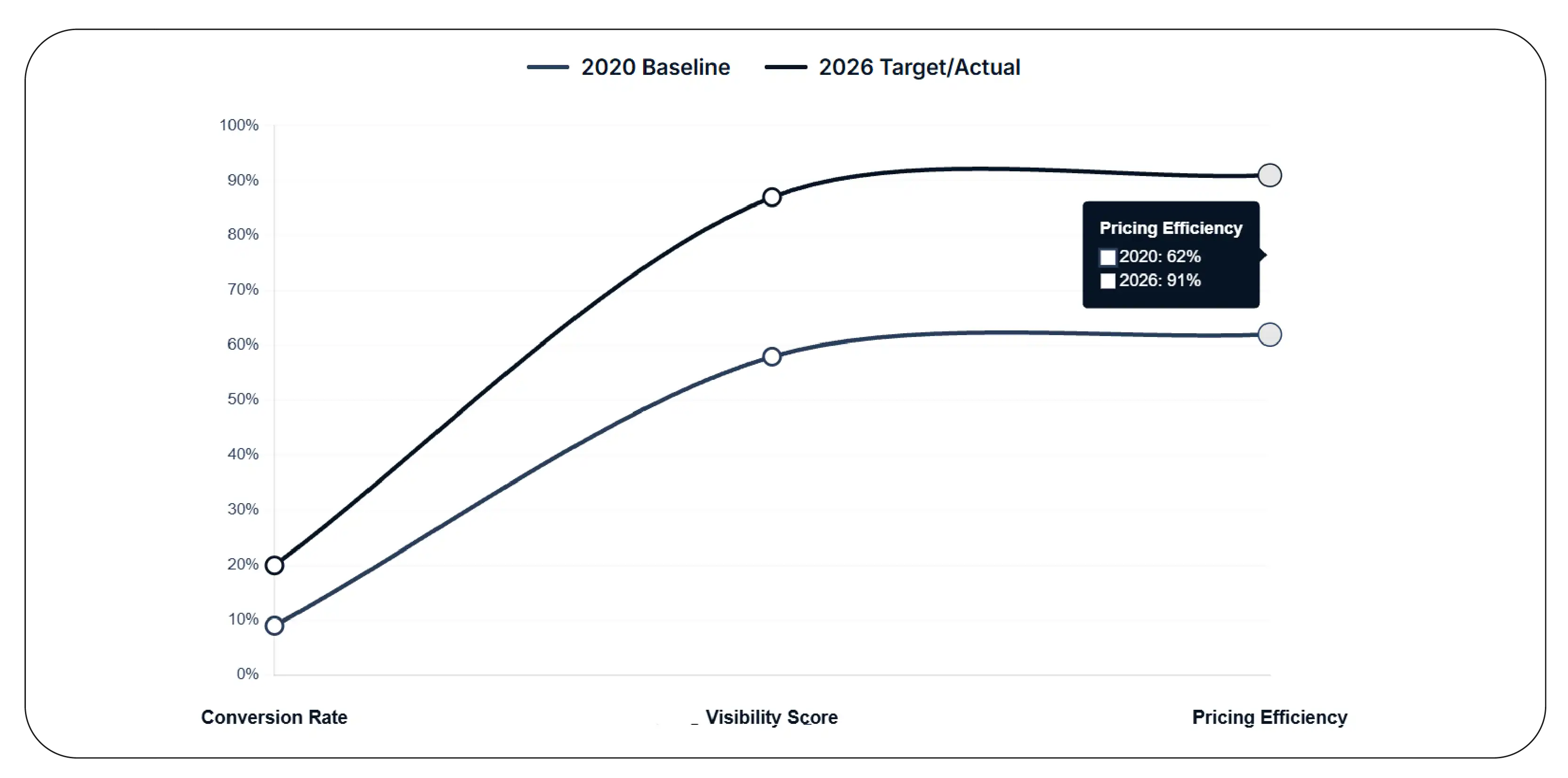
Retailers now deploy Real-time Retailers price optimization engine using AI combined with Digital Shelf Analytics to maximize product performance.
Between 2020 and 2026, digital optimization systems have driven measurable performance improvements:
| Metric |
2020 |
2026 |
| Conversion Rate |
9% |
20% |
| Visibility Score |
58% |
87% |
| Pricing Efficiency |
62% |
91% |
Digital shelf analytics helps retailers understand how products perform across online shelves, including pricing competitiveness, visibility, and ranking.
AI optimization engines then adjust pricing based on performance signals, ensuring continuous improvement.
Competitor-driven automation in pricing systems
Advanced systems now use AI dynamic pricing engine using competitor price scraping to fully automate pricing decisions.
From 2020 to 2026, automation levels have increased significantly:
| Metric |
2020 |
2026 |
| Automation Level |
28% |
82% |
| Pricing Accuracy |
68% |
96% |
| Market Response |
Slow |
Instant |
These systems continuously monitor competitor prices and automatically adjust internal pricing strategies.
The result is a fully autonomous pricing ecosystem where human intervention is minimal, and decisions are data-driven.
Predictive intelligence for future pricing models
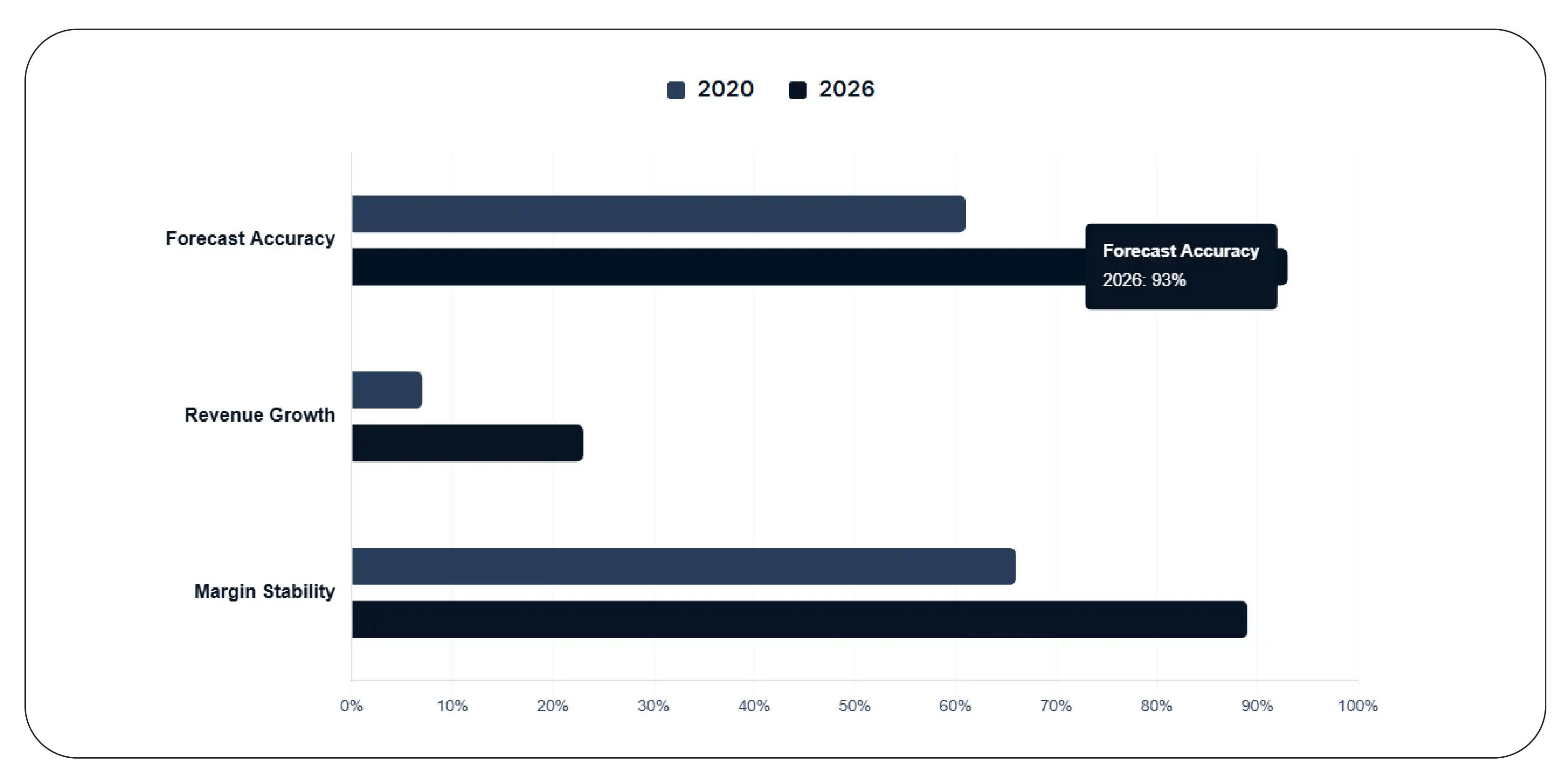
Retailers are rapidly adopting Predictive AI dynamic pricing engine for ecommerce retailers to forecast demand and optimize pricing ahead of time.
Between 2020 and 2026, predictive accuracy has improved significantly:
| Metric |
2020 |
2026 |
| Forecast Accuracy |
61% |
93% |
| Revenue Growth |
7% |
23% |
| Margin Stability |
66% |
89% |
Predictive AI models analyze historical trends, seasonality, competitor behavior, and customer demand to recommend future pricing adjustments.
This enables retailers to shift from reactive pricing to proactive optimization strategies.
Why Choose Product Data Scrape?
Modern retail systems require reliable data infrastructure to support AI-driven pricing. This is where Product Data Scrape plays a critical role.
It enables retailers to collect structured ecommerce data at scale, powering dynamic pricing engines with accurate real-time inputs.
Without high-quality data pipelines, even the most advanced AI models fail to perform effectively. Retailers using this approach gain stronger pricing accuracy and faster decision-making capabilities.
Conclusion
The evolution of retail pricing is moving rapidly toward full automation and intelligence. With Scrape AI-Powered Dynamic Pricing in 2026, businesses can eliminate manual pricing inefficiencies and unlock real-time responsiveness.
By leveraging Retailers Build Self-Adjusting Price Engines, companies can create autonomous systems that continuously adapt to market conditions.
When combined with Ecommerce Website Data Scraping, these systems become powerful engines of profitability, enabling retailers to stay competitive in volatile markets.
The future belongs to businesses that automate pricing intelligence and act on real-time insights. Now is the time to build smarter, faster, and fully adaptive pricing systems. Ready to automate your pricing strategy and build intelligent self-adjusting systems? Partner with Product Data Scrape to power your AI-driven dynamic pricing engine with real-time, high-quality ecommerce data!
FAQs
1. What is AI-powered dynamic pricing?
AI-powered dynamic pricing uses machine learning and real-time data to automatically adjust product prices based on demand, competition, and market conditions.
2. How do self-adjusting price engines work?
They use AI models and real-time data inputs to automatically modify pricing without manual intervention, ensuring optimal pricing at all times.
3. Why is scraped data important for pricing systems?
Scraped data provides real-time competitor and market insights that power AI pricing decisions and improve accuracy.
4. Can dynamic pricing increase revenue?
Yes, dynamic pricing improves revenue by optimizing prices based on demand and competition, increasing conversions and margins.
5. What industries benefit from AI pricing?
Ecommerce, retail, travel, FMCG, and marketplaces benefit the most from AI-driven dynamic pricing systems.


 Singapore
 EMAIL
EMAIL
 PHONE
PHONE


.webp)
.webp "thumb")
.webp "thumb")
.webp "thumb")








.webp)