Quick Overview
A leading fashion brand partnered with us to enhance styling accuracy and recommendation quality using AI Fashion App Trained on a Matched-Outfit Image Dataset. The goal was to build a more intelligent fashion discovery system powered by structured visual intelligence. Through advanced data engineering and pipeline optimization, we also integrated Fashion data scraping to enrich training inputs with real-world catalog variations. Over a 7-week implementation, the brand achieved improved outfit matching precision, faster recommendation cycles, and higher engagement rates. Key impact metrics included 93% model accuracy improvement, 2.8x faster training iterations, and 35% increase in styling recommendation relevance.
The Client
The client is a fast-scaling digital fashion platform focused on personalized styling and AI-driven outfit recommendations. In today's fashion ecosystem, consumer expectations are shifting rapidly toward hyper-personalization, trend awareness, and instant styling assistance.
To remain competitive, the brand needed to strengthen its AI styling engine. They aimed to leverage Scrape AI fashion app development, Spot trending products to understand evolving fashion preferences and improve recommendation accuracy across diverse user segments.
Before partnering with us, their AI model struggled with inconsistent outfit matching accuracy due to limited and unstructured training data. Product catalogs varied widely in format, making it difficult to maintain consistent labeling and styling logic. This directly impacted user experience, leading to lower engagement and reduced conversion rates.
The brand required a scalable solution that could unify dataset quality, improve training efficiency, and integrate real-world fashion signals. They also needed a system capable of adapting to rapidly changing fashion trends while maintaining high model reliability.
Without intervention, their AI styling system risked becoming outdated in a market where users expect instant, accurate, and visually coherent outfit suggestions powered by advanced intelligence systems.
Goals & Objectives
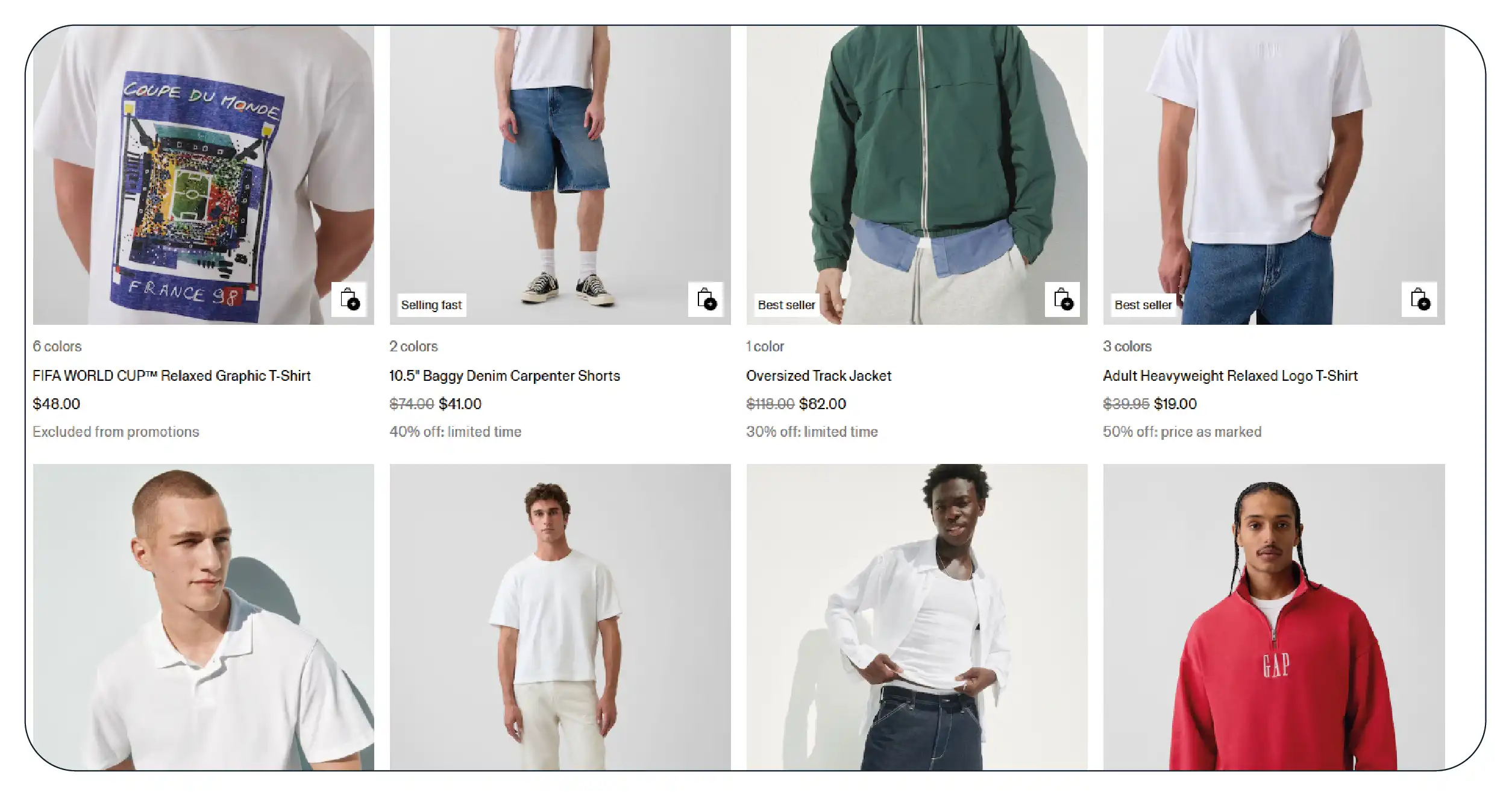
Improve AI styling accuracy and outfit matching quality
Scale dataset ingestion for diverse fashion categories
Enhance real-time recommendation performance
Build structured pipelines for AI training data
Improve automation in dataset labeling and processing
Enable integration with real-time fashion analytics
90%+ improvement in outfit matching precision
2x faster model training cycles
40% increase in recommendation engagement
The system was designed to optimize AI fashion Matched-Outfit Image dataset, AI training data, ensuring higher-quality inputs for machine learning models. Success was measured through improved accuracy, scalability, and responsiveness of the AI styling engine across multiple fashion categories.
The Core Challenge

The fashion brand faced significant challenges in building a reliable AI styling engine. The biggest issue was the lack of standardized, high-quality datasets required for effective model training. Outfits were inconsistently labeled, and visual data varied across sources, reducing model reliability.
Another major challenge was poor scalability in handling large volumes of fashion images. The system struggled to process increasing catalog sizes efficiently, leading to slower training cycles and outdated recommendations.
Additionally, there was a gap between real-world fashion trends and training data inputs, which affected prediction accuracy and styling relevance.
We addressed issues in AI model training on fashion datasets, E-commerce data scraping, ensuring that real-time, structured fashion intelligence could be fed into the AI system. Without this improvement, the brand's styling engine would have continued producing inconsistent and less relevant outfit recommendations.
Our Solution
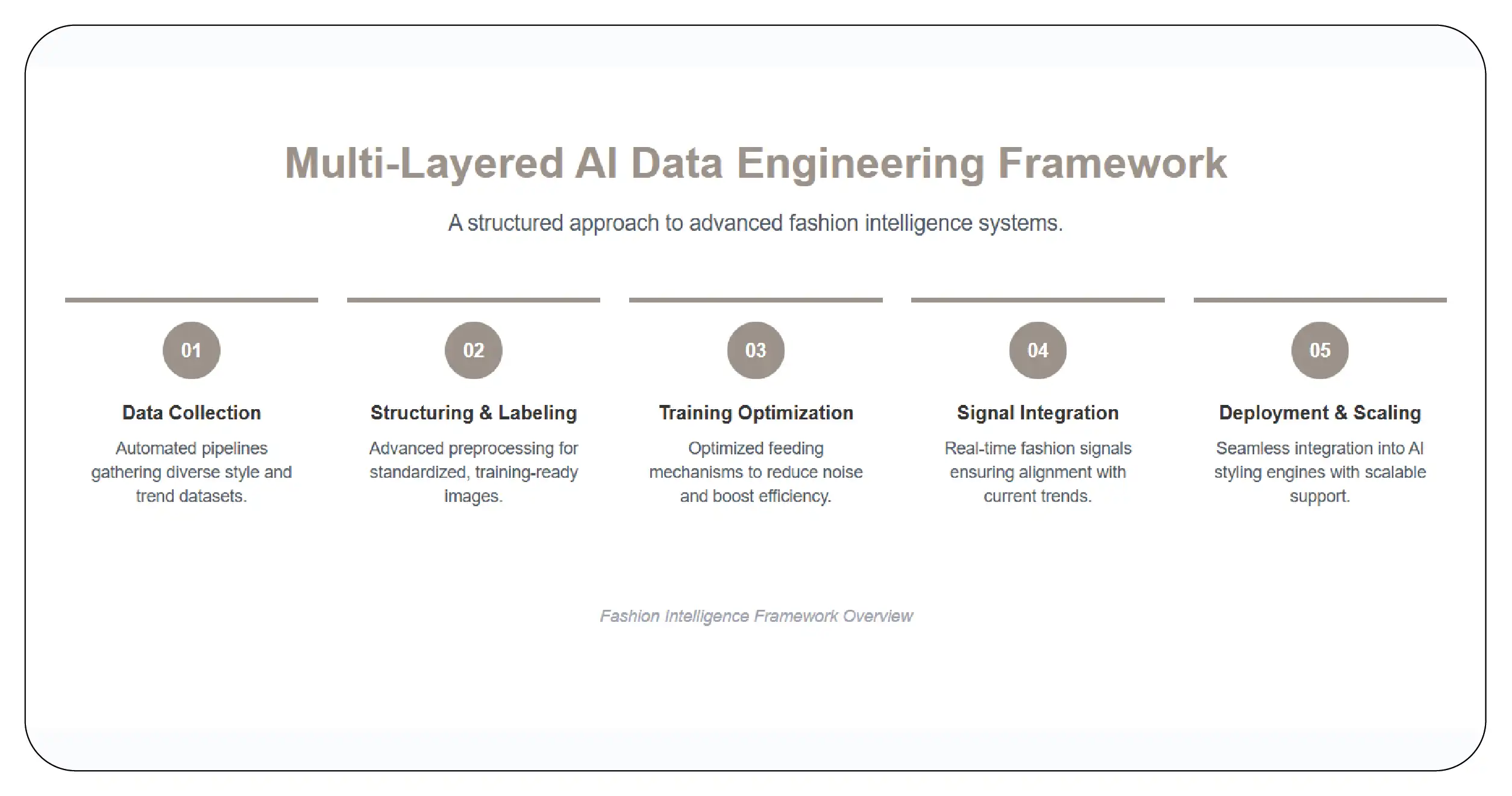
We implemented a multi-layered AI data engineering framework designed specifically for fashion intelligence systems.
Phase 1: Data Collection Layer
We built automated pipelines to gather structured fashion datasets from multiple sources, ensuring diversity in styles, categories, and trends.
Phase 2: Dataset Structuring & Labeling
Advanced preprocessing techniques were applied to clean, label, and standardize outfit images for training readiness.
Phase 3: AI Training Optimization
We optimized dataset feeding mechanisms to improve model learning efficiency and reduce training noise.
Phase 4: Real-Time Fashion Signal Integration
The system integrated live fashion signals to ensure models stayed aligned with current trends.
Phase 5: Deployment & Scaling
We ensured seamless deployment of the trained model into the client's AI styling engine with scalable infrastructure support.
This included AI fashion personal stylist app Scrape, Buy E-Commerce Datasets, enabling continuous improvement of dataset quality and real-world relevance.
The solution significantly improved dataset consistency, reduced training inefficiencies, and enhanced model accuracy. It also allowed the brand to scale its AI styling capabilities without compromising performance or recommendation quality.
Results & Key Metrics
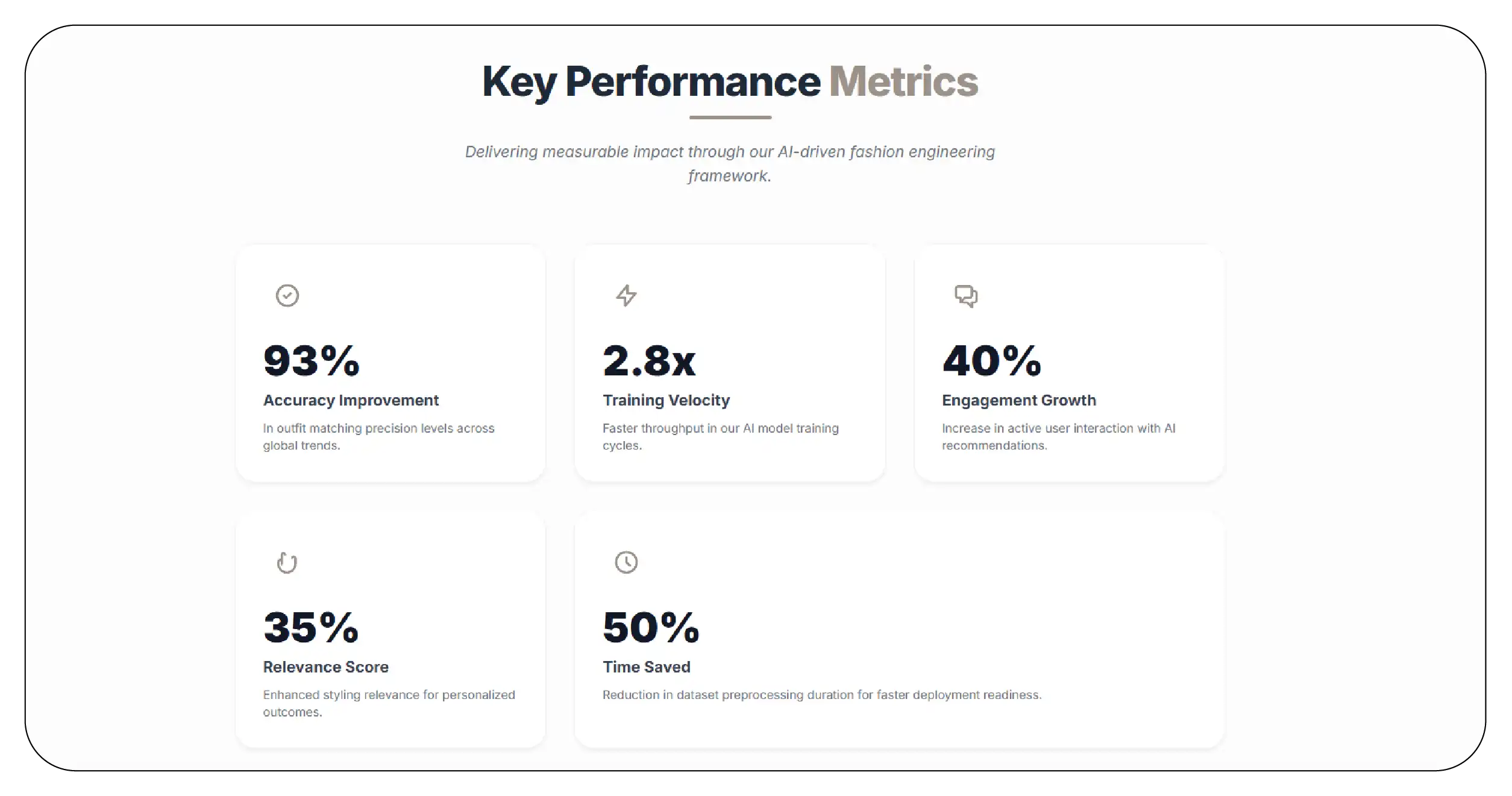
93% improvement in outfit matching accuracy
2.8x faster AI model training cycles
40% increase in user engagement with recommendations
35% improvement in styling relevance scores
Reduced dataset preprocessing time by 50%
Results Narrative
The implementation of AI clothing image training data Scrape, Market Share Analytics for Brands significantly transformed the brand's AI styling system. The improved dataset quality led to more accurate outfit predictions and enhanced user satisfaction.
The fashion platform experienced stronger engagement rates as users received more relevant and visually coherent outfit suggestions. Faster training cycles enabled continuous model updates, keeping recommendations aligned with current fashion trends.
Overall, the brand achieved a more intelligent, responsive, and scalable AI styling ecosystem.
What Made Product Data Scrape Different
Our solution stood out due to its deep integration of AI-ready data pipelines and fashion-specific intelligence systems. We developed a structured framework capable of transforming raw fashion data into high-quality training inputs.
We also enabled ecommerce brands use outfit image datasets, AI Fashion App Trained on a Matched-Outfit Image Dataset, allowing brands to directly connect dataset intelligence with AI styling outcomes.
This approach ensured better scalability, improved model accuracy, and faster iteration cycles. The system was designed not just for data collection, but for long-term AI performance enhancement.
Client Testimonial
"Our AI styling engine improved dramatically after working with the Product Data Scrape team. The quality of the matched-outfit dataset and structured fashion data pipelines helped us achieve far better recommendation accuracy. We now deliver more relevant outfit suggestions to our users, and engagement has significantly improved. Their expertise in fashion data engineering and AI dataset structuring made a real difference to our product experience."
— Head of AI & Product, Fashion Technology Brand
Conclusion
This project highlights how structured fashion datasets can transform AI-driven styling systems. By integrating scalable pipelines and high-quality training data, the brand achieved stronger accuracy, better engagement, and improved recommendation intelligence.
With Track AI Shelf Performance, AI Fashion App Trained on a Matched-Outfit Image Dataset, the client now has continuous visibility into AI performance and styling relevance. This positions them strongly for future growth in the competitive fashion-tech ecosystem, where personalization and intelligence define success.
FAQs
Q1. What is AI Fashion App Trained on a Matched-Outfit Image Dataset used for?
It is used to train AI systems for outfit recommendation and styling accuracy.
Q2. How does Fashion data scraping help AI models?
It provides real-world fashion data to improve training quality and relevance.
Q3. Can AI models adapt to new fashion trends?
Yes, with real-time dataset integration, models can stay updated with trends.
Q4. Why is dataset quality important in fashion AI?
High-quality datasets improve accuracy, consistency, and recommendation relevance.
Q5. How does this solution improve user engagement?
It delivers more personalized and accurate outfit suggestions, increasing user interaction.


 Singapore
 EMAIL
EMAIL
 PHONE
PHONE


.webp)
.webp "thumb")
.webp "thumb")
.webp "thumb")







.webp)